

Before we begin, our friends at Lehrhaus (Jewish tavern and house of learning - read my Drop about it here!) had a pipe burst, causing water damage. Let’s be 10% Jewier (last Drop reference and a tzedakah deep cut) by either donating or buying a gift card!
Please excuse last week’s silence - flu season got the best of me!
A few weeks ago, I invited readers to write in. Here were some of your burning questions, and some of my abridged but hopefully helpful answers.
💌 “I know 18 is an important number in Judaism, I believe it means life. I recently learned that 26 is also an important number, and the secular year being 2026 made me wonder what significance does 26 represent. Is it because 13 x 2 =26 and 13 seems like an important one as well. So I guess this is really two questions: what is the significance of the numbers 26 and 13? Which leads to a third question: what is the magic behind numbers in Hebrew and how they relate to letters?” -Maddy
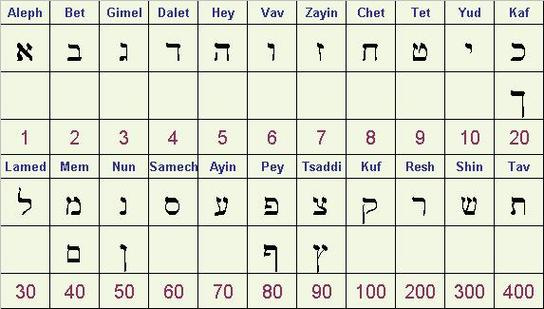
Ah, that’s a neat system called gematria, which assigns a numerical value to each letter of the Hebrew alphabet. When you add up the letters of a word, you give that word (and its total) special meaning. It’s a spiritual tool used to draw connections between words and numbers, and it’s the closest I ever willingly get to doing math.
Here’s a chart showing each letter and their numerical value:
If it sounds Kabbalistic and mystical, it is, but it actually predates classic Kabbalah. This method of Hebrew numerology was likely inspired by the Greeks, who had their own numerology system.
The term “gematria” likely comes from the Greek word “geometria,” which means “geometry.” This connection means that math is all around and we can’t escape it, no matter how hard we try.
Yes, the Hebrew word for life (חי) totals 18! 8+10=18, so 18 means life.
26 is the total (10+5+6+5) of the special letters that make up the four-letter Tetragrammaton, the most sacred name for G-d: י–ה–ו–ה
Jews don’t care about secular years (we have our own calendar!), so 2026 is just a coincidence… or is it? 👀
13 is significant in Judaism because that’s when a child becomes a b-mitzvah. In gematria, two words that add up to 13 is the Hebrew word for love (אהבה) (1+5+2+5) and the word for one (אחד) (1+8+4). Mysticism points out that love and oneness share the same numerical value, interpreted to mean that love creates unity, or one being. Awww.
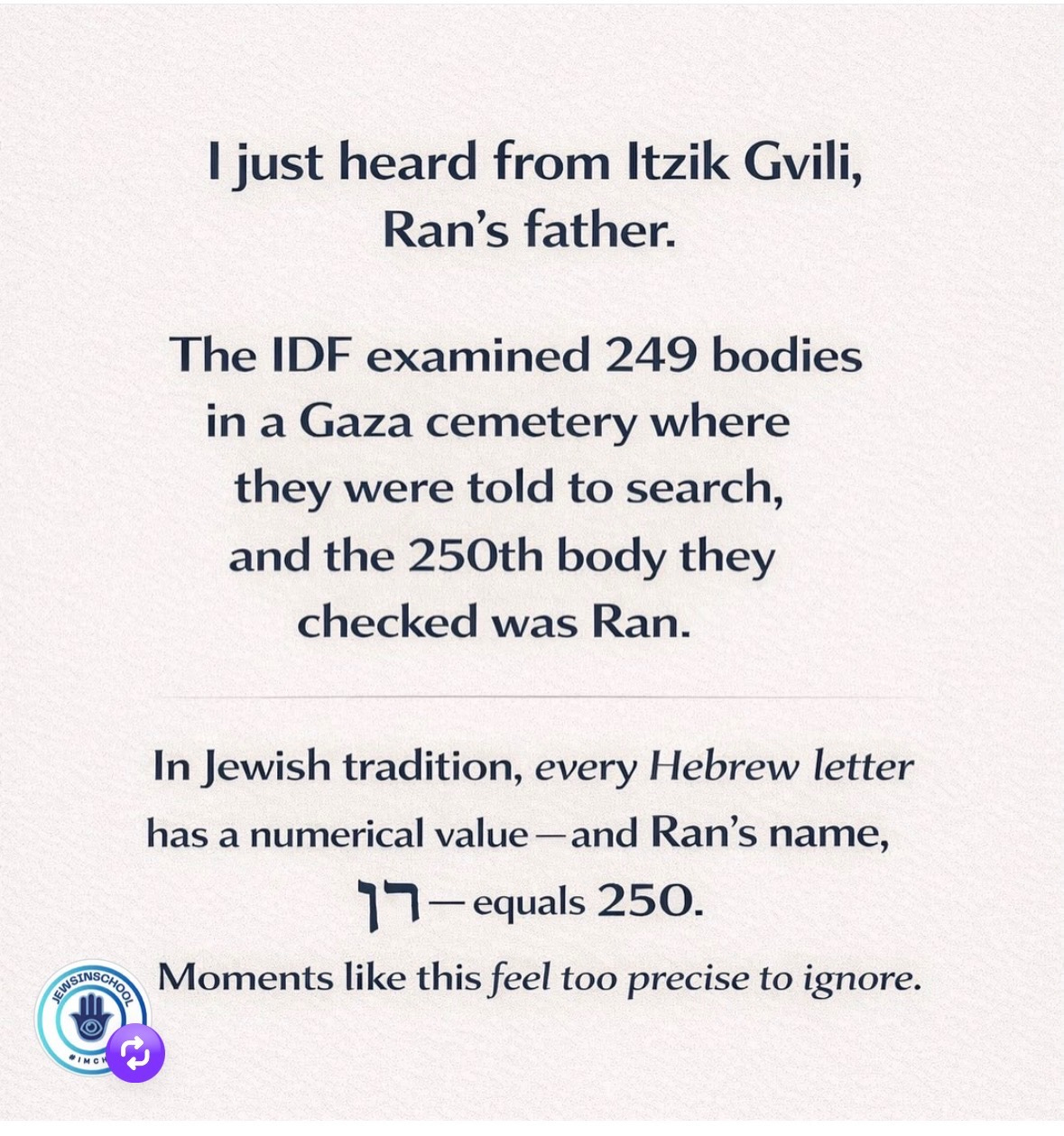
A modern example that gives me chills about the last hostage, Ran Gvili, whose body was just returned to Israel last month:
I recommend the book Letters of Light by Rabbi Aaron L. Raskin to learn about each letter and what they represent!
💌 “I would love an edition to focus on what it was like being a Jew during the Middle Ages.” -Nick
This is a dense topic (Many years! Many places!) and I would be happy to write a separate Drop on this someday, but in brief:
After the destruction of the Second Temple in Israel in 70 CE, Jews were even more scattered all over the Middle East, North Africa, and Europe.
Under Muslim Rule: Since the 7th century, Jews in lands under Islamic rule lived under the Pact of Umar, which treated Jews (and Christians) as second class citizens called dhimmis. Jews were allowed to practice Judaism but were seen as inferior, often forced to walk on the opposite side of the street as Muslims, pay a special tax, wear embarrassing outfits including tall, conical caps and a yellow band around their waist, and were not permitted to build synagogues. There were different rules in different areas. This status lasted about 1,200 years.
The Golden Age of Spain: It wasn’t all bad! The 10th-12th centuries saw a cultural flourishing in Jewish communities, particularly in Spain. Still under dhimmi status, some Jews prospered as craftsmen and traders, while great thinkers like Moses Maimonides and Judah Halevi contributed to philosophy, poetry, Torah, and more.
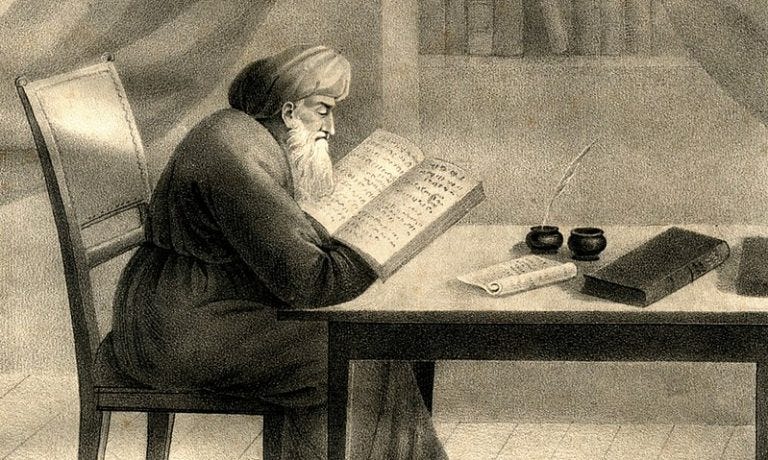
The Rishonim: More Jewish intellectual life flourishing! For the biggest stars and their contributions, check out this link.
The Crusades: It was bad again. Starting in the 11th century, Christian mobs attacked Jews and Muslims, from Germany to the Holy Land, in an effort to capture Jerusalem from the Muslims. Each crusade involved forced conversion or death for the Jews (the first few months saw 12,000 Jews killed). This ended in the late 13th century, and destroyed three centers of Ashkenazi Jewry: Cologne, Mainz, and Worms.
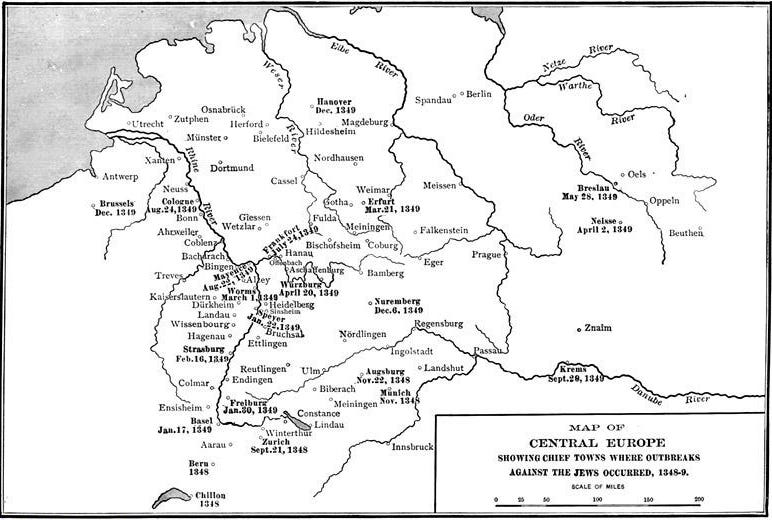
Christian Antisemitism: Jews under Christian rule generally had it worse than living under Muslim rule. Seen as Christ killers or nonbelievers, they were often confined to ghettos, forced to convert, killed, or expelled. This period of history gave us the first documented case of blood libel. Jews were blamed for the torture and murder of 12-year-old William of Norwich, whose real murderer was never found. Soon, it was common to accuse Jews of ritual murder of children in Europe, which often led to persecution and the murder of Jews in their local communities. The 14th century brought scapegoating during the Black Death, when Jews were blamed for spreading the illness that would end up killing 1/3 of Europe. In Strasbourg alone, 1,000 Jews were burned to death after mass hysteria spread that Jews had poisoned the wells. In Mainz, Germany, 6,000 Jews were also killed in one day for the same reason. A rumor spread that Jews were able to survive the Plague because of their cleanliness and hand washing habits, a theory later debunked when it became known that the Plague was spread by fleas hitching free rides on rats (those flealoaders!). Also, Jews died from the Plague as well. It wasn’t as though Jews were magically immune.
Expulsion from Spain: In the 15th century, King Ferdinand and Queen Isabella of Spain enforced mass conversion to Catholicism. During this period called the Inquisition, their favorite pastime was torturing and killing thousands of conversos they suspected of secretly practicing Judaism. In 1492, all Jews were expelled from Spain, forcing many to flee to North Africa, the Ottoman Empire, and other parts of Europe.
So there you have it: Jewish Middle Ages in a nutshell. It includes some sad and ugly history, and some rich history that has forever changed how we interpret our sacred texts and deal with erectile dysfunction.
💌 “According to the Book of Genesis, Abraham and Hagar have a son, Ishmael. Abraham also has a son with Sarah, Isaac. Ishmael (Arabs/Muslims) and Isaac (Israelites/Jews) are brothers. Half brothers sure, but half brothers are brothers. They are blood.
Here’s my question: Why don’t more Jews and Muslims feel shame about how they treat, talk about, view their fellow brothers? It is incredibly sad that far too many people, on both sides, have killed their fellow brothers and continue to do so. Curious to hear your thoughts.” -Jordan
Oof, I think if I had the answer to this I could solve world peace! But let me try.
Some Muslims are antisemitic. Some Jews are Islamophobic. I can only speak for Jews, and I’m not defending this belief, but I think it comes from a sense of fear and survival. When Jews cherry pick examples of unfavorable depictions of Jews in the Quran and the Sahih Muslim hadith and say, “See? They want to kill us!” they’re putting up a psychological shield that makes it easier to justify hostility toward the other side. That’s not to say there aren’t real threats in the world, but it’s possible to acknowledge them without speaking out against Muslims. (That linked hadith is pretty violent though; it’s included in the 1988 Hamas charter. Still, it’s important to remember that it’s only used by extremists.)
My dad has three favorite words for explaining human behavior: “People are tribal.” Evolutionarily, we survived by protecting our group and confronting perceived threats. That protection can include harmful words if not literal violence.
So to answer your question, they feel like they’re doing the right thing and protecting their own.
The good news is there are efforts to combat this energy. JAMAAT, Jews and Muslims and Allies Acting Together, is a DC-based grassroots organization that promotes social action, advocacy, and interfaith dialogue. It’s Jews and Muslims focused on a “third thing,” like fighting climate change and ICE. All they need is better marketing!
During the war, there were dialogue groups like Standing Together that invited Jews and Arabs to share their trauma and pain. They could use less marketing (kidding, kidding, I just didn’t agree with their messaging during the war).
Our relationship with our Muslim siblings starts with us. It starts with dialogue and maybe even a little breaking bread together. Hey, maybe I’ll start an organization called Breaking Bread Together. Or Breaking Bad Together, where Jews and Muslims sit around and watch Breaking Bad. Everyone loves that show!
If you’ve learned anything, please consider donating here, or sharing this page! I will do this again sometime - I had fun and learned a thing or two, and I hope you did as well.
1078 (gematria for “Shabbat Shalom”),

Such a good article. Thanks for sharing!
I thought you were going to say your group - called Breaking Bad - would have Jews and Muslims making Meth together.