

Hebrew Word of the Week:
Shopping mall is kanyon (קניון). So, is the Mall of America called the Grand Kanyon?
Dear friends,
Before we dive into Jewish joy today, I want to start out with some joy of my own:
The Drop has reached over 1,000 subscribers. 🎉 This has been a dream of mine since I started it four years ago!
Thank you to everyone for subscribing, reading even if only occasionally, and putting up with my puns, stories, and attempts at relating niche fandoms to Jewish ideas.
If you’re new here, I’m Miranda in the streets, Maayan in the synagogue seats. 👋 New Yorker, Hebrew learner, explorer of Jewish meaning, and an elder emo.
Despite that last point, I was recently dubbed “the happiest Jewess on Substack.” I’ll take it! But my Jewish joy wasn’t complete until I got the new book, The Art of Jewish Joy, by Amanda Kingloff and Suzy Ultman.
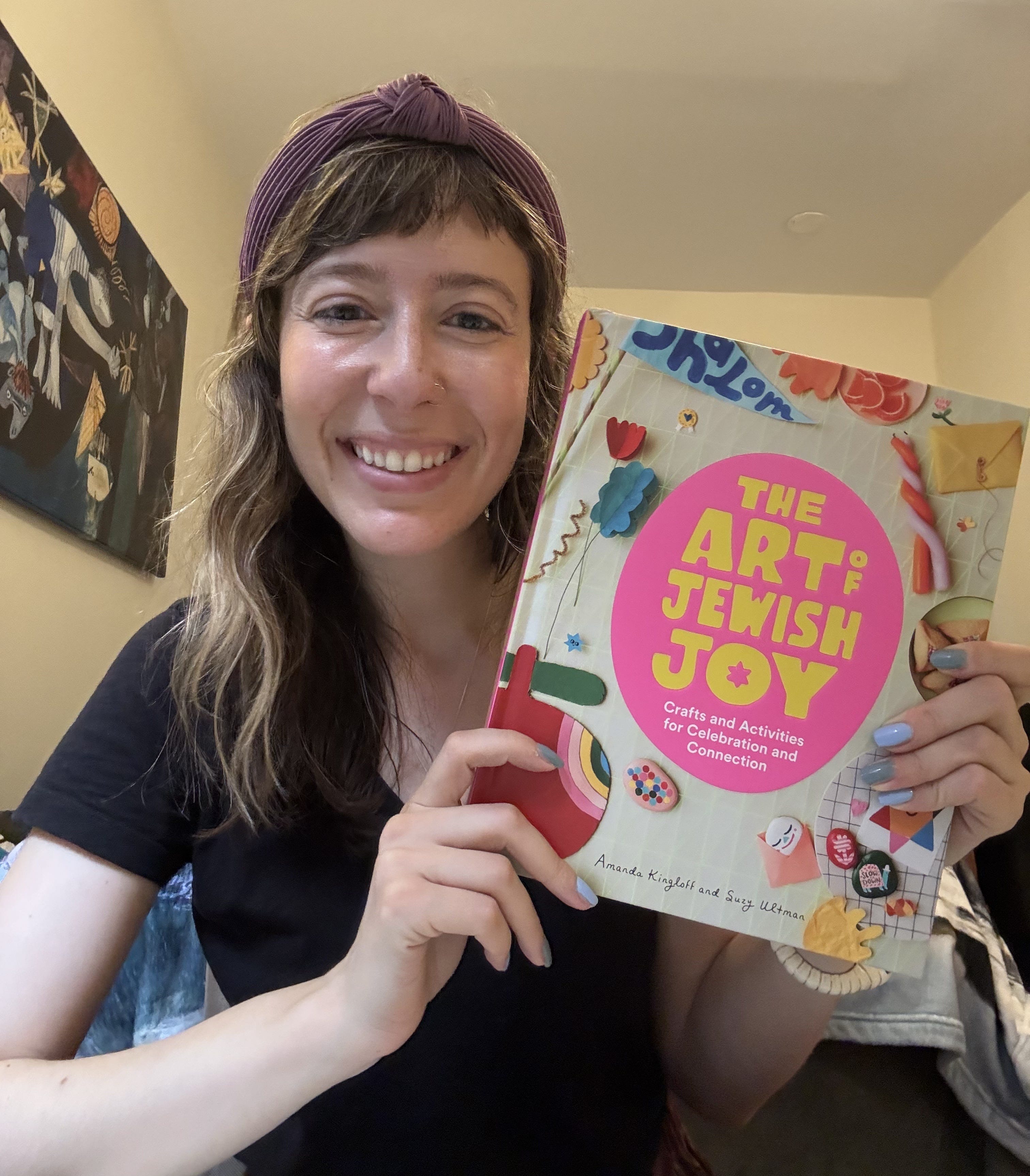
I received a copy of this book from the publisher (thanks, Chronicle Books!) in exchange for an honest review. The thoughts below are entirely my own.
And here’s the honest part: I’m not keen on crafting. Aside from collaging and the occasional watercolor painting (which was more of a Covid hobby anyway), I get lazy and I would much rather just buy something than make it. I know, it seems off-brand.
However, when I met Amanda at a day of camp for Jewish professionals handing out Jewish joy stickers to promote her upcoming book about joy and art, I needed to get my hands on this book.
I needed it on my Jewish bookshelf because A) I mean look at that colorful cover, B) it’s perfect for children and I collect books for my future children like the freak that I am, and C) I like seeing how educators creatively teach about Judaism!
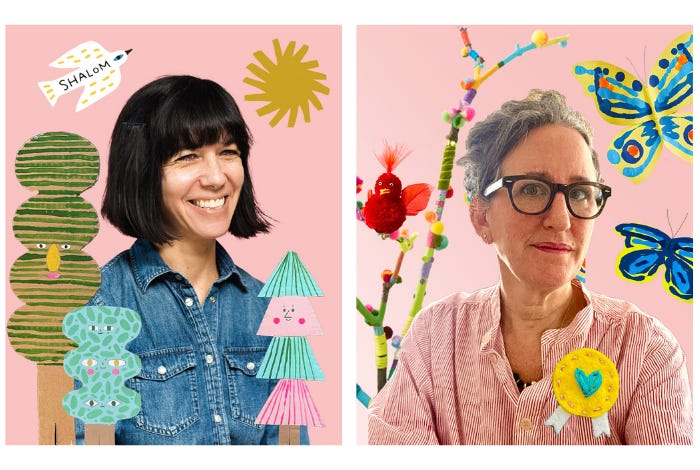
Suzy Ultman (left) is an Ohio-based illustrator, author, and toy maker. Her shop is ridiculously cute, full of smiling heart-shaped stickers and children’s books, one of which (How Do You Jew?) I just realized is also in my future children’s book pile.
Amanda Kingloff (right) is the founder of Project Kid, which helps families build imaginative, beautiful lives through hands-on creativity.
🎙️Podcast alert: Suzy and Amanda were just interviewed on my work’s podcast I help produce, Adapting: The Future of Jewish Education! After reading this, listen to the episode, “We’re Serious About Jewish Joy” here.
But when this occasional dabbler in arts and crafts (that’s me) sat down to review The Art of Jewish Joy, I figured I needed to get the full experience and make some art myself!
Because, as Suzy and Amanda point out, Judaism is about doing. There’s a lot of physicality while connecting to the traditions, like baking challah and shaking the lulav and etrog (which is an activity in the book: making your own lulav and etrog!).
As I was flipping through the book’s 50 artsy activities, from creating Purim puppets to butterflies, inspired by the famous Holocaust poem, “The Butterfly”, which I reference in this Drop, I stopped at Sukkot. Why not make art for an upcoming holiday?
Paper flowers to decorate your sukkah seemed pretty easy. While I don’t have a sukkah (I live in Manhattan), I could make these flowers and bring them to my friend’s sukkah on Saturday!
But the activity, called Invitation to the Past, wasn’t just gluing construction-paper flora to green pipe cleaners (to see the final results, scroll to the end of this post). It was also a learning moment about the Sukkot tradition of Ushpizin.
Ushpizin is a Kabbalistic Sukkot tradition in which people symbolically invite biblical ancestors into the sukkah as honored guests. The word comes from Aramaic and means “guests” or “visitors.”
And I had never heard of it before!
In modern years, biblical matriarchs (Ushpizot) have been included in this tradition of hospitality as well. Each guest represents traditional values, inviting not only the person but what they represented as well.
Day 1: Love with Abraham and Sarah
Day 2: Strength with Isaac and Miriam
Day 3: Harmony with Jacob and Deborah
Day 4: Endurance with Moses and Hannah
Day 5: Humility with Aaron and Abigail
Day 6: Connection with Joseph and Huldah
Day 7: Leadership with David and Esther
In the Sukkot activity, after you make your flowers, you write the ushpizin/ot you’re inviting into your sukkah on the paper petals.
But hold up… who was Abigail?! And Huldah? And why were they included in this list of esteemed biblical figures, while Rebecca, Rachel, and Leah were passed over, to use another biblical reference?
I asked a couple of Jewish friends, and they didn’t know who Abigail and Huldah were either. Dear reader, do you know? Write in the comments - points to you if you already knew who they were!
This seemed like another learning moment, so here’s my quick research:
Abigail: One of King David’s wives. She was married to Nabal, and when he insulted David, Abigail intervened with gifts and diplomacy, preventing David from taking revenge. After Nabal’s death, she became David’s wife. She’s remembered for her wisdom and ability to prevent violence. She appears in the Books of Samuel. Read more about her here.
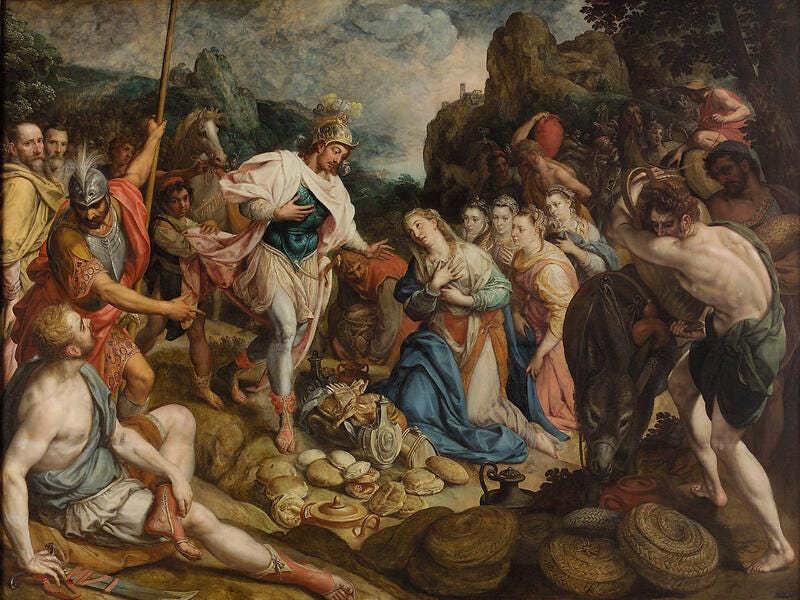
Huldah: A prophetess living in Jerusalem during the reign of King Josiah. When the priests discovered a scroll of the Torah in the Temple, Josiah’s officials consulted Huldah, who delivered a prophetic message about its significance and Judah’s future. She’s remembered for her religious authority and judgment. She appears in Kings and Chronicles. Read more about her here.
These women are included in Ushpizot because they were listed as important prophetesses in the Talmud.
I found this modern list of Ushpizot, including female leaders like Golda Meir and Ruth Bader Ginsberg. Another question for you: Whose spirit from the modern era would you invite into your sukkah?
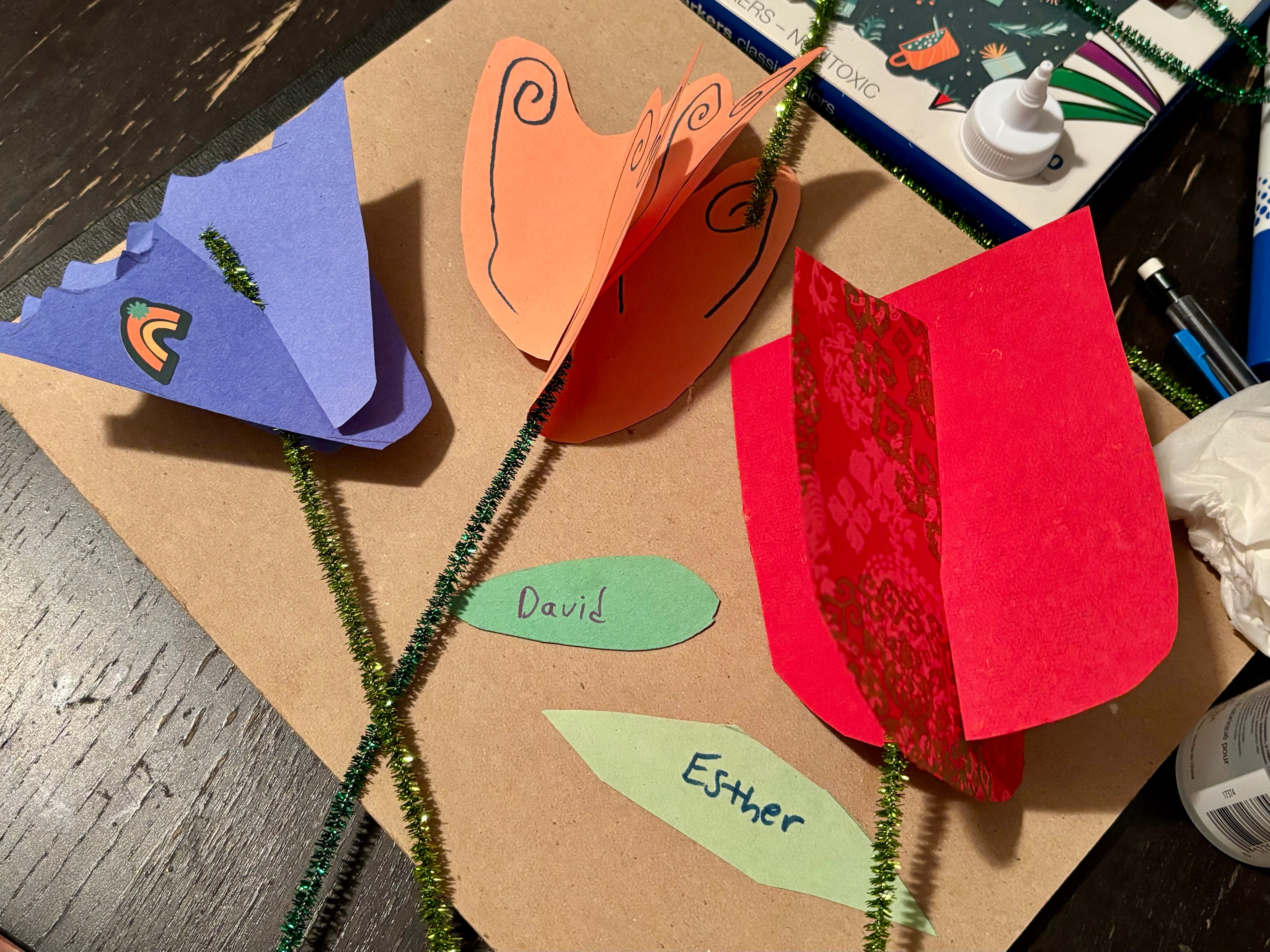
And how did my flowers turn out, you may be wondering?
Well, the tacky glue I bought didn’t stick to the pipe cleaners AT ALL and I grew frustrated, but I had fun because I made Phil make them with me.
As you can see, I invited the spirit of Esther into my metaphorical sukkah for her bravery in standing up to hatred and injustice to save the Jewish people, even though I have a soft spot for Deborah. Fun fact: my last name comes from Deborah’s husband, Lapidoth! Phil chose King David for his leadership. If only I chose Abigail, we could have been a match made in Jewish heaven.


The Art of Jewish Joy is a fun way to learn and connect to the holidays! It’s perfect for parents, and even people who dislike arts and crafts.
Shabbat Shalom and chag sameach!
May you have more strength than tacky glue,

💦 If you like biblical women, check out these Drops:
Jewish Women Who Understood the Assignment

In honor of International Women’s Day, my review of Bedtime Stories for Strong Jewish Girls: Tales of 50 Jewish Heroines Who Changed the World by Melanie Goldberg Silver, illustrated by Jess Goldsmith. Again, I learned about women I had never heard of before! Am I a bad feminist?
Courage: Let the Queens Show Us How It's Done

A look at two distinct models of courage, courtesy of Queens Vashti and Esther, and some personal encounters of antisemitism where I did not show courage (which is why I wanted to channel Esther).
Great read! Chag Sukkot Sameach from outside Jerusalem, where there are sukkahs on every porch, rooftop, garden, and even crowding the sidewalks! And, that brings me so much Jewish Joy 😍.
Congrats on reaching your follower goal! You are such a rockstar!!!