

What was your favorite band when you were 13? Have you seen them live? What did it feel like? Do you still listen to them? And can you relate them to Yom Kippur?!
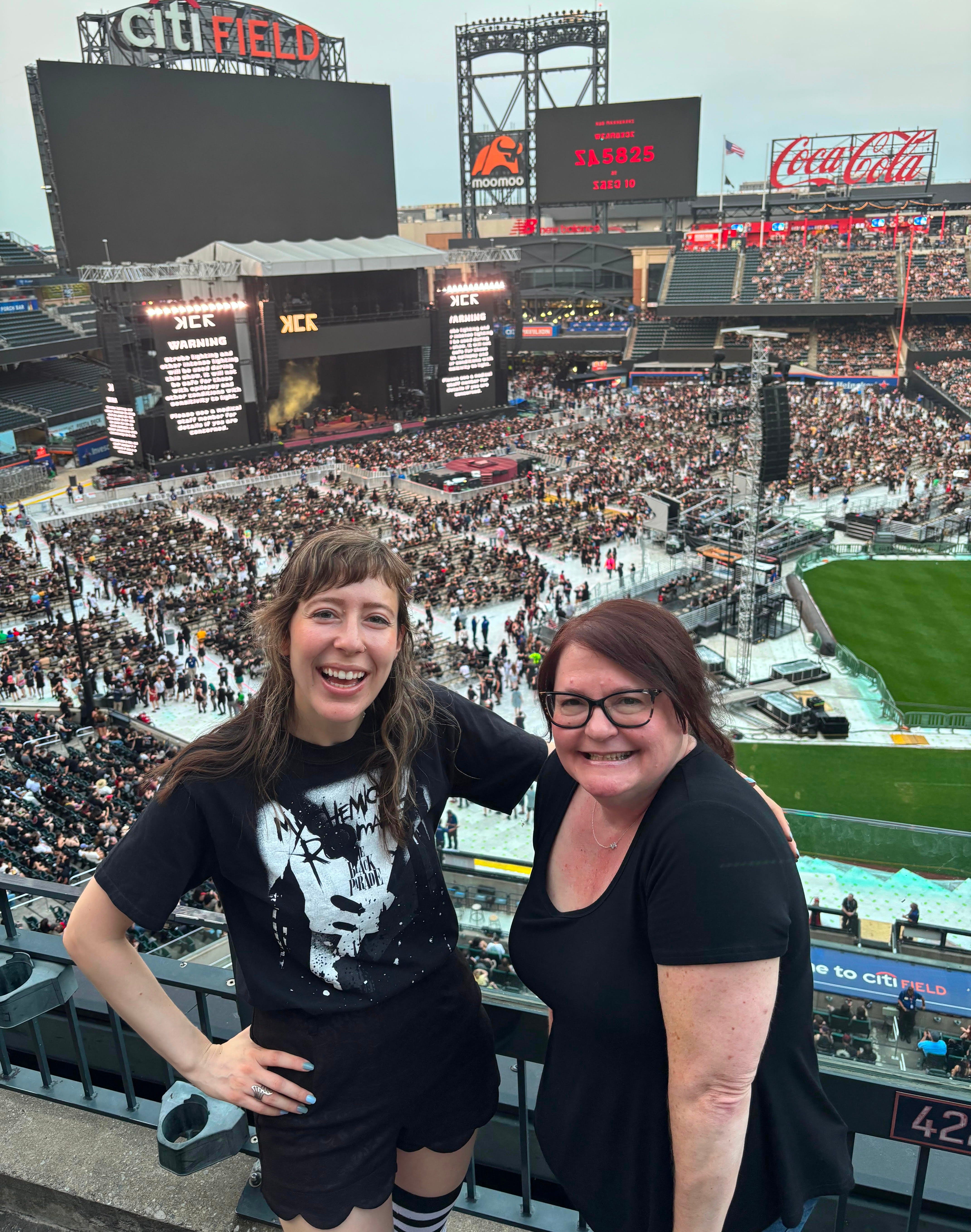
Last month, I experienced one of the greatest nights of my life when I saw My Chemical Romance for the third time at Citi Field. It was unlike any concert I’ve ever been to (yes, even Phish!).
80,000 fans screamed “I’m not okay” at the top of our lungs so all of Queens could hear us. The stadium was lit up by just as many glowing, swaying phone lights. There were theatrics. Fake blood. Probably real blood at some point. An actor running across the stage completely engulfed in flames.
My Chemical Romance is an emo pop-punk band that formed after its front man, Gerard Way, witnessed the Twin Towers going down on 9/11 from a ferry on the Hudson River.
With four successful albums and millions of fans around the globe, My Chemical Romance sings about revenge, death, vampires, and a post-apocalyptic world. They also prompt my adult self to wonder, “Why on earth did my mom let me listen to this violent, angry music as a young, impressionable teen?”
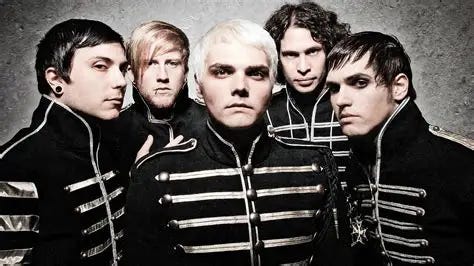
But for all their screamy angst and imagery around death, the band is pro-life. Not, like, abortion pro-life, but pro-living. Resilience. Surviving tough stuff and coming out stronger on the other side.
Which is probably why their lyrics, not to mention their boyish-looking, eyeliner-wearing singer, appealed to my lonely, shy teenage self.


The concert reminded me of who I am at my deepest core.
After all, we meet this time of year with teshuvah, or returning to G-d, but also returning to your soul, or your teruah-est self. Yes, that was a shofar pun.
My Chemical Romance, also known as MCR or My Chem, is imprinted on my soul, along with dancing skeletons in parade uniform, Mother War, and primal, cathartic screaming. Whenever I hear a ringing G note played on piano, I perk up, expecting to hear the rest of the notes that begin their most famous song “Welcome to the Black Parade.” So seeing them live felt like coming home, and nothing you can say can stop me going home. Yes, that’s an MCR lyric.
Now come one, come all to this tragic affair
There’s a deeper connection, though, between MCR and the Holy Days.
Yom Kippur, which begins Sunday evening, is the Jews’ Day of Atonement. We fast, pray, we ask G-d to forgive us for our sins, and we think about how we want to be better in the new year.
It’s also the day we imagine our own death. The Unetaneh Tokef prayer, the central liturgy of the holidays, asks, “Who will live and who will die?”, asking us to confront our own mortality as we reflect on how we’ve behaved in the past year.
It’s said G-d has three books open on this day: the Book of Life, the Book of the Death, and the Book of the In-Between. Those judged righteous are inscribed for another year of life. Those deemed wicked are inscribed for death. Those in the gray area are judged until Yom Kippur.
In memento mori fashion, the holiday urges us to reflect on who we’ve been and who we’d like to be. It asks us, “If these were your last days of life, would you really want to spend them gossiping, holding grudges, or putting off the things that matter most?”
To get in this mindset, Jews typically rehearse for their death on Yom Kippur by fasting, wearing white, and refraining from sexual intimacy and physical comforts like bathing and brushing their teeth (which, if you’ve smelled my breath in the morning, can smell like death itself). Being so conscious of death helps us contemplate life.
There’s also the Yizkor service to remember loved ones who have died.
So, death is a ubiquitous theme on Yom Kippur. It also plays a big role on My Chem’s 2006 album, The Black Parade.
The Black Parade’s march toward death
The conceptual rock opera follows a character named The Patient who is dying of cancer. As he confronts death, which comes to him as a parade from his childhood memories, he confronts his life, including his relationships, regrets, anger, and the fear of dying.
The album sequentially explores these themes, starting with “Dead!”, a darkly upbeat song with hard electric guitar riffs:
And if your heart stops beating
I'll be here wondering
Did you get what you deserve?
The ending of your life
Kind of an Unetaneh Tokef prayer itself, no? Imagine dying, arriving to Jewish heaven, and G-d is just singing My Chemical Romance!
“Dead!” gives us a glimpse into The Patient’s personality pre-teshuvah: sarcastic, bitter, and making light of his situation. Possibly using humor to hide his fear and the responsibility he has to make things right before he dies: “If life ain’t just a joke, then why are we laughing?”
By the middle of the album, The Patient begins to accept that death is near. We see this in the album’s most famous song “Welcome to the Black Parade,” as he recalls a childhood memory of his father taking him into the city to see a marching band. The memory comforts him and gives his life meaning.
Like Yom Kippur, death almost becomes a dramatic spectacle for our protagonist, one that looms too large to think about anything else. The theatrics of the procession easing him toward the end reflect on who he was and who he wants to be in the little time he has left.
The Patient makes meaning of this, and decides he’s going to be the “savior of the broken, the beaten and the damned, “ just like his father asked of him as a boy.
By the record’s end, The Patient has made peace with his sins, his broken relationships, and death. In “Famous Last Words,” he’s talking to his lover (or perhaps G-d?) and says:
I am not afraid to keep on living
I am not afraid to walk this world alone
Honey, if you stay, I'll be forgiven
Nothing you can say can stop me going home
Up until this point, we’ve listened to The Patient recall his agony through his physical suffering (“Cancer”), alcoholism (“The Sharpest Lives”), sleepless nights (“Sleep”), life’s disappointments (“Disenchantment”), and broken relationships (“I Don’t Love You”).
But the tone shifts in “Famous Last Words” to something more positive. In this song, he’s saying, “I’ve meditated on death, and I choose to keep living for as long as I can, despite fear, pain, and uncertainty.” And hopefully he betters himself in the process. With his renewed commitment to life, I’m sure he will.
Moses bonus!
We (and MCR) are not the only ones contemplating death. During this time of year, we read the parshiyot in the Torah when Moses is giving his final speech to the Israelites as he approaches the end of his life. He “remembers the days of old” as he recounts their exodus from Egypt, their covenant with G-d, the mitzvot, and the fact that they are about to enter the Promised Land and might forget where they came from.
Thus, Deuteronomy is Moses’s Black Parade, as he imparts wisdom to the people as if he were the savior of the broken, the beaten, and the damned. Or, more accurately, reminding them that G-d is the savior of the broken, the beaten, and the damned.
So, this Sunday/Monday, even if you’re not fasting, take some time to think about what you could change, repair, or pursue to give your life meaning. We only get one, after all.
I will end with one of the last verses in the Unetaneh Tokef prayer to keep us humble:
Man’s origin is dust and his end is unto dust. He earns his bread at the risk of his life. He is likened to a broken potsherd, to withering grass, to a fading flower, to a passing shadow, to a vanishing cloud, to a blowing wind, to dust that scatters and to a fleeting dream.
Shabbat Shalom. May you be inscribed in the Book of Life!
Awake and unafraid,

💦 If you like Yom Kippur, check out these Drops:
Cemetery Measuring Women of Ashkenaz

The old Ashkenazi custom of women measuring graves in cemeteries during the High Holy Days. It's witchy! It's forgotten! It's fascinating!
A Tale of Two Yom Kippur Services

A reflection on two very different (one Reconstructionist and one Modern Orthodox) Yom Kippur services I attended. This was my first-ever Drop, so please take my writing with a grain of salt.
wow i love this post so much. i had the same kind of experience two summers back when i caught blink 182 at that same stadium and during some of the songs it was like being at sinai lol, my soul leaving my body and then returning and then leaving again in a loop, what an incredible night. wishing you a meaningful yom kippur + gmar chatima tovah
This is such a fascinating analogy Miranda, I so enjoyed reading it. I actually think you should try and send this to MCR, I’ll bet they’d appreciate the depth of your analysis of their work and the parallel to the Old Testament!