


Hebrew Word of the Week:
If you’re facing an important decision in life, or you’re at my favorite thrift store, you’re at a crossroads, or tzomet (צומת).
📕 🎁 GIVEAWAY TIME! It’s been a while. If you’re a paid subscriber, you’ll automatically be entered to win a copy of Alon Shaya and June Hirsch’s Memories of a Good Meal: Recipes of Resilience, Inspired by Stories of World War II Survival. Only applicable to U.S. residents. Winners announced in the next Drop!
It’s a warm and sunny spring day.
An eight-year-old girl and her twin sister are enjoying the open, fresh air in their seemingly endless backyard.
It seems endless, because it borders a forest. Their natural playground is filled with ancient oak trees, moss-covered logs, and in the warmer months, mosaics of colorful flowers.
The girls join a group of excited women and other children as they enter the forest with baskets. They’re spending the afternoon picking wild blueberries there.
Together, they carefully pluck the slightly tart berries from the vines, laughing and cheering for their successes.
On the walk back to their house, the little girl and her sister devour handfuls of berries, dripping purple juices from their chins, and wiping the evidence away before entering their house.
The blueberries that survived were given to their mother to turn into blueberry cake and chilled blueberry soup topped with sour cream and dumplings.
These were some of the best memories of the girl’s life.
This is an edited description based on a real story from the recipe book, Memories of a Good Meal by Alon Shaya and June Hersh.
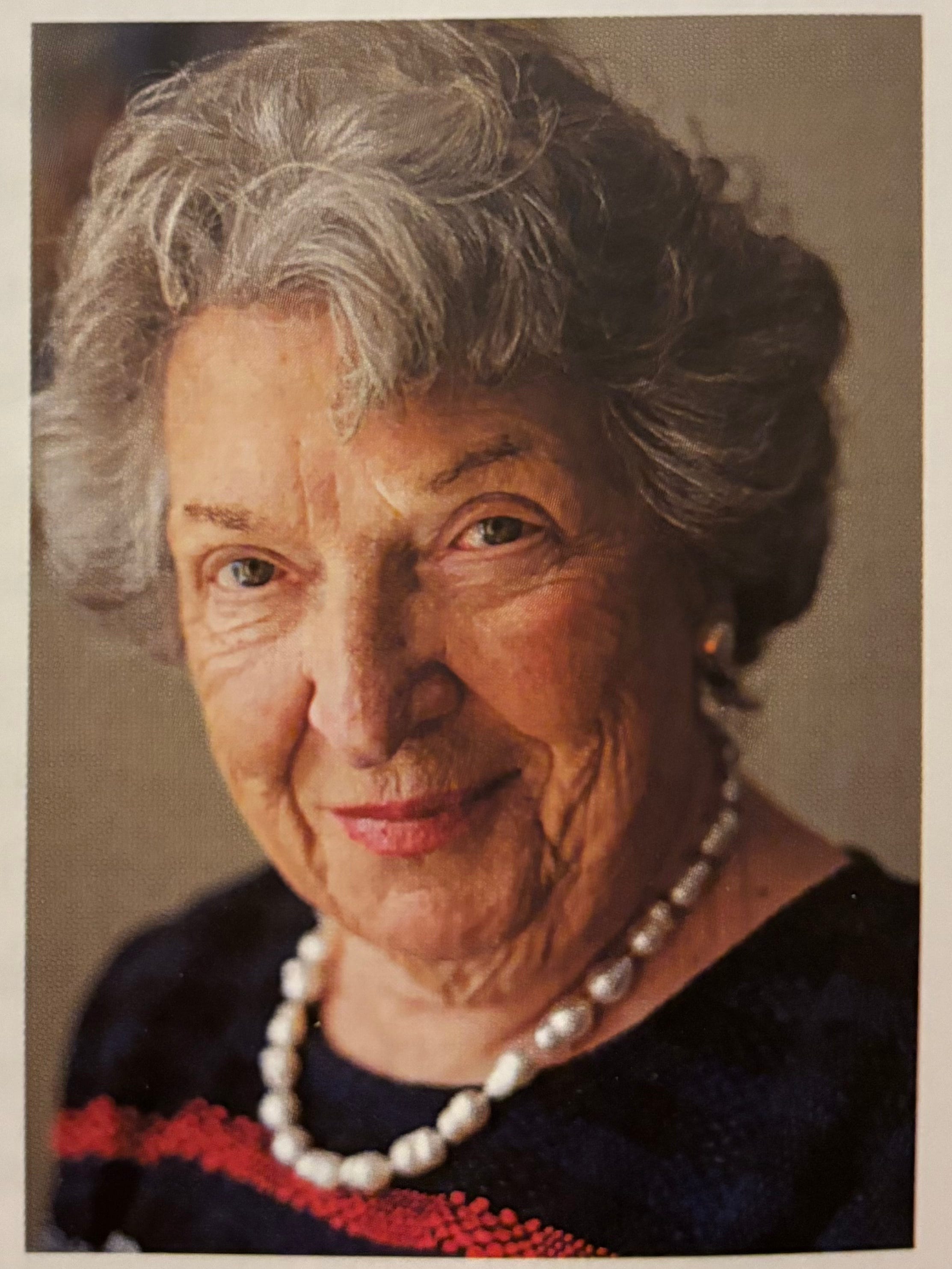
The little girl was Celina Hecht, born Celina Friedmann. She and her twin sister, Fella, survived the Holocaust by hiding on a farm belonging to a Catholic family on the outskirts of Białystok, Poland. The family disguised the Jewish twins as Catholic girls, and together the family prayed and celebrated Catholic holidays.
The forest in which they often played and foraged was also full of Polish partisans evading the Russians and fighting the Nazis, and Catholic families hunting down Jews hiding there.
The girls brought the blueberries back not to their real mother, but to a woman named Mrs. Kaczynska who was hiding them. They had been exchanging letters with their real mother who was writing from the ghetto. Eventually, their mother stopped responding to their letters. They never heard from their mother again.
When the girls were 11, the woman who arranged for them to hide with the Kaczynskas drunkenly told the Gestapo about their hiding place. She profusely apologized for her mistake and suggested the family drown the girls, but Mrs. Kaczynska would do no such thing.
To split the twins up so that they wouldn’t be discovered together, Mrs. Kaczynska sent Celina to a nearby home, and kept Fella on the farm. Sometimes, the identical twins would switch places so that Celina could return to the farm by the forest with the blueberries.
After the war, the girls reunited with their father in Germany.
Celina lost her childhood and her mother, but she never lost her love of blueberries. Those sweet springtime memories of adventuring in the Białowieża Forest remind Celina of a simple time, when she really felt like a Catholic girl with no troubles in the world, and just a basket full of blueberries.
It’s a hot mid-July afternoon.
A carefree 18-year-old woman is spending a vacation at a nearby resort, enjoying a leisurely long weekend. She is accompanied by some of her colleagues who are also her friends, young women like her in their late teens and early twenties.
The women were rewarded this brief stay at the resort for their hard work at their job. They were given the long weekend to eat, socialize, and rest up before returning to work on Monday.
The resort, tucked into a lush, green valley in the countryside, is picturesque: its rustic lodge overlooks sloping mountains, open blue sky, and a winding river. Reminiscent of the Catskills, this retreat is the ideal place to spend a summer weekend.
In the afternoon, their boss, who is also at the resort, passes out bowls of freshly picked blueberries to the young women.
Together, they sit side by side along the wooden railing of the resort’s deck to enjoy the midday treat. They eat spoonfuls of fresh blueberries as they giggle like innocent schoolgirls. One woman playfully pretends to cry when her bowl is empty.
Their boss stands in the middle of all the young pretty women, leaning against the railing, beaming with pride. Work and all the troubles of life seem so far away from this riverside resort, from the sweetness of a summer snack.
This is a description I wrote based on a photograph that has now become famous thanks to the new Broadway play, Here There are Blueberries.
The women in the photograph, taken on July 22, 1944, are the Helferinnen, female auxiliaries who work for the SS as telephone operators, typists, and clerical staff at Auschwitz.
In the middle of the group is Karl Höcker, assistant to the commandant of Auschwitz.
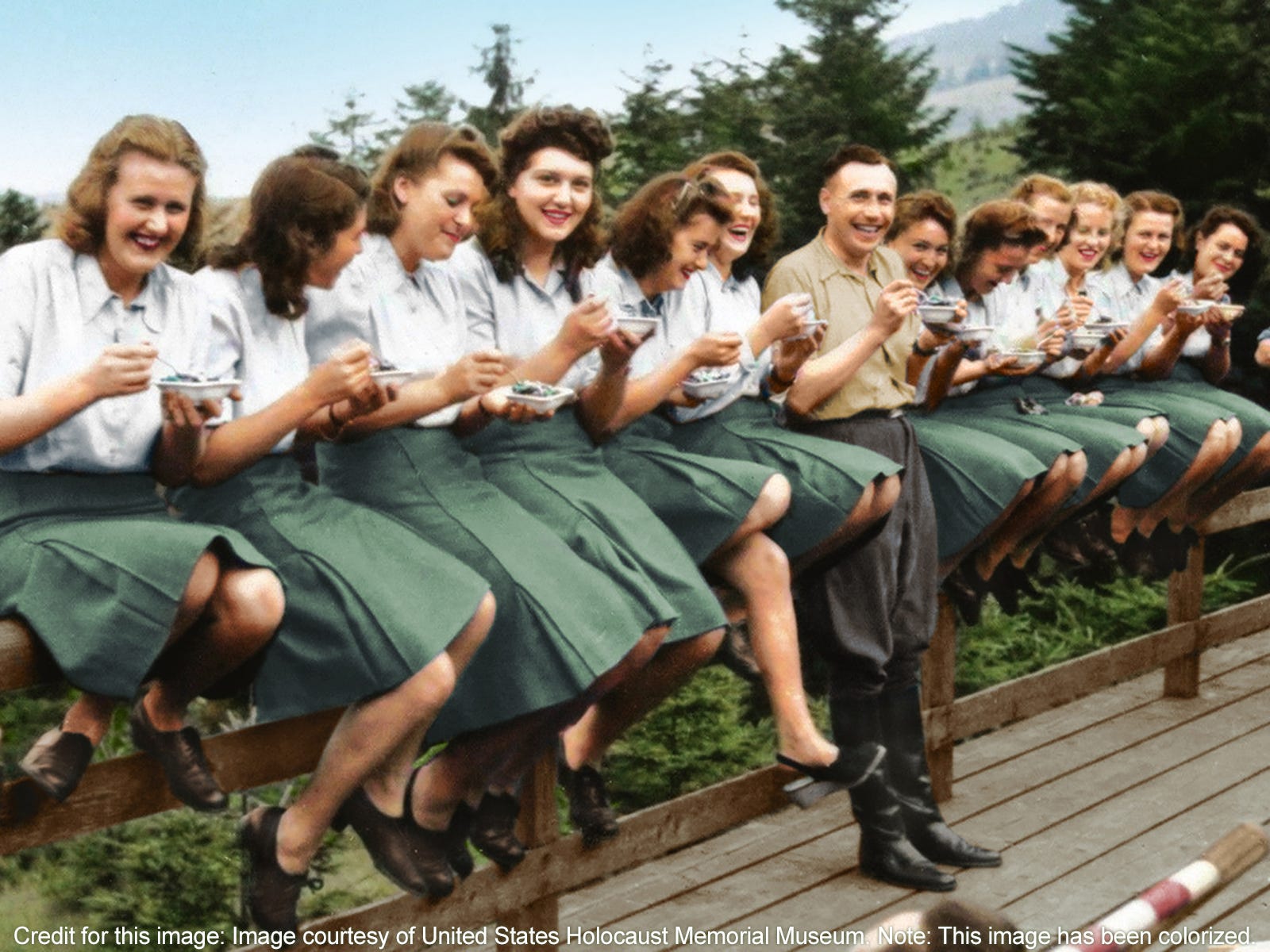
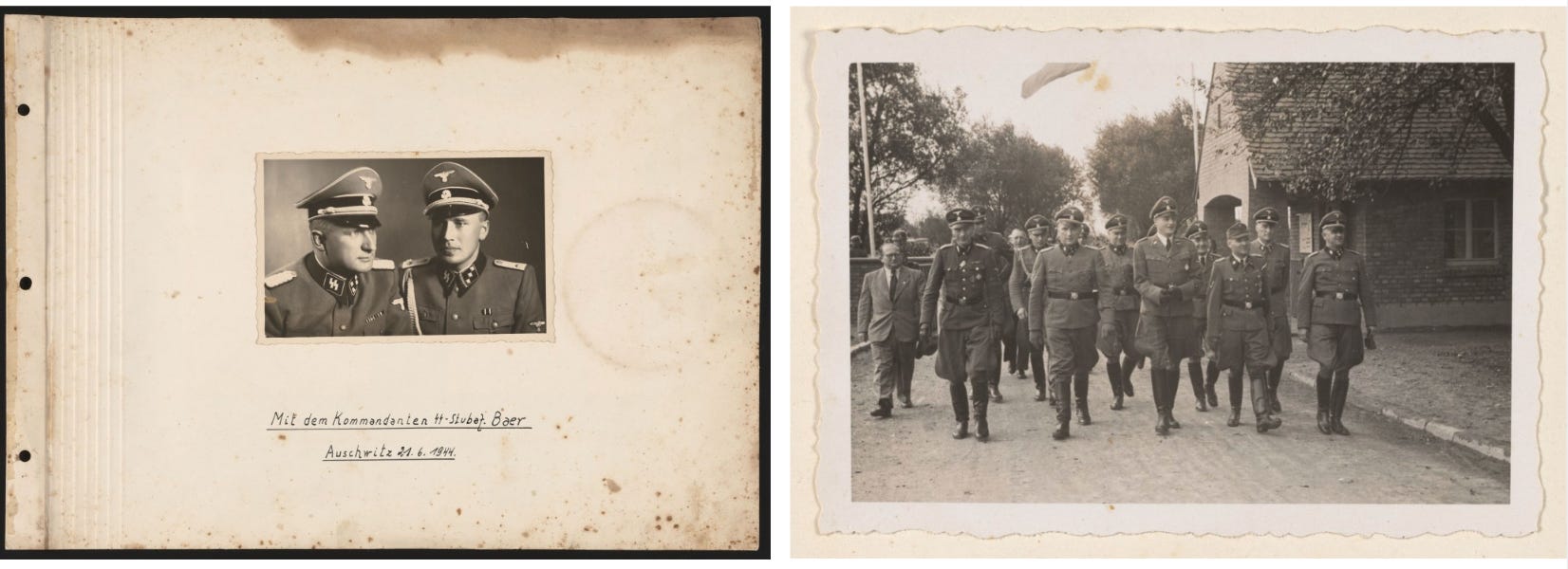
The happy-go-lucky photograph is just one of 116 from an album donated to the United States Holocaust Memorial Museum. The album, the subject of the play, belonged to Karl. The photo collection documented his time working at Auschwitz, like a mid-twentieth century “summer wrap-up” carousel on Instagram.
The photograph of Karl and the Helferinnen took place at Solahütte, a retreat for SS officers and their families in German-occupied Poland, just 19 miles from Auschwitz.
The bottom of the photo reads “Hier gibt es Blaubeeren,” German for "Here there are blueberries."
The magnificent play explores how the album ended up at the museum, the stories of these subjects in its photographs, and how everyday people — from bankers to bakers — could become Nazis. It also investigates just how much they knew about the brutality and murder that was taking place not far from their blueberry paradise.
It’s an unusually warm mid-November morning.
A woman in her early thirties opens her laptop to begin writing her latest Jewish article, but first checks social media.
As she scrolls, she eats spoonfuls of her typical breakfast as of late: oatmeal with crunchy peanut butter, cinnamon, chia seeds, and wild blueberries that leave purple streaks in the creamy hot cereal.
She reads the latest comments on her most recent social media campaign for work. It’s an advertisement for free activities and resources to create more Jewish joy at home.
“Fk the Jews”
“Jewish filth”
“These are the future genocide makers”
*gif of a smiling woman pointing to an oven*
“SYNAGOGUE OF SATAN”
“Imagine supporting a group that believes everyone should die. Why is this ok?”
“The only Jew I like is Jesus, the rest can go”
“Go back to Israel stop pretending to be Jewish” (This one genuinely confuses her.)
She puts her spoon down and sighs.
The weight of the week feels heavy. Seeing a play about how “normal” people tell themselves it’s okay to kill Jews. Remembering how it all it takes are words and a few power-hungry people to create a Jew-hating machine.
Reading books on antizionism isn’t easing her anxiety, either. She can’t help but compare antisemitism of the 1930s to antisemitism of today.
Suddenly feeling her stomach bogged down from oatmeal and dread, she closes Instagram and opens Substack to work on Friday’s Drop. The topic is how the most popular romantasy author, Sarah J. Maas, writes her Jewish pride into her books. Sarah is inspired by her grandmother, a Holocaust survivor and Zionist.
For this woman, sitting down at her laptop, writing about niche Jewish culture, history, Torah, and more, gives her a much-needed weekly boost of optimism.
Putting her temporary blinders up, she pours her energy into writing about Jews doing amazing things and being our own heroes. The relationships she makes along the way become her fuel. The kind comments, a reminder that the words she's putting into the world matter.
“Shabbat Shalom!”
“That book is on my list. Now I have even more of a reason to read it.”
“I didn’t know that about Kislev. Cool!”
All this Jewish joy and meaning are what make the blueberries in her breakfast bowl taste sweeter. It’s what gives her hope. 🫐
Shabbat Shalom! Happy Thanksgiving. Taking a break next week,

💦 Related Drops:
“It’s Here. I’m Here. They Were All Here.”

An interview about a powerful Jewish heritage trip and a visit to Auschwitz in honor of Holocaust Remembrance Day.
2 New Cookbooks You Need on Your Shelf

A meaningful collection of recipes inspired by WWII resilience, and joyful dishes to elevate your holiday table.
I love the happy photo of SS women eating blueberries while sitting on the fence..............then love to shoot them all with my automatic rifle and shoot the SS men as well. Then reload another magazine of 30 looking for other SS enjoying leisure. Then I'd love to eat their blueberries myself. That's an "out of court settlement", Texas style and payment for the 110 relatives our family lost.
I saw the show the week it opened. There were 19 Holocaust survivors in the audience that night. It was amazing