

Hebrew Word of the Week:
I learned that wedding is chatunah (חתונה). My trick to remembering this: there is no greater marriage than between a cat and tuna.
Think of your favorite franchise, or whatever you’re a fan of that you’ve been following for a long time.
Now, imagine it ending.
The final episode of The Office. Derek Jeter’s last game. The Grateful Dead’s last show with Jerry Garcia. Your last meal at your favorite restaurant before it closes for good.
That dreadful, sorrowful feeling in your chest is what I felt in the spring, when my favorite series, Outlander, ended.
Outlander is a romance TV series based on a book series from the 90s by Diana Gabaldon. It’s not Jewish at all. Or is it?
This is what we do here on the Drop: we investigate, we learn, and we convince you to watch Outlander. Pour yourself a dram of Scotch and say sláinte!
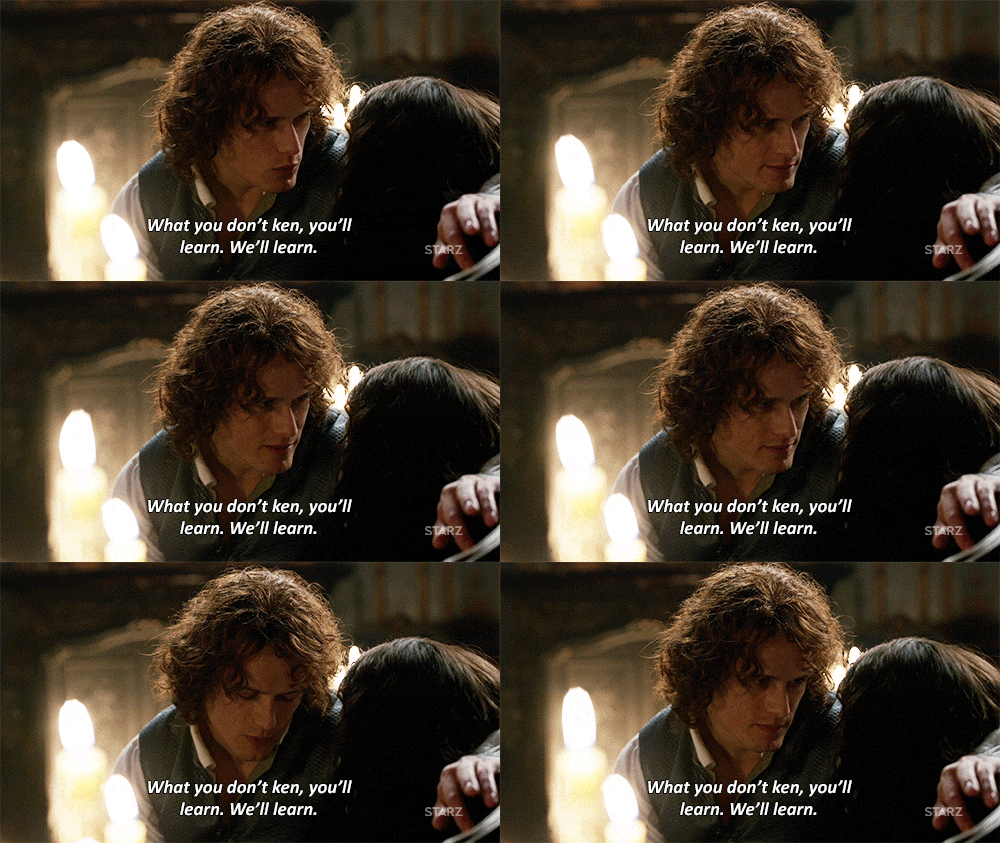
The plot of Outlander follows Claire Randall, a British former World War II nurse who, while on her honeymoon in 1945, touches ancient standing stones and accidentally travels to 1743 Scotland! Though she tries to return to her previous life (and husband), she can’t help but fall in love with a Highland warrior named Jamie Fraser.
Before you roll your eyes, I like to tell people that Outlander (named after Claire’s status as an outsider in the Scottish Highlands) is so much more than romance (and “soft-core p@rn” as people like to tell me). Sure, there’s spicy scenes, but it also has:
adventure
history (I learned so much more Scottish and American history from the show than I ever did in school!)
philosophy
religion
9 seasons (technically 8, but season 7 is split in two) and 10 books (9 out right now, the last is in the works) that take you all over the world. Dozens of characters you fall in love with. Many tears. Now that the show is over after 12 years, let’s explore what’s so Jewish about a very Catholic show.
FYI this piece ended up being so long, I split it into two. Be on the lookout for Part II next week!
Parallels to Jewish history
There are many similar themes in Outlander that we see in Judaism: exile and yearning for home, assimilation, the importance of family, and debates around morality, to name a few. But there’s one that stands out to me I’d like to focus on.
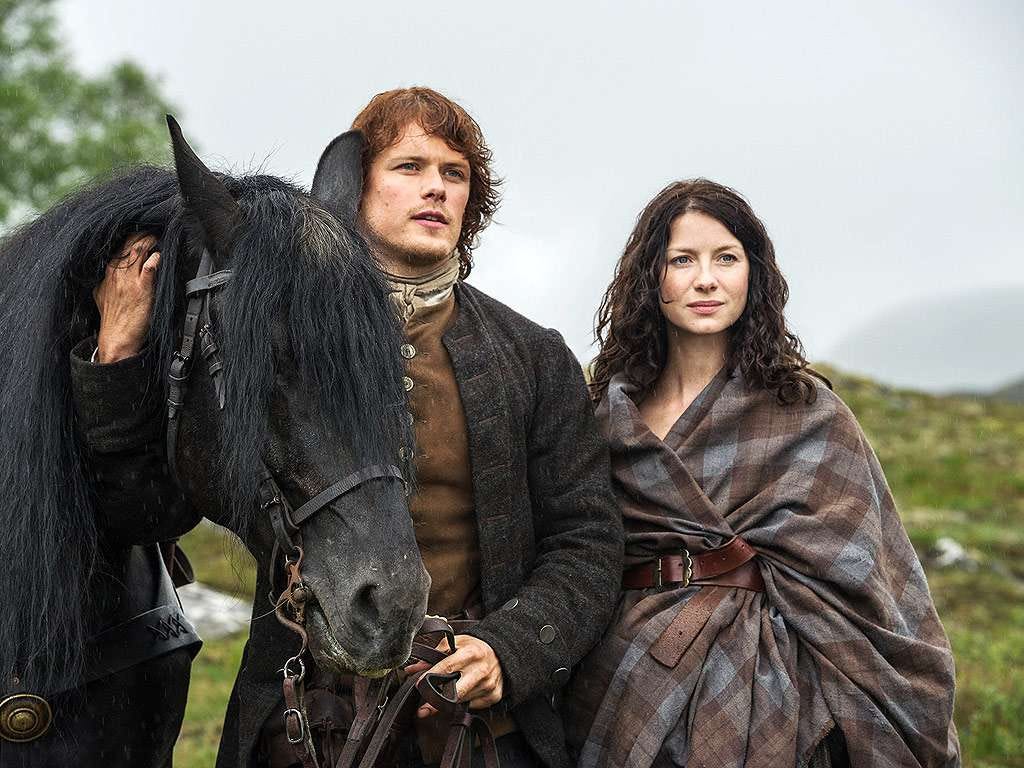
Fighting to preserve one’s identity & culture
If Claire were to time travel to, say, the 2nd century BCE instead of the 18th century CE (I’d totally watch that show!), she might have empathized with the Jews.
That’s because she would see a people rise up against a powerful empire to preserve their customs, identity, and traditions on their ancestral land.


I’m referring to the Seleucid Empire’s rule over Judaea under King Antiochus IV, and the suppression of Jewish customs like circumcision, Shabbat, and Torah study, and desecrating the Temple with pagan worship.
These examples are known today as “Chanukah antisemitism” because the Seleucids weren’t trying to kill the Jews (until the Jews rose up and fought back, of course); they were trying to “kill Judaism” by banning Jewish customs. And it’s when the story of Chanukah takes place!
In Outlander, Claire travels to 1743, at a time when some Highland Scots did not recognize the authority of the British government and remained loyal to the House of Stuart, despite being a part of Great Britain.
This was a conflict dating back to 1688, when King James II (of the House of Stuart), the last Catholic monarch to reign over England, Scotland, and Ireland, was overthrown by Protestant William III & Mary II.
There had been a few Jacobite uprisings1, as King James’s followers were called, and this tension culminated in the famous Battle of Culloden against the British in 1746, depicted in Season 2.
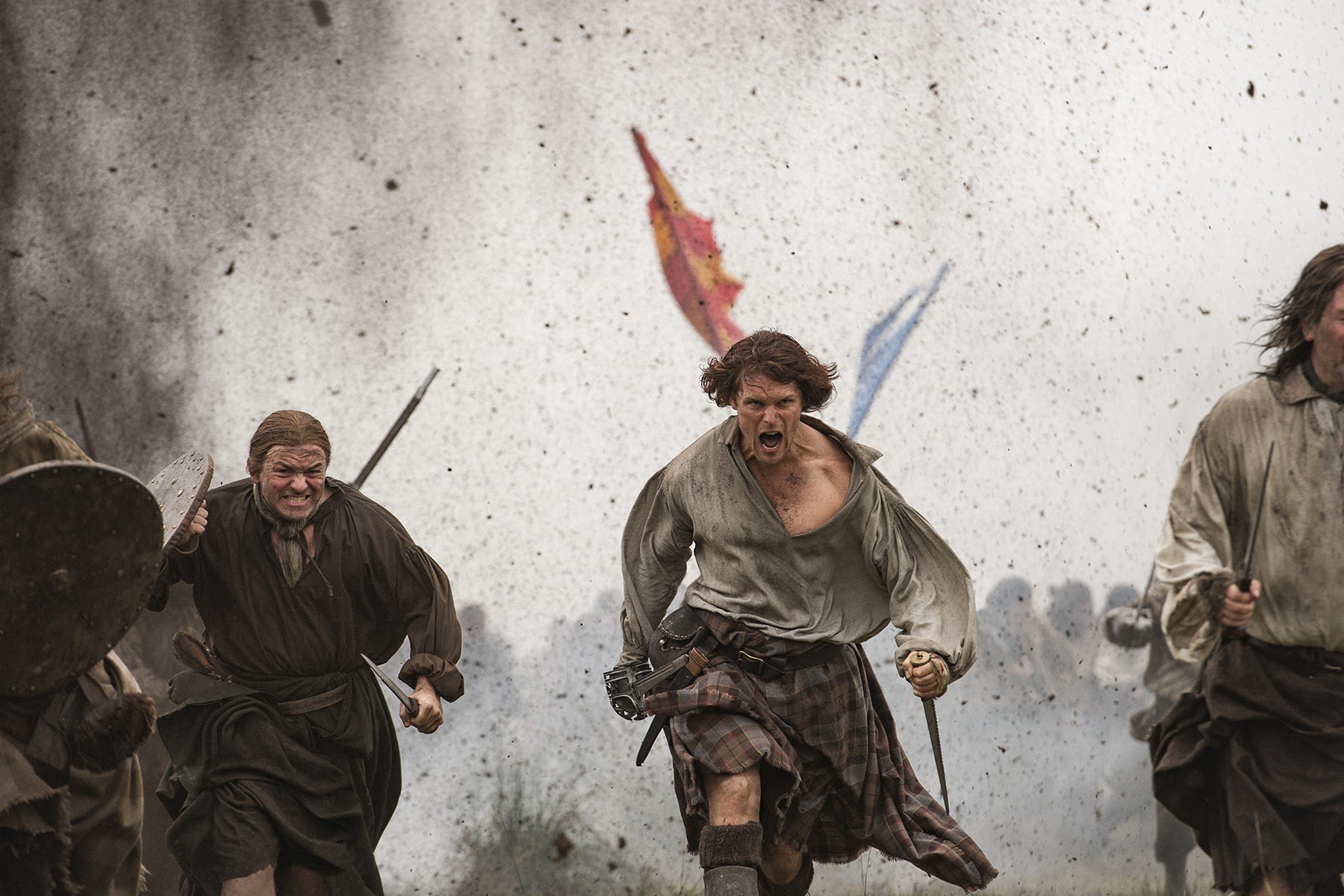
After the Jacobite defeat (not a spoiler, this is history), the British government imposed restrictions on Highland culture, like banning weapons and Highland dress2 (goodbye, kilts), and weakening their clan system that they’ve had for centuries.
Though not a perfect analogy (the biggest difference was that the Maccabees fought for religious autonomy from the get-go, while the Jacobites didn’t lose many of their cultural and religious freedoms until after they lost the Battle of Culloden3), the ‘Bees and the ‘Bites both fought fiercely to preserve what they believed was worth fighting for.
Internal disagreements
Another noteworthy comparison is that not everyone in either group wanted to revolt. Some Jews, mostly upper class, embraced Hellenistic culture, like speaking Greek, hanging out nude at the bath houses and the gymnasium, and surgically reversing their circumcisions4.
Not all Scottish Highlanders were Jacobites5. In fact, most weren’t. In Season 1, we see tension between Jamie’s uncles, Colum and Dougal MacKenzie. Dougal is passionate about restoring the Stuart throne through military victory, while Colum, laird of the MacKenzie clan, understands the dangers of rebellion and prefers diplomacy.
This plot line is reminiscent of the many disagreements within the Jewish community that have led to division and fracturing. Reminds me of an upcoming holiday.
Preserving identity in the diaspora
This theme of preserving identity carries into the diaspora experience of both peoples as well. In Season 4 of Outlander (incoming spoiler!), Claire and Jamie rebuild their life in America, bringing Scottish settlers with them (an actual example of settler colonialism, but you don’t see anyone calling that out).
In the show, the Scottish community abroad maintains their traditions like lighting the fiery cross6 before a battle, and speaking Scottish Gaelic (pronounced gal-ic, not gay-lic). They also frequent trips back to their ancestral homeland.
Meanwhile, the Jewish diaspora maintains a connection to its roots through language, ritual, and memory. By speaking the Hebrew language, reciting prayers that long for Zion (where Jews come from), and praying in a way that resembles the ancient rituals of the Temple, Jewish communities all over the world have maintained a connection to Israel by preserving these traditions.
Sure, Outlander has love, gorgeous gowns, and lots of drama, but maybe this franchise has resonated with me so deeply for another reason: that its themes of memory, resilience, and preserving identity across generations remind me of themes Jews have known for thousands of years.
Next week, we get even more Jewish, as we discuss the Jewish characters of Outlander, and compare them to real 18th-century Jews!
Shabbat Shalom!

Further Reading: When Scotland Was Jewish
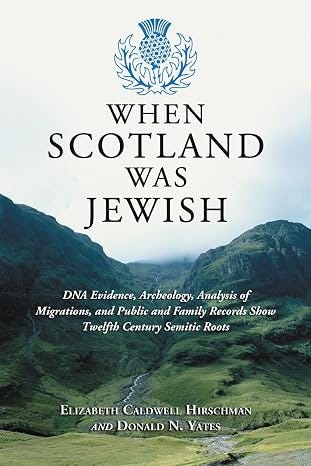
This book argues that much of Scotland's history and culture from 1100 CE forward is Jewish. The authors provide research and evidence using census records, archaeology, castle carvings, cemetery inscriptions, and more to prove that many of Scotland’s national heroes, rulers, nobles, traders, merchants, bishops, and more were of Jewish descent, their ancestors originating in France and Spain.
💦 If you like Outlander or AI, check out this Drop:
Why is my AI boyfriend so obsessed with Jews?

In an old Drop from 2023 when ChatGPT was just becoming a thing, I teach AI Jamie Fraser all about the Jews and the Holocaust. His reaction is... interesting. AI Maimonides also makes an appearance!
Read about them here: https://www.visitscotland.com/things-to-do/attractions/historic/jacobites
This came to pass in the 1746 Dress Act. https://www.scotclans.com/pages/1746-highland-dress-proscription-act
Another major difference is that the Maccabees were resisting foreign imperial rule while the Jacobites were fighting their own government, seeking to restore the Stuart monarchy rather than gain independence from an occupying empire. See, I told you Outlander teaches you so much!
Yeah, you read that right. https://www.cirp.org/library/restoration/hall1/
Only about 1-2% of the entire Highland population (or 5-9% of eligible fighting Highland men). Sympathizers from other parts of the UK like the Lowlands and England joined the Jacobite cause as well. https://www.clan-forbes.org/post/jacobite-uprising-1745
The Fiery Cross is the name of the fifth book (and, IMO, the most boring). https://scottishtales.substack.com/p/the-fiery-cross
Sing me a song of a Jew who is wise, oy vey could that lass be you? Neshamah tehorah she fell through a stone, this week’s Drop a delight and true.
Jewish themes are everything. You just have to have that searching Jewish analytical mindset that Miranda has once again proven she has. Outlander will never be viewed the same. Kol Hakavod and Shabbat shalom and a Highlander scotch L’Chaim. 🕎