

SEEKING: Your Passover Symbols!
Every year, I assign homework at my Seder: bring anything - a piece of art, music, a quote/article - that resembles any theme from the Exodus story, from freedom to frogs.
This year, I’m not inviting you to my Seder (sorry), but I’m inviting you to contribute! Send your “exodus object” to miranda.lapides@gmail.com before Passover, and I’ll share my favorites in the next Drop. I will give a prize to my favorite response!
For inspiration, read this old Drop or this one.
A few weeks ago, I gave a d’var Torah for Parashat Tetzaveh, which describes the dress of the kohen gadol, or the High Priest. The High Priest’s robes of fine linen and a breastplate adorned with 12 stones representing each of the tribes distinguishes him from the regular priests of the Mishkan. As I posed here, does this mean his garments were a symbol of superiority, or of responsibility?
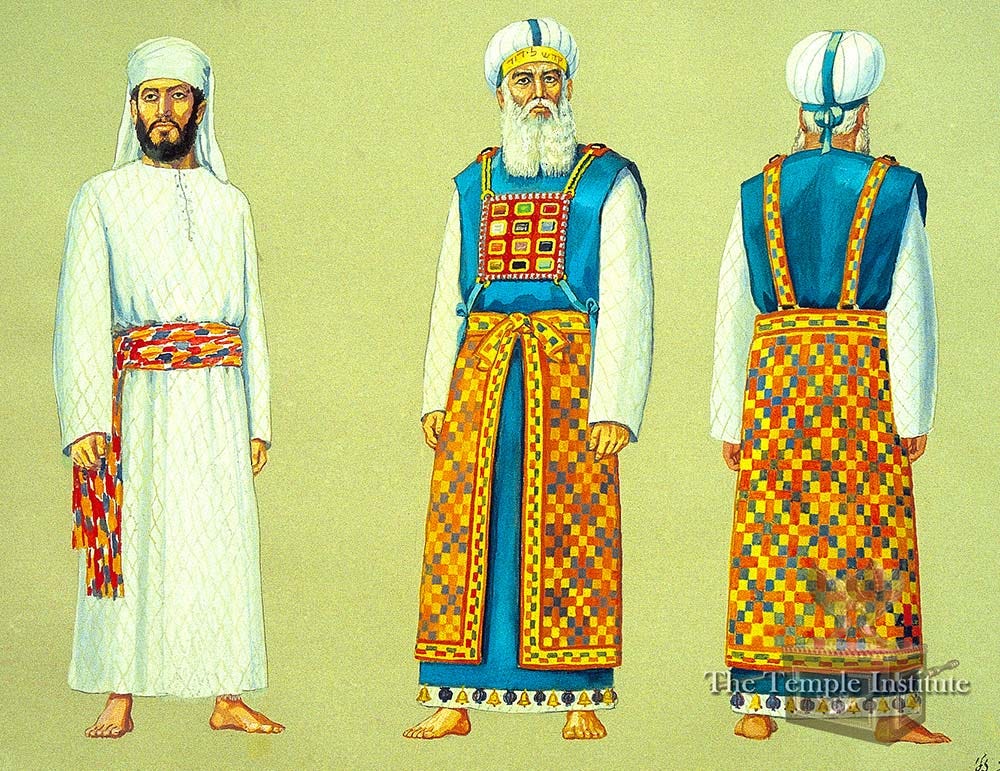
As you ponder that question, allow me to introduce Shlomo Bar-Ayal, a Freemason and an Orthodox Jew! I incorporated him into my d’var when I spoke about how we dress for the important roles we play, which you can read at the bottom of this post. I never published it because the war with Iran broke out, so I thought this week’s parsha would be perfect to bring it back! Especially since the priests are mentioned again (the priests that keep on giving… sacrifices).
Before we hear from Shlomo, what are the Freemasons? No, they’re not a secret society hiding treasure maps on the back of the Declaration of Independence.

Created in 16th-17th century London, Freemasonry is a predominantly fraternal organization that focuses on moral development, mutual support, and shared ethical values. Originally consisting of stonemasons, its teachings often use symbols from the trade, like a compass and a square (to remind members to act ‘squarely’ and with self-restraint), and the eye in the pyramid on the one-dollar bill (a reminder that G-d is always watching).
The members, known as brothers, gather in local lodges, with hundreds of thousands of lodges around the world. Some chapters accept women. There are about six million active members today. You could throw a stone anywhere and you’d likely hit a Freemason.
Shlomo is the 32nd Degree Master Mason of the Grand Lodge of the State of New York (which is a beautiful building!). But more relevantly, he’s an Orthodox Jew, which doesn’t conflict with his Masonic affiliation. In fact, his cultural and religious tradition enhances it.
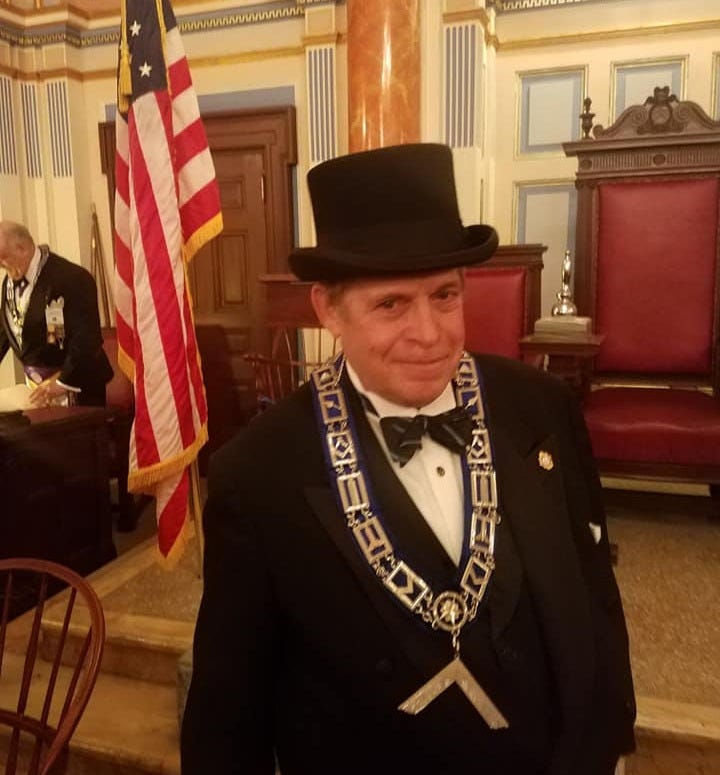
He writes a blog (here’s a great Passover post about the Four Questions) and has a podcast called The Jewish Freemason, where he explores the connection between Jewish thought and Freemasonry. Here’s Shlomo, our local treasure!
What made you want to become a Freemason?
My favorite uncle was a Freemason so it was something that I knew about and he was one of the best men that I knew growing up. The fact that he was accepted even though he was openly Jewish in Saginaw, Michigan said a lot about it. I also had the chance to meet other Masons along the way and was impressed by their dedication to the moral principles of the fraternity.
Freemasonry emphasizes moral development, brotherhood, and service. How do these values resonate with Jewish teachings and reinforce each other in your daily life?
Freemasonry is very close to Judaism vis a vis moral development, brotherhood, and service. When we read the Torah it is no accident that these are emphasized. Right now, for instance, we are reading the Book of Vayikra. In the middle of it we suddenly come across Parashat Kidoshim, which is concerned with our moral behavior. It says, in essence, that if you truly want to be holy then you have to follow these moral principles.
The concept of caring for your neighbor is emphasized throughout the Torah. There are a lot of laws concerning how we should live together.
Masons are required to believe in God, but we do not ask them how they do so. Like in Freemasonry, Judaism focuses more on morals and ethics. Abraham, for example, questions God’s judgment in the classic case of Sodom and Gomorrah. Abraham debates with God about destroying the city, because there might be 10 righteous people there. God takes on the debate, because God was not looking for somebody who was a believer, but somebody who was morally righteous. This tells us it’s the action that matters. What you do is more important than what you believe. This is a very Jewish and Masonic concept.
The Torah does not seem to command us to believe in God. The Ten Commandments start out with God making the statement “I am the Lord, your God who took you out of Egypt.” Note that this is a statement of fact, not a commandment per se. This fits in well with the concept in Freemasonry that all Masons are required to believe in God, but how they do so is left to the individual.
How do your fellow brothers see or perceive you as a Jew (if at all)?
Everyone knows that I am a religious Jew, and I have been accepted by the Brethren as such. I proudly wear my kippah and have taken to wearing my tzitzit out. They have given me the utmost respect in religious issues. When it comes to eating, kosher meals are always supplied to those who keep kosher.
We have traveled the world and have met Masons in many countries. They have all greeted my as a brother and treated both me and my wife with utmost respect. They also assigned brothers to be our guides in these countries.
What’s the biggest misconception you’d like to clear up?
The biggest misconception is that we are involved in politics. We stay away from politics as much as possible. I know quite a few active political men who are Masons. While in lodge they do not speak about any politics. I should point out that no lodge will endorse a political campaign. We do say the Pledge of Allegiance when opening the lodge in the US. In other countries they have similar customs.
That said, we do take moral stands. The Grand Lodge of New York has sent support to the Grand Lodge of Israel during the Gaza war. Not for political reasons, but for moral reasons.
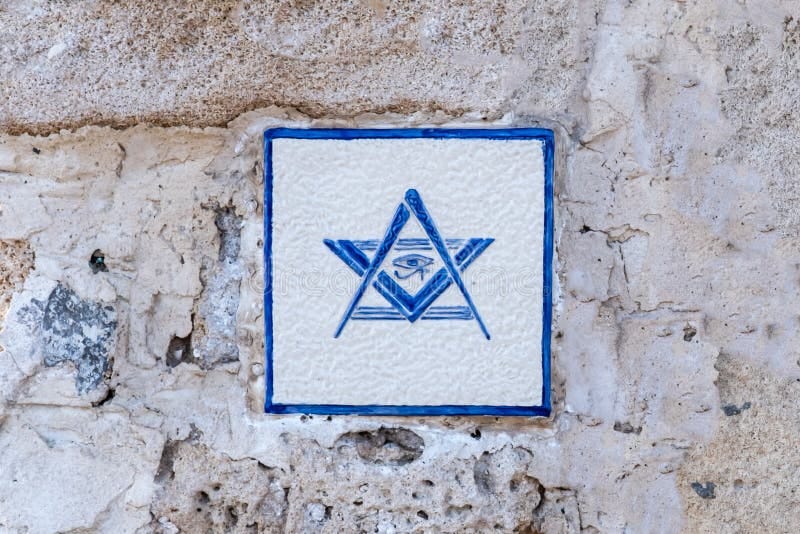
The biggest misconception is that we are trying to take over the world. If you look up conspiracy theories, you will find that there are as many about Freemasons as there are about Jews.
👉Here’s some history published by Yad Vashem on antisemitism against the Freemasons for accepting Jews.
We are not a religion nor a substitute for a religion. There are many Jews who are afraid that Freemasonry is a form of idolatry. We are not. My wife and I were on a tour of Freemason’s Hall in London. Someone noticed that there were pictures representing different religious ideas but there was not a picture of Jesus. The guide pointed out that that would be violation of Masonic principles. We do our best to stay away of a particular religion.
Any comment on National Treasure?
I loved National Treasure. Totally untrue but a lot of fun.

Lastly, what are your Shabbat and Pesach plans?
This Shabbat we are going to our shul, Congregation Ohab Zedek, on the Upper West Side for a Shabbat Hagadol for a Friday night seudah.
Then on Sunday we will be flying to Rome to spend Pesach on the Amalfi coast in a Pesach program. I will be speaking about the effect of the Bayit HaRishon on Western Civilization. Then I will give another lecture on the effects of Jews on the US Constitution and the effect of the US Constitution on the Jews.
Here’s Shlomo’s gracious contribution to my d’var from a few weeks ago on Parashat Tetzaveh:
“In Freemasonry it is usually required to be in a suit and tie at all meetings. When we have a special event then we are to be in tuxedos. When Grand Line officers attend a very special event then they will be in morning coats.
The reason for this is simple: Our goal is to make good men better. Men behave better when they are dressed better. Also, it makes a statement to us and the world that we are not just a bunch of guys getting together.
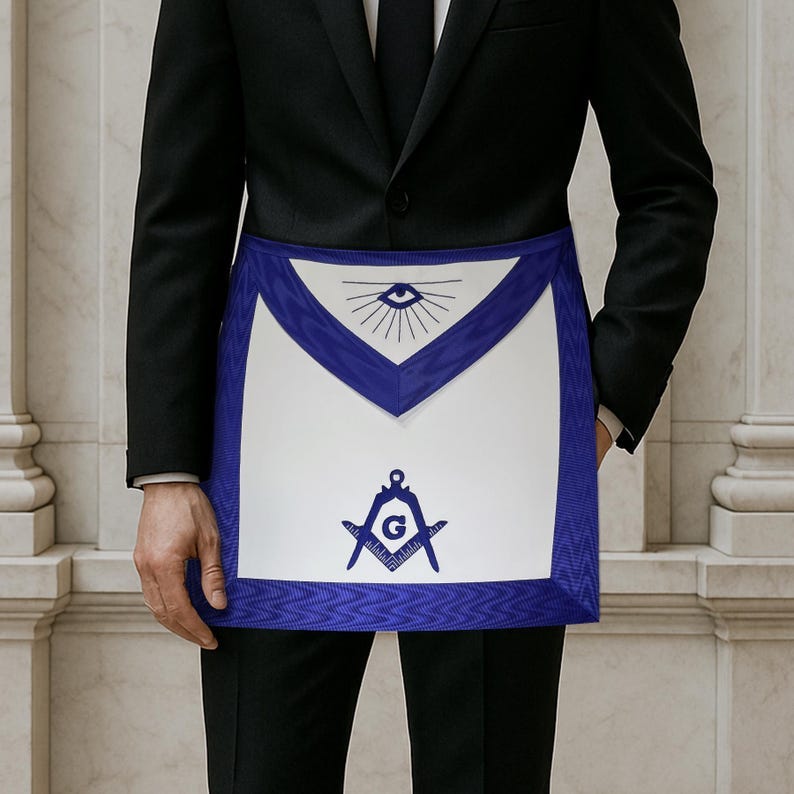
Now how does this fit into the parsha?
Let’s realize that there are certain fundamental reasons for the Kohanim to be dressed as the Torah mentions. First, they have to approach their duties with respect. They have to display that respect to the people since in a certain sense they are representing the common, i.e., non kohen, Jew to God. They are also representing God to the common Jew. In Masonry we are to be considered leaders of our communities. Thus we need to dress appropriately.
Another reason is that this ‘uniform’ takes individuality out of the equation. One cannot show off with a special garment. All are equal in service to God. In Masonry we wear aprons. This is a throw back to the days when we were actual stonemasons. While many of us have special aprons depending on our status within Masonry, the most important apron that we have is the plain white apron that we each received upon our initiation. That is the apron that we will be placed on our casket when we leave this world. It underlines a basic fact. We might rise to a higher station with the Craft but in the final analysis we are still equal.”
Good Shabbos and Chag Pesach sameach,

Very interesting about behaving as a better person if you dress better. One thing both have in common - free mason and orthodoxy - is the focus on men. Just had to say it. Also “delicious jams and jellies”kept running through my head!