

Hebrew Word of the Week:
This week, I attended a debate, or a vikuach (וִיכּוּחַ), at the Streicker Center between New York Times columnist Bret Stephens and J Street founder and president Jeremy Ben-Ami.
“Happiness is the ability to say: I lived for certain values and acted on them.”
-Rabbi Jonathan Sacks
Throughout April, I did an experiment on myself. Let me explain.
In the months leading up to this experiment, I have been wondering if I really live my life Jewishly.
I obviously live a Jewish life: I am a Jewish professional, I write a Jewish blog, and I attend Jewish classes and Shabbat dinners weekly.
But do I live Jewish values? Do I not only talk the talk (well, yes, I’m learning Hebrew חחח), but do I walk the walk? And I don’t mean to shul on Shabbos!
So, I chose an upcoming month (which was April, though I now realize should have been a Hebrew month; I’ve failed already!), and selected Jewish values by which to live. There are many more values I could have chosen, but I selected my list based on what felt most important to me as a Jew and on the areas I’m most interested in. I was also was curious to see if this “experiment” would make me any happier/more fulfilled, or more connected to my Judaism. You have to read through to the end to find out!
We’re in the process of counting the Omer, the days leading up to Shavuot and the moment when the Jews received the Torah. This is a period of personal reflection and character development. Any time is an ideal time for growth, but the Omer period feels especially intentional, as we move toward receiving the Torah and trying to become more aligned with its teachings. I hope my experiment of sorts inspires you to tap into one or more Jewish values!
🎁Before we dive in, mazel tov to the winner of the latest giveaway, a signed copy of Out of the Sky by Matti Friedman, Yael from Atlanta!
Prayer
“… to love the Lord your God and to serve him with all your heart and with all your soul…” -Deuteronomy 11:13
Before experiment: Ever since my transformative stay in Israel during the 12-Day War, I started reading some morning prayers, but I don’t recite them every day. I typically only pray on Shabbat in synagogue. I also have occasional off-the-cuff chats with G-d.
During experiment: During April, I tried to stay consistent in reciting the morning prayers. On days I didn’t have enough time, I recited Modeh Ani, the gratitude prayer. I also got bored reciting the same prayers over and over. I don’t know how people who pray every day don’t get bored! At times, it was challenging to connect to the repetitive theme of how G-d is all powerful. I wanted to recite something that felt more personal.
So, midway through the month, I switched from my traditional ArtScroll siddur to one that my cousin, Jay, got me called the Siddur Eitz Ratzon. This siddur describes itself as “a traditional prayerbook designed for those who seek spirituality and meaning beyond what they have found in conventional prayerbooks.”
And it really feels that way! For example, instead of the traditionally different lines recited by men (“Blessed are you… for not having made me a woman”) and women (“Blessed are you… for having made me according to His will”), the Siddur Eitz Ratzon reads, “Blessed are you… You have made me a Jew with an enriching heritage.”). I also like the line a few verses later, “You guide my steps, helping me walk on my intended path.” Poetry! What a way to begin your morning!

This experiment also introduced me to the bedtime prayers, which I never read until now. They brought me comfort, especially one particular night when I was upset about something and mentally spiraling.
I was listening to the new episode of my now former favorite podcast. The guest speaker being interviewed was an economist, but within the first ten minutes, it sounded like he was using this platform to spew antizionist and antisemitic hate and misinformation to millions of listeners without receiving pushback from the host.
As I paced around my room huffing and puffing, and sending minutes-long voice notes to my friends to complain, my eyes fell on my ArtScroll siddur (back to traditiooon!). I read the first few verses of the bedtime Shema in it and immediately felt calmer:
“Master of the Universe,
I hereby forgive anyone who angered or antagonized me
or who sinned against me —
whether against my body, my property,
my honor or against anything of mine;
whether he did so accidentally, willfully,
carelessly, or purposely;
whether through speech, deed,
thought, or notion…”
The Bedtime Shema offers an emotional and spiritual reset before shuteye. While I never finished reciting the whole prayer, I knew I could sleep easy, not thinking about an economist pretending to be a war expert. I guess I forgive him… for now.
Kashrut (Kosher law)
“So you shall set apart the pure animal from the impure… You shall be holy to Me, for I G-d am holy, and I have set you apart from other peoples to be Mine.”
-Leviticus 20:25-26
Before experiment: I’ve never been one interested in a kosher lifestyle, but I finally understand its purpose: to infuse Judaism and holiness into the mundane, even while eating. And ever since last year’s Israel trip (I told you it was transformative!), I stopped eating non-kosher animals for the most part. I try to keep kosher style on Shabbat to mark the day differently. To me, this means eating kosher meat and not mixing meat and dairy.
During experiment: One day in April, I took myself out for a burger. I was craving cheese, so I ordered a plant-based burger with cheese and all the fixin’s. When I took my first bite, I heavily regretted it. It was awful! I decided if I had to choose, I’d go meat patty sans cheese. The plant patty was just not worth it.
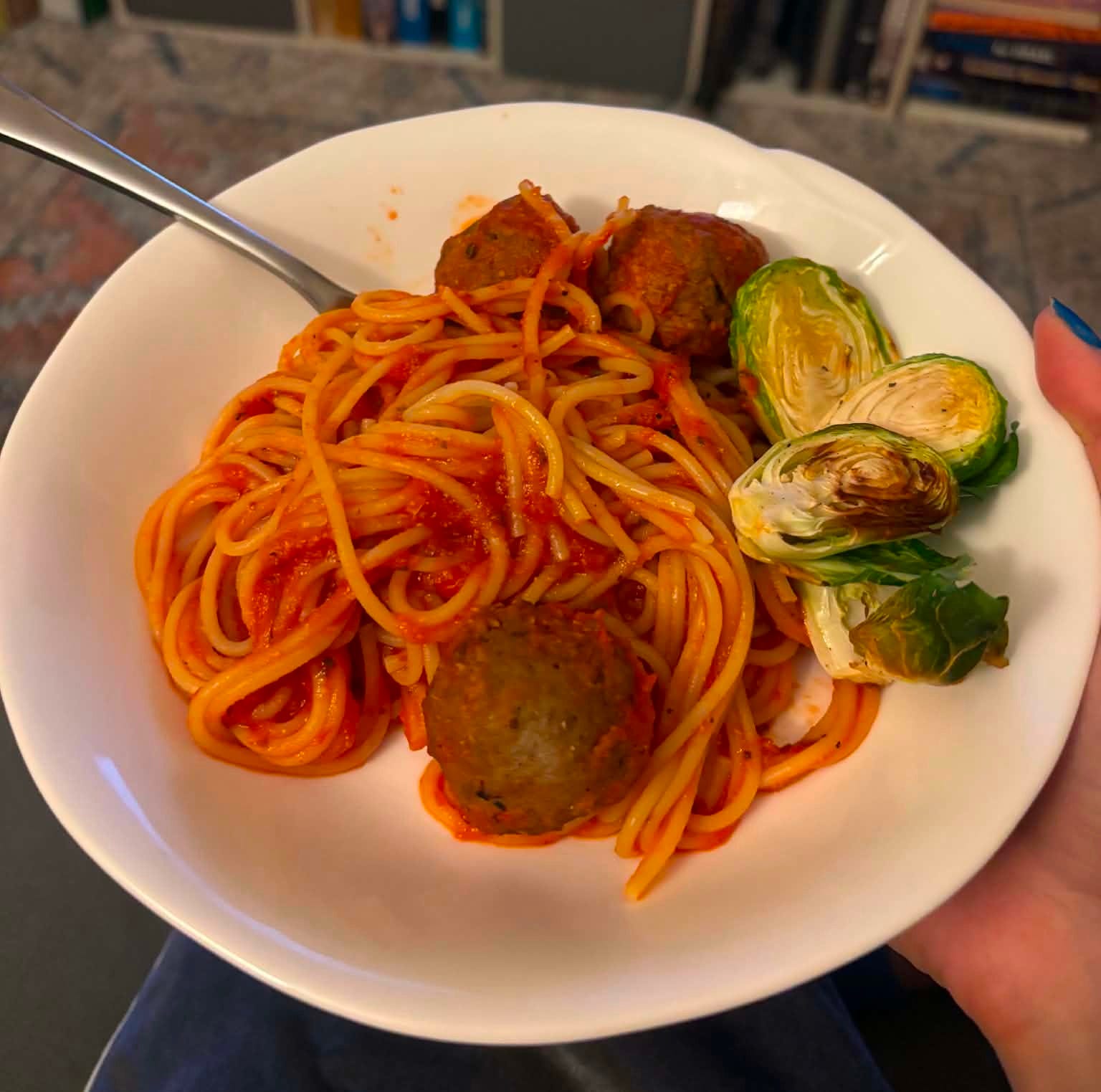
On a different night, I made spaghetti and meatballs (made of real beef). It was a rare time for me having spaghetti and meatballs without parmesan. I learned I didn’t miss the parm. I even posted about it on Instagram and received many messages of support and suggestions, which I will save for a later Drop on kashrut!
As I reflect on the month, I just realized I took a few bites out of my friend’s chicken melt the other night without thinking. I was hungry, okay?
Tzedakah (Justice)
“You shall not harden your heart nor shut your hand against your needy brother.”
-Deuteronomy 15:7
Before experiment: I donate once or twice a year.
During experiment: Living in NYC, I come across several people a week begging for money. If I have a spare dollar on me, I sometimes give, but I rarely carry cash. In the Mishne Torah, Maimonides lays out the rules for giving charity. He says that you are not required to give beyond your means, and you are not required to give to everyone who asks. But you should always respond to an ask with compassion or an effort to help if you can, treating every beggar with dignity. While I didn’t give to everyone who asked, I was more aware of it and treated each interaction with compassion. Instead, I gave to a friend who just happened to ask me at the right time! He was raising money for his NYC marathon campaign to support Blue Card, an organization that financially supports Holocaust survivors in need.
Chesed (Loving-kindess)
“Acts of kindness never die. They linger in the memory, giving life to other acts in return.” - Rabbi Jonathan Sacks, From Optimism to Hope
Before experiment: Not to talk myself up, but acts of kindness come naturally to me. I was always taught to just be nice to people! But it’s hard to go above and beyond, especially when you don’t want to. Chesed reminds us that we are obligated to perform acts of deeds that benefit others. Many Jews do this through volunteering, which I have done only once this year. 🫣
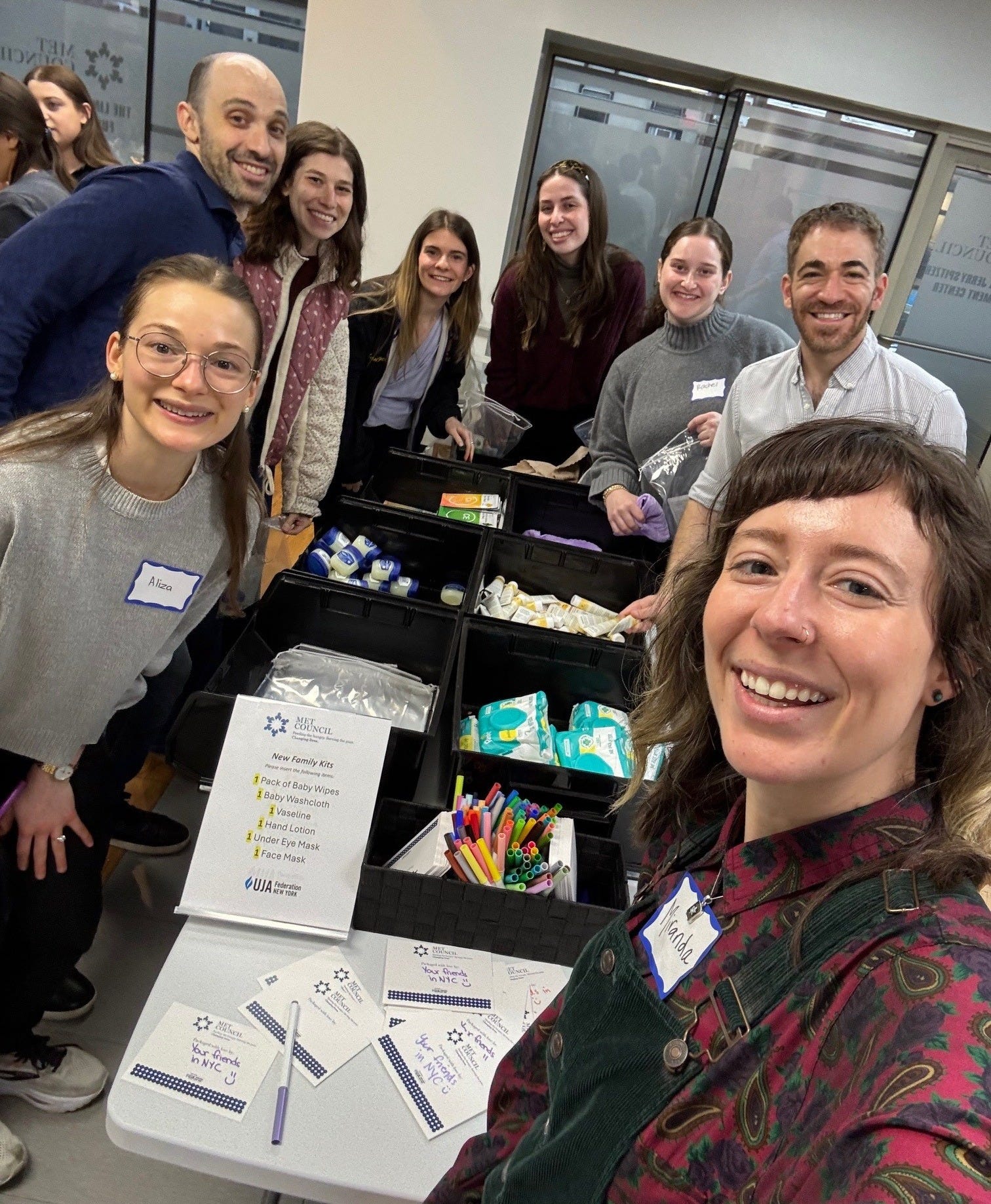
During experiment: … until this week, when I volunteered with Met Council, America’s largest Jewish nonprofit that serves New Yorkers in need (which includes non-Jews). Together, we packed thousands of toiletry kits for families in the Bronx. I met new people and had fun!
Learning
“Do not say ‘When I am free I will study,’ for perhaps you will not become free.”
-Pirkei Avot 2:6
Before experiment: If you know me, you know I love learning. Let’s just say this value was easier keep than the kosher one!
During experiment: I attended two Torah classes: one on lashon hara (evil speech) by Rabbi Arielle Stein at Central Synagogue, and one on bikur cholim (visiting the sick) by Rabbi Ben Varon (yes, our favorite chaplain!) at AltShul. No notes on the experiment here - I just want to share with you a taste of what I learned:
3 Types of Gossip (All bad, don’t do them)
Motzi Shem Ra: spreading false, negative information; slander
Lashon Hara: speaking negatively about someone even if the information is true
Rechilut: tale-bearing; telling a person what someone else has said about them
Reflection
I obviously live a pretty, pretty, prettaaayy Jewish life already. But carving out time to focus on core values has made me think about them more: why they matter so much in our tradition, how to incorporate them into my life, and what other values I can practice with intention.
Now that April is over, do I feel happier? More fulfilled? While I don’t feel all that different, I can say with resounding confidence that I had fun along the way. Sure, I struggled through plant-based burgers on my kashrut journey. I felt stingy when I only gave tzedakah once, and it wasn’t even that much. But I made friends while doing something meaningful for my community. I enjoyed pausing to pray in my busy mornings or evenings, even if not every day and even if I stopped midway and gave up. I learned to give myself grace, and I am all the better for it.
Now that it’s May, it’s time to return to my shrimp-and-gossip-filled life. Just kidding ;)
✨ Jewish Joy of the Week
In another edition of Jewish geography, my work recently hosted a third-generation Holocaust survivor to share her grandparents’ experiences in Hungarian concentration camps. She recounted their journeys of survival, which included moving to a Philadelphia suburb and her grandfather becoming a Hebrew school teacher. While sitting in the audience and hearing this story, my colleague made the connection that this speaker’s grandfather was her very own bat mitzvah tutor many years ago! With tears, they embraced. It was a beautiful moment of Jewish connection.
Shabbat Shalom!

💦 If you like self-development, check out this Drop:
What's in Your Jewish Pie?

While the work of reflection, repair, and return may feel daunting, the Torah tells us it’s already within our reach. With this in mind, I’ve created a sort of framework to reflect on this idea and see where I could apply myself more Jewishly in the year ahead.
you make a grown man cry...your father
Another great drop, kol hakavod on your dedication to exploring so many aspects of Jewish identity. Sorry to hear about your loss of favorite podcast. FYI if I could only listen to one podcast I would have to pick EconTalk, maybe check it out if you're not familiar. Great conversations about diverse interesting topics (not only, and not even mostly economics, despite the title). Even before Oct 7 this would have been my favorite, but especially since then.