

Hebrew Word of the Week:
I was delighted to find a recording of the Moomin theme song in Hebrew. From that translation, I learned the word for wonderful/marvelous, which is mufla (מופלא). How marvelous!
Weird transition: This week was Tisha B’Av, the saddest day on the Jewish calendar.
For those who have been here a while, you know how fickle my relationship with this holiday has been.
I’ve written about Tisha B’Av from multiple angles, from arguing we should be celebrating life instead of mourning our past (which I feel differently about today), to writing about how October 7th changed my view of TBA (which inspired someone to start observing it!).
And this year, I had a completely different idea for TBA content, until I had an interaction that’s been sitting with me. It was one of those moments I’ve written about that could have been educational had I spoken up.
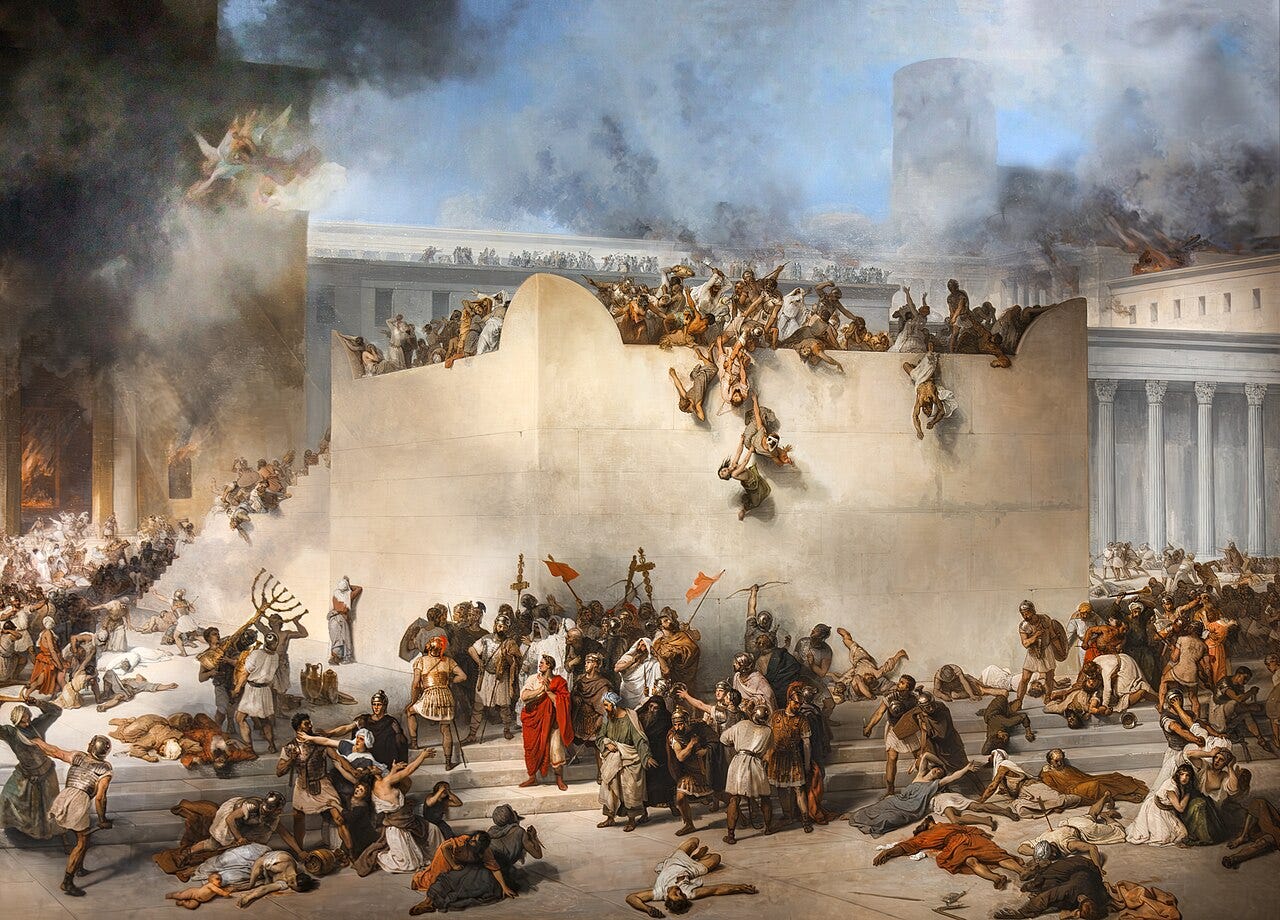
I was in a Jewish setting that was discussing Tisha B’Av and sinat chinam, which is a big theme of the holiday.
Sinat chinam: Baseless hatred.
The Rabbis taught that the Second Temple was destroyed by baseless hatred. This includes infighting between internal Jewish factions and senseless animosity that fractured the Jewish people, making them vulnerable to outside forces. Rabbinic tradition uses Tisha B'Av to teach that a community divided by baseless hatred is spiritually and physically fragile.
The rabbis who developed the Babylonian Talmud in the 6th century CE suggested this moral explanation for the fall of the Second Temple:
"However, considering that the people during the Second Temple period were engaged in Torah study, observance of mitzvot, and acts of kindness, and that they did not perform the sinful acts that were performed in the First Temple, why was the Second Temple destroyed? It was destroyed due to the fact that there was wanton hatred during that period. This comes to teach you that the sin of wanton hatred is equivalent to the three severe transgressions: Idol worship, forbidden sexual relations and bloodshed.” -Yoma 9b
Referring to the idea that sinat chinam brought about the destruction of our spiritual home, someone in the group discussion said, “It’s so full of Jewish guilt. The rabbis always do this! They did this with the Holocaust and now you’re telling me they did this for Tisha B’Av.”
Okay, I am the last person to defend the rabbis, but I immediately and silently took issue with this seemingly baseless dismissal of baseless hatred.
My mental wheels were turning as I laid it out in my head: Yes, a small number of Orthodox rabbis have made the ridiculous and disgusting claim that six million Jews died in the Holocaust because they weren’t observant. In their eyes, the Holocaust was divine punishment for being tempted by the Enlightenment, socialism, and Zionism.1
Pretty awful thing to say. But is that the same as the rabbis’ belief about sinat chinam? No.
One major difference between these two ideas is who was spreading them. The Holocaust-as-punishment claim was made by a few fringe rabbis, whereas the idea that sinat chinam (SC from here on out!) led to the destruction of the Temple became a part of the foundational texts of rabbinic Judaism.
But there’s an even more important difference: historical context. The idea of SC didn’t come out of thin air.
By the 1st century CE, Judea was deeply divided among several factions steeped in baseless hatred. Some of the major groups included:
Pharisees – prioritized tradition, emphasizing Torah study and Oral Law. Comes from the Hebrew word for “separatists,” since they separated themselves from those who didn’t strictly observe.
Sadducees – the priests who controlled the Temple and rejected the Oral Law. They were often rich and befriended the Romans.
Essenes – mystics (possibly connected to the Dead Sea Scrolls) who believed the Temple leadership was corrupt.
Zealots – nationalists committed to armed resistance against Rome who broke away from the Pharisees because they wanted to fight the Romans at all costs, while the Pharisees hesitated.
Sicarii – an extremist group against any form of government, known for assassinating Romans and fellow Jews they considered collaborators, often with small daggers (their name means “dagger-men”).2
Clearly, there was a lot of disagreement, extremism, and violence at this point in Jewish history.
But it wasn’t only the rabbis who noticed this. Historians saw it too.
Josephus, the famous Jewish historian from this time period, documented the infighting, and how the different factions burned each other’s food supplies.3
Historians also blame the Hasmonean Civil War circa 67 BCE for the demise of Jewish sovereignty in the Land of Israel. This involved two royal brothers - Jonathan Hyrcanus and Aristobulus - fighting over who would rule Judaea after their mother died.
Things got ugly and the brothers just haaad to bring the Roman general, Pompey the Great, into it to see which brother he’d side with. Instead, Pompey laid siege to Jerusalem, bringing the last sovereign Jewish kingdom under Roman rule.4
Returning to the rabbis, they were saying more than, “We’re doing hateful things to our fellow Jews.” They were pointing out that a fractured society is a danger to itself, making it more vulnerable. And sure, the Jews of Jerusalem had real disagreements that were not always baseless. But the rabbis argued that their disagreement became destructive hatred.
They even used the story of Kamtza and Bar Kamtza to show how petty hatred can have catastrophic consequences.
Kamtza and Bar Kamtza in short: A man accidentally invited his enemy, Bar Kamtza, to a party, then publicly humiliated and expelled him while the city's rabbis did nothing. Seeking revenge, Bar Kamtza convinced the Romans that the Jews were rebelling, helping set the stage for Jerusalem's destruction.
The real lesson here is to keep your Partifuls private and double check your guest list!
Hatred, division, polarization… we’ve seen this theme play out in recent history. Israel was still politically divided in 2023 because of the previous year’s judicial reform. Military analysts and political commentators believe Hamas took advantage of a fractured Israeli society, leading to the brutal attack on October 7th.
But Hamas is not the Roman Empire. And Jews, after 2,000 years of exile, have regained sovereignty in their ancestral land. But maybe the rabbis were onto something about baseless hatred being a cause of societal collapse and suffering.
And again - it’s not just the rabbis! The more I observe Tisha B’Av (this is my fourth year) and attend classes, the more I realize that part of our tradition is to look inward on this day. Not cast full blame on the enemies that persecuted us and drove us to exile throughout history, but to also ask ourselves what part we played in it this and how we can do better. It’s the lead-up to the High Holidays.
Rachel Goldberg-Polin said it best on the recent Tisha B’Av episode of “Call Me Back with Dan Senor”:
“Woven into our tradition is always: we have huge mirrors that we hold up and we say, ‘What part did we play in this?’ And that makes some people very uncomfortable. Don’t get me wrong: No one’s giving anyone who does something terrible a pass. It’s just that part of the DNA of being part of the Jewish tradition is we also say, ‘What were we doing at the time?’
-Rachel Goldberg-Polin
So these were the thoughts bouncing around in my head during the group discussion after someone dismissed the rabbis. I was too busy recounting Jewish history with myself when the window for an educational moment passed.
Here’s said educational moment. And, not to sound like a hippie, but the only way forward is through ahavat chinam, baseless or unconditional love. The decision to choose love, generosity, and compassion for your fellow Jews, even when it’s hard. Or, at least, don't let your hatred be baseless. Make sure your hatred always has a reason! ;)
Thankfully, six days after the saddest day of the year comes Tu B’Av, the day of love. It gives us a chance to practice loving without a reason.
Shabbat Shalom! May your hatred have a base,

💦 If you like Jewish growth, check out these Drops:
Be confident in your Jewish knowledge

You ever have something to say and hold yourself back because you think, "Well, maybe I'm wrong or it sounds stupid?" Don't. This is a lesson learned, featuring matzah!
How October 7th Changed My View of Tisha B'Av

"I understood the difference between reading about a tragic moment in time, and feeling my stomach drop as I worried about the future of my people."
It was hard to find one article that covered multiple rabbis who believe/d this (I only found separate articles focusing on individuals), so here’s one with the Rebbe’s response: https://www.jta.org/archive/lubavitcher-rebbe-rejects-assertion-that-holocaust-was-divine-punishment
Here’s a good beach read: https://penelope.uchicago.edu/josephus/war-6.html
Read about this history and its archaeological proof in Israel on Trial by Roy Altman!
Well done and reasoned. Nice piece.
Also, this Drop reminded me of this short talk (only about 18 minutes) by Dara Horn called "The Eicha Problem," (Eicha is the Hebrew name of the book of Lamentations) from about 14 years ago. Unfortunately, even more relevant today than when it was given.
https://youtu.be/_MYE_usN__E?si=dBRldI_k3yWPIkws
Also there's a great follow-up conversation with Dara Horn and Ruth Wisse.
https://www.youtube.com/live/gf6hcGrlpUM?si=2NDvBvvL6nkfznCd
Both videos highly recommended if you haven't seen them.