

Hebrew Word of the Week:
Shame in Hebrew is busha (בּוּשָׁה). You hear this one at anti-Bibi protests often!
One time when I was hosting Shabbat dinner, I had everyone go around the table and name something they’ve stolen (yeah, I have fun ice breakers). Someone said parking meter spots. Another person said wine glasses from fancy restaurants (okay, that was me). Somebody even said clothes from TJ Maxx. Everyone has stolen something, whether they want to admit it or not. If you’re feeling brave, comment on this post with something you’ve stolen!
This week’s Drop is kind of a follow-up to last week’s, when I mentioned I lived out some Jewish values in April, like praying, learning, and giving tzedakah more.
What I didn’t mention in that piece was my attempt to also observe negative commandments, like refraining from lashon hara (gossip) or murder. I’m happy to report I survived April without murdering anyone.
Out of the 613 commandments in the Torah, there are 248 positive commandments ("do's") and 365 negative commandments ("don'ts").1 Rabbinic tradition teaches that there are 248 “do’s” for each of your limbs and organs. This is because mitzvot engage your whole being. There are 365 “don’ts” just like there are 365 days in a year, since avoiding wrongdoing is a daily practice. These prohibitions provide restraint and encourage a moral life.
One big “don’t” in Judaism — so big that it’s one of the Ten Commandments — is stealing. I don’t steal often, only wine glasses, and before you judge me, judging is another prohibition! Plus, I used to know someone who stole cutlery from The Cheesecake Factory, sooo… but who am I to judge?
During my month of Jewish values, I technically stole something. I was heading uptown from the Upper West Side for a Shabbat service, and I hopped on the back of a bus without swiping my OMNY card to pay the $3 fare.
Our mayor says the buses will be free, but until they officially are, I usually pay. I just chose not to pay this time, and was judged for it by two older men sitting in the back.
“That little girl snuck onto the back of the bus,” one of them said to the other while looking right at me. The other one stared at me and mumbled something inaudible.
Little girl! I was so enraged. First of all, I’m a woman, not a little girl. (I actually wasn’t mad at this comment; it’s good to know my Korean skincare keeps me looking youthful.) I was more annoyed about his judgment. Some people can’t afford to pay for the bus. In less affluent neighborhoods, fare evasion is all too common. While I could afford the fare, he doesn’t know that about me or my financial situation.
I then looked down and remembered I was wearing my new Shabbat Drop t-shirt. It says Shabbat Shalom (hey!) on it, referencing the campy Shabbat song I sing on my Instagram stories every Friday to spark joy.

I was suddenly full of shame. Here I was, hitching a free ride (technically stealing) that wasn’t mine to take, with my Judaism on full display. I may as well have worn a shirt that said, “Here’s a Jew stealing.” (On the back: “And she’s late to shul.”) Busha!
It made me think of chillul Hashem, or desecrating G-d’s name, which was what I was doing by publicly committing a sin. Actions like stealing, embarrassing someone, or delaying a worker’s wages, for instance, make Jews look bad. And making Jews look bad makes G-d look bad. As representatives of G-d’s moral code, Jews should instead sanctify G-d’s name (kiddush Hashem) to bring honor and respect to the Jewish people, and therefore G-d.
At first, it sounds ridiculous. We should refrain from doing bad things simply because they’re bad, and do good deeds simply because they’re good. We shouldn’t care what people think about us. But maybe by living a life based on values, we can inspire others to live a more ethical life. We can set a good example.
Perhaps by telling you my story, it will encourage you to lead by example. May we all sanctify G-d’s name when we’re out and about in this world!
Want to hear something chilling?
That night, I was flipping through the latest issue of Hadassah Magazine. I always enjoy learning from Joseph Lowin’s “About Hebrew” column on the last page, which explores a different Hebrew root and its related words, usually connected by a theme. This issue’s theme was about, well, stealing. 👀
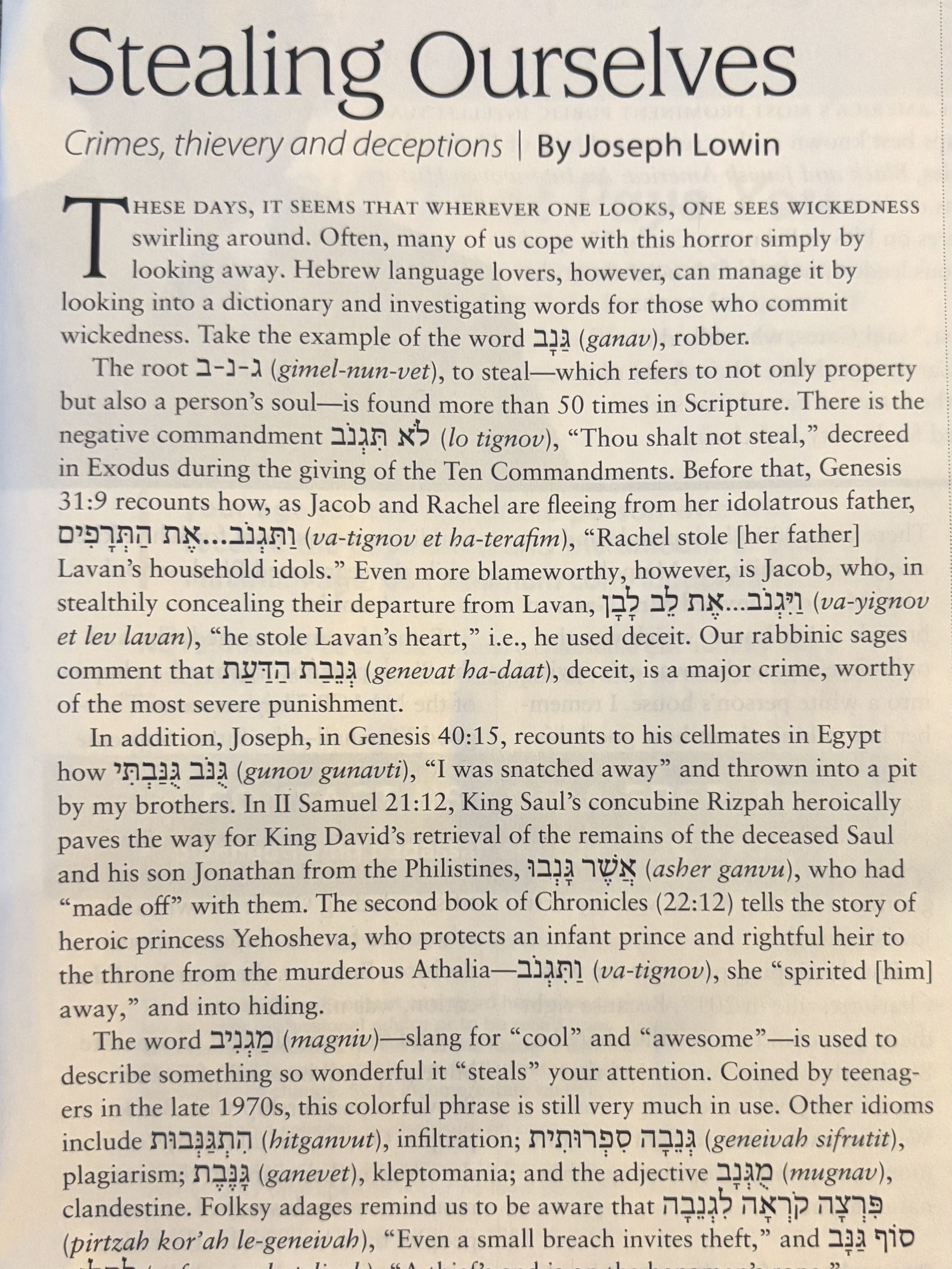
Good Shabbos. Off to catch a bus,

✨ Jewish Joy of the Week
My colleague made Bamba Rice Krispies Treats from Adeena Sussman’s new cookbook, Zariz, full of quick and easy Israeli recipes. They were dangerously delicious!

Roughly 369 commandments are considered applicable in the modern era, consisting of about 126 positive and 243 negative commandments. This is because many of the mitzvot had to do with the Temple. https://www.yeshiva.co/ask/9029
Is it considered stealing when stealing is expected, like hotel towels?
Ah so that is where it went!
But you shared yours with me and sharing is mutual stealing and we are both the richer for it