

Shalom from California! Just like Joseph in this week’s parsha, Vayigash, I too am having a reunion with my brother! But with less weeping.
This year, I hit a personal reading record (43 books, but who’s counting), and when I wasn’t lost in romantasy (helloooo Sarah J. Maas fans!) my list was prettyyy, prettyyyy Jewish. Here are my favorite Jewish books I read this year.
Let me know in the comments if you’ve read any of these, and what Jewish books you’re reading or would like to read in 2026. :)
Shabbat Shalom & Happy New Year!
See you in two weeks,

Mrs. Lilienblum’s Cloud Factory by Iddo Gefen

Hands down the quirkiest and most entertaining novel I read this year! Following an eccentric family in the Negev whose matriarch invents a machine that turns sand into rainclouds, this satirical novel contrasts the scrappy, small business mentality of the desert with the high-powered, fast-paced Tel Aviv start-up world. The characters are rich and soulful, and the surrealist story weaves Jewish themes throughout, from witty tales of Chelm to Kabbalah. But nothing carries the plot like the Negev itself, as if it were one of the main characters. Can’t recommend this one enough!
The Source by James Michener
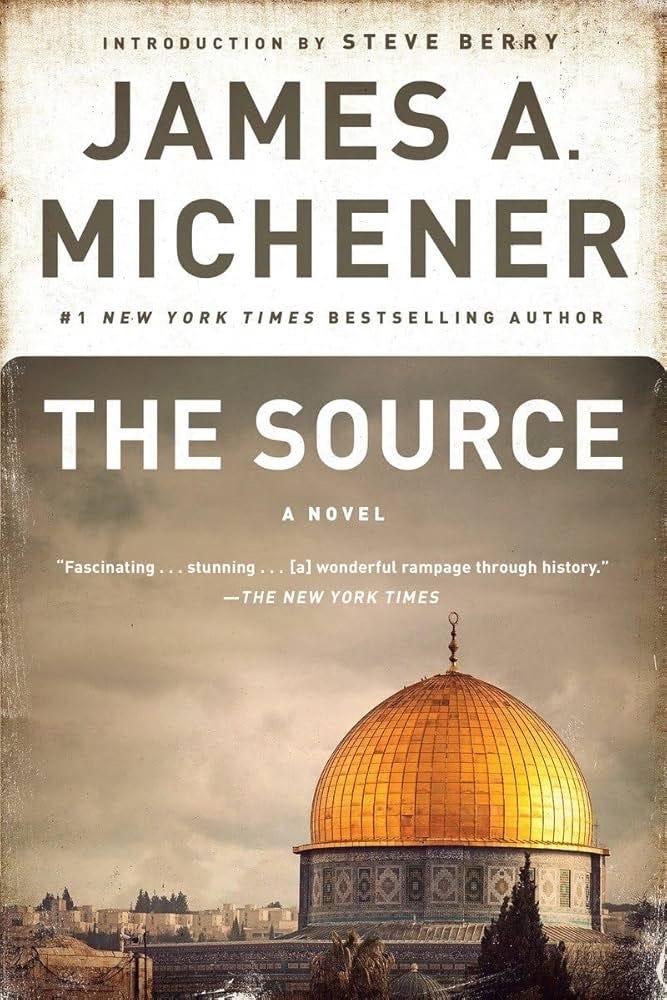
I fell in love with James Micheners’ novels when I read Alaska to prepare for my trip to Alaska last year. Like another favorite author of mine, Edward Rutherfurd, Michener captivatingly teaches about the history of a particular place through thorough research and vivid detail. So when I learned he had a book on the history of Israel and the Jewish people, I jumped at the chance to read it.
The book hops back and forth between past and “present,” starting in 20,000 BCE following a prehistoric man named Ur, to the site of a fictional archaeological dig in the ‘60s based on Tel Megiddo. Once you get past the cheesy beginning on the tel, you span millennia of rich Jewish history, including both exiles from the Land of Israel, the Seleucid Empire, Jesus, the formation of the Talmud, the Crusades, the Inquisition, and the War of Independence.
Wow this book is dense, but that goes to show how much history we have! The Source is also an engaging way to learn about what makes us Jews tick. For example, characters debate each other on matters of the Jewish soul, like if we should follow what the rabbis say in the Talmud, and whether or not Israel should be a completely religious state. Do we need laws to ensure our survival? What kind of country do we want to be? The main character on the 1960s tel is not Jewish, so it’s also fun following the journey from his perspective as he learns about and explores these issues. If you have the time, read it.
The Torah in the Tarot by Stav Appel
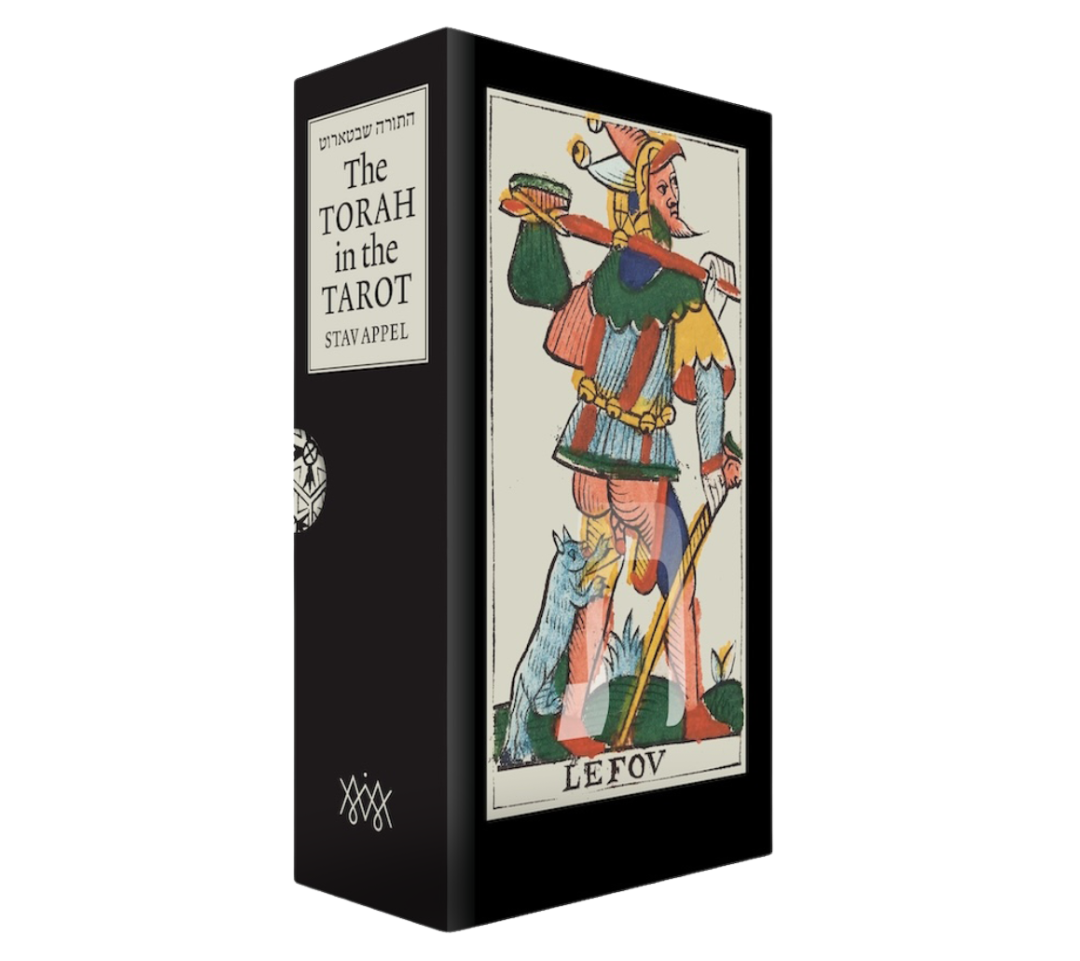
My favorite non-fiction I picked up this year is one scholar’s argument that a particular Tarot deck from 17th-century France may have been used as a means for secret, illegal Jewish education. It’s so interesting and compelling, I wrote a whole separate Drop on it. Bonus: it comes with a copy of said Tarot deck!
A Passion for Israel: Adventures of a Sar-El Volunteer by Mark Werner
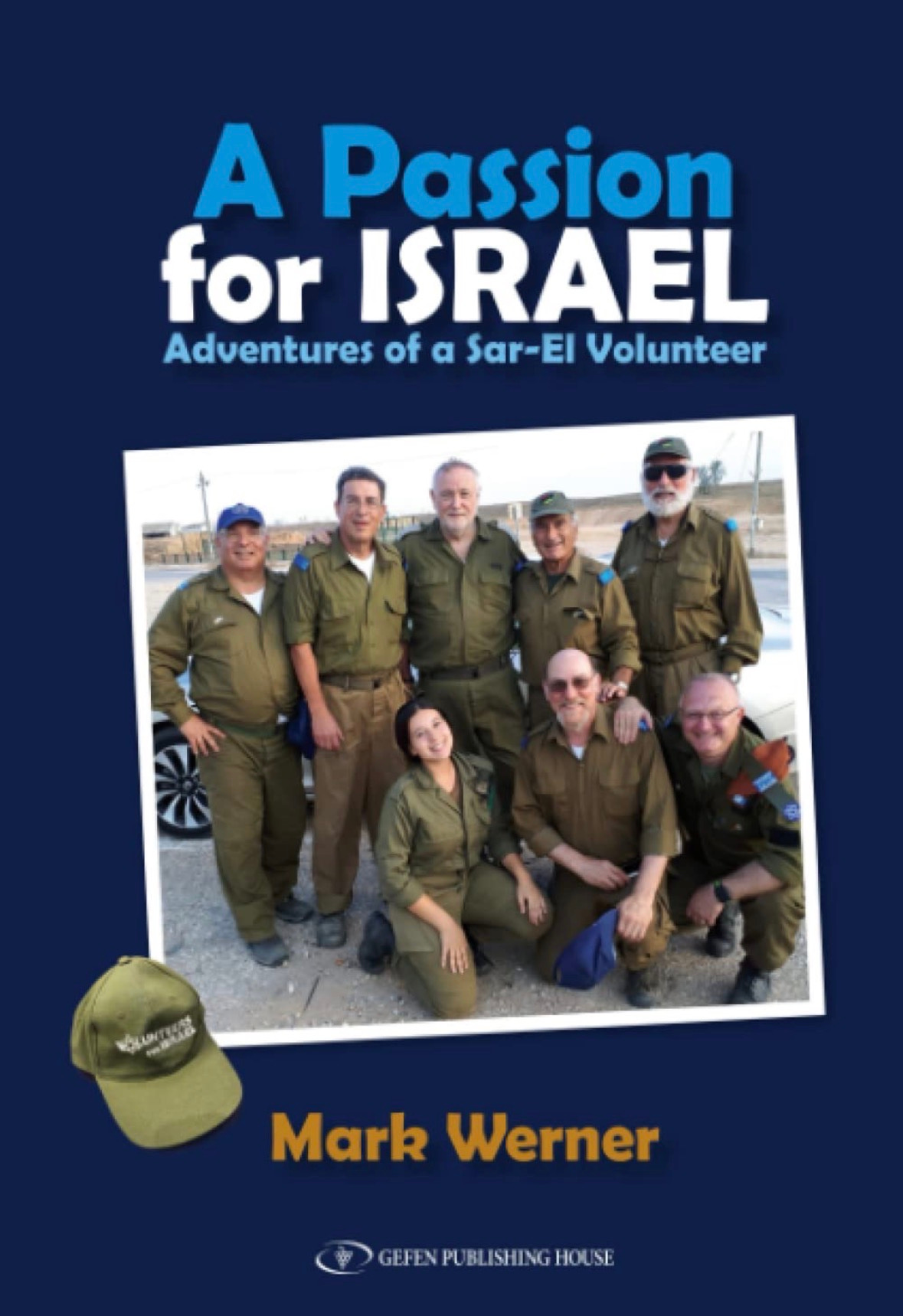
If you followed my Israel adventures this summer, you’d know I volunteered on an IDF base with Sar-El just before the 12-Day War with Iran. I met amazing people on this one base in the Negev (can you tell I love the Negev?), other like-minded volunteers from Canada to France. One volunteer, who had done this work with Sar-El over 25 times, had written not one but two books about his experiences. He was kind enough to give me his first book which I devoured.
In his first installment, Mark Werner documents his volunteer stints from 2006-2019. Each chapter describes his experience on a different base around the country, and opens up with history of what’s going on in Israel and in the region at the time. But where there’s a lot of detailed history, Mark also infuses heart into the narrative, with entertaining and sometimes funny stories of the friends and balagan (“chaos”) he meets along the way.
Personally, reading Mark’s book was therapeutic after having left Israel while being there during two wars at the same time. It was also eye opening (and depressing) to read about both Hamas and the weaponization of Iran’s nuclear program gaining ground in the early 2000s, and comparing that history to today. Depressing more in terms of Hamas, and not so much with the Iranian regime, considering we whooped the latter’s tuchus in June.
As a Jew: Reclaiming Our Story from Those Who Blame, Shame, and Try to Erase Us by Sarah Hurwitz
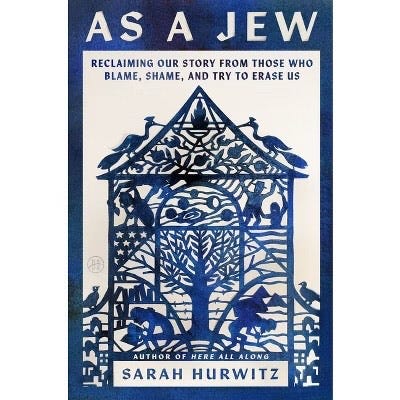
We all know and love Sarah Hurwitz’s Here All Along. So much, in fact, that I deemed it my favorite Jewish book of all time.
So you bet I was excited when she came out with her second book, As a Jew, a clever and snarky title referencing those “good Jews” who love to tokenize themselves by putting distance between them and the Jewish homeland.
I have to admit, it was hard for me to get through the first half. If her first book was rah-rah yay Judaism!, her second feels like a response to external forces (like Christian antisemitism, and assimilation during the Enlightenment) that have played a part in shaping negative views of her own identity. Which is the point, but I found it to be a negative premise. Or maybe, with my rah-rah spirit, I had trouble relating to it. But I scheduled to lead a book club discussion on it, so I had to follow through!
… and I’m glad I kept going! Because the second half tears into antizionist beliefs and why they’re antithetical to Judaism and just plain hypocritical. I don’t think enough books address the current cultural crisis of antizionism we are in, so Sarah’s book is both timely and therapeutic (can you tell books are my therapy?), even though she wrote it before 10/7.
The only problem? I don’t think people who need to read this book are the ones picking it up. But it definitely belongs on the shelf of any Jewish advocate who wants to be well informed. Sarah’s unabashed and honest exploration of her identity will inspire you to stand up for Jewish beliefs and exhibit Jewish pride. I’m not just saying that because she follows this Substack ;) (omg!)
Hostage by Eli Sharabi
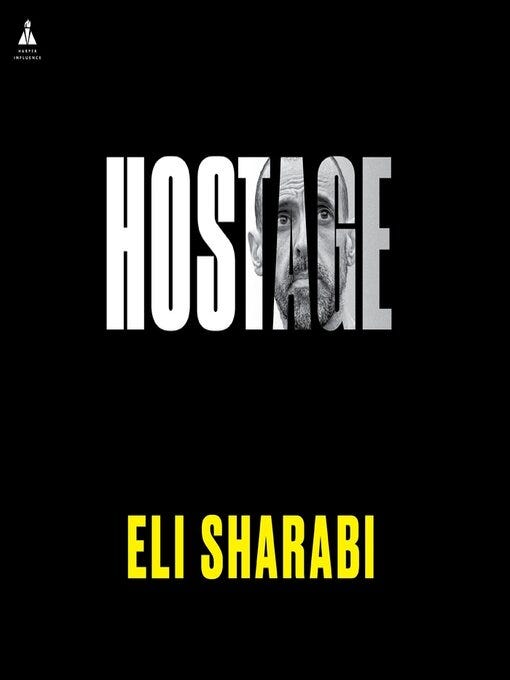
Not my favorite book I read this year, but undoubtedly the most important. The first published memoir of a hostage’s experience while held captive in Gaza, Eli Sharabi’s detailed account of what happened on 10/7 and after is a must-read to pay tribute to what he and others endured under the hands of Hamas and Gazan civilians.
He brings insight and nuance, shedding light on conversations he has with both civilians and militants who hold him hostage. The bonds he forms with other hostages, like Hersh Goldberg-Polin and Alon Ohel, and the role he plays as their comforting and stoic father figure, makes you wonder how you would act in their shoes (even though they didn’t wear any).
A reminder there is still one more hostage in Gaza, Sgt. Ran Gvili. I just shared a powerful menorah lighting with his younger sister, Shira, and heard how he saved over a hundred people at Nova and killed 15 terrorists, only to risk his life. He must be brought home.


Always well written , Miranda is a gifted journalist ; glad we met
Everyone needs to read As a Jew.