

Hi friends! Something different for ya…
This week’s Drop was inspired by a fellow Jew recently asking me, “Why do so many Jews like basketball?”
I had never heard of this before! Baseball, sure, because of our famed players like Sandy Koufax and Moe Berg, and apparently the Mets being today’s “Jewish team” (🤷♀️ don’t shoot the messenger). But basketball? I only know two Jews who are obsessed with the sport.
Not knowing anything about the history (or much about sports for that matter), I answered incorrectly that it’s probably because Jews look up to (pun intended) such tall athletes?? But I had to dig further to find a real answer and share it with you all!
Some of you may already be familiar with this history, but it was all new to me! Let me know if you also learned anything new. 🏀 But before we begin…
NEW 🔥 SHABBAT NOTES: Do you have a burning question, either something you’ve always wondered about Judaism, or just a question about my own Jewish journey/The Shabbat Drop? Or a question for Fred (I’ve been getting requests for more of my dad!)? Reply to this email or comment below, and I may answer them. No promises.
Philosopher-novelist Rebecca Goldstein writes in Jewish Jocks: An Unorthodox Hall of Fame about a period in American sports history (1910s-1930s) “when Jews ruled basketball — and lest you think those last three words are a misprint, let me repeat: Jews ruled basketball.”
Jews have been a part of the NBA since, well, the very beginning. It was Ossie Schectman, a player on the NY Knicks, who scored the first points in league history (back then called the Basketball Association of America) against the Toronto Huskies in 1946. He was 6’1; so much for my stereotyping!
But let’s backpedal (yes, I Googled basketball terms). The late 19th and early 20th centuries saw Eastern European Jewish immigration to America en masse. Popular sports at the time, like baseball, football, and tennis, were seen as elite, and were played at predominantly Protestant institutions like country clubs and Ivy League schools. Institutions that often banned Jews. Sounds like a foul to me!
Basketball, which was invented by Dr. James Naismith in 1891, was cheap and didn’t require much, just a basket and a ball. The accessible game was played by Jewish immigrants who wanted to assimilate and prove themselves athletically, in spaces like public gyms, settlement houses, and school basements. Looks like baby Moses wasn’t the only one who loved a good basket!
"It was absolutely a way out of the ghetto," said Dave Dabrow, a player from the Philadelphia SPHAs (named for the South Philadelphia Hebrew Association that initially funded the Jewish team). "It was where the young Jewish boy would never have been able to go to college if it wasn't for the amount of basketball playing and for the scholarship."
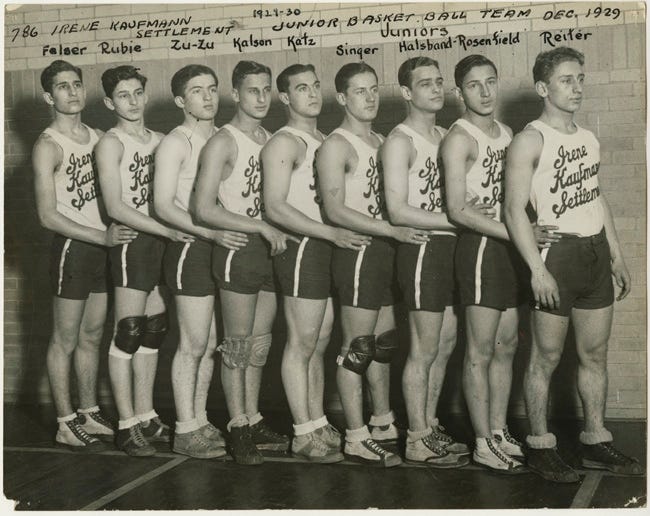
And they had an edge! They understood that they didn’t need to be the tallest or strongest to win. Like good Jewish boys, they used their brains. It was all about strategy: using speed, collaboration, and plays to score.
Pretty soon, players were forming teams at YMHAs, synagogues, and community centers. At a time when antisemitism banned Jews from many elite fields and spaces, they found opportunities in fields like comic books, cinema, and comedy in the Catskills. It sounds like basketball was no different.
Despite making it to the big leagues, the American Basketball League to be precise, Jewish players often faced antisemitism. Moe Goldman, a player for the Philadelphia SPHAs, recalls in Douglas Stark’s book, When Basketball was Jewish:
“There was antisemitic feeling among the fans in other towns. We went to Prospect Hall in Brooklyn to play the Visitations, and the first row of spectators when we went by would poke us with cigarettes. They’d call us ‘Jew bastard’ or something like that. Maybe it was a little intensified for the SPHAS, but I think they did it for every team. Most of the teams in the ABL had Jewish players.”
But it wasn’t always like this; many Jews looked up to these talented players. After all, the athletes were proudly, visibly Jewish. Teams like the New York Hakoahs (Hebrew for “strength”) wore Stars of David on their uniforms. And they dominated the courts while doing it!
The golden era of Jewish basketball waned by the ‘50s, when more Jews moved to the suburbs. In that sense, basketball mirrors a broader immigrant story, as Jews pivoted from crowded city blocks to new forms of integration and identity. ;)
Notable Players
Barney “Tiny” Sedran
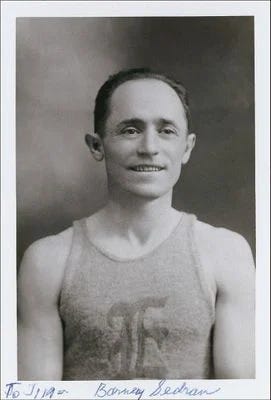
Born Bernard Sedransky on the Lower East Side of New York, Barney was the shortest player ever inducted into the Basketball Hall of Fame, in 1962. At 5’4” and 115 lbs., he was known for his passing, speed, and agility. Barney was one half of the “Heavenly Twins,” with teammate Marty Friedman, of the New York Whirlwinds in the 1920s. Read more about him here.
Marty Friedman
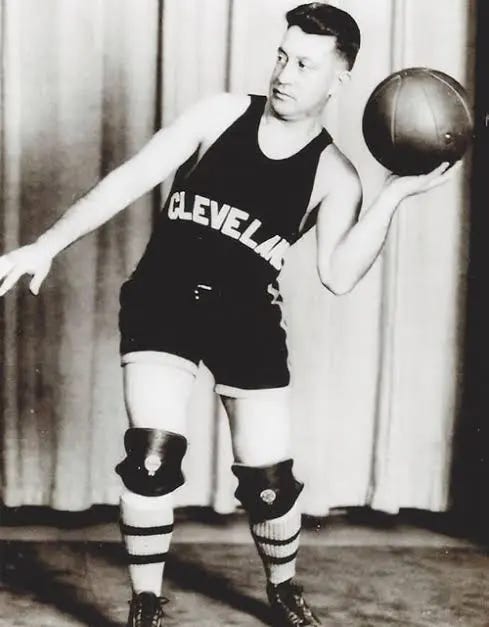
Known as one of the best defensive guards of his era, Marty Friedman promoted basketball internationally during World War I, organizing a 600-team tournament in France that led to the Inter-Allied Games. He played for the Whirlwinds and coached the Cleveland Rosenblums (we need more team names like this today!). Read more about him here.
Amar’e Stoudemire
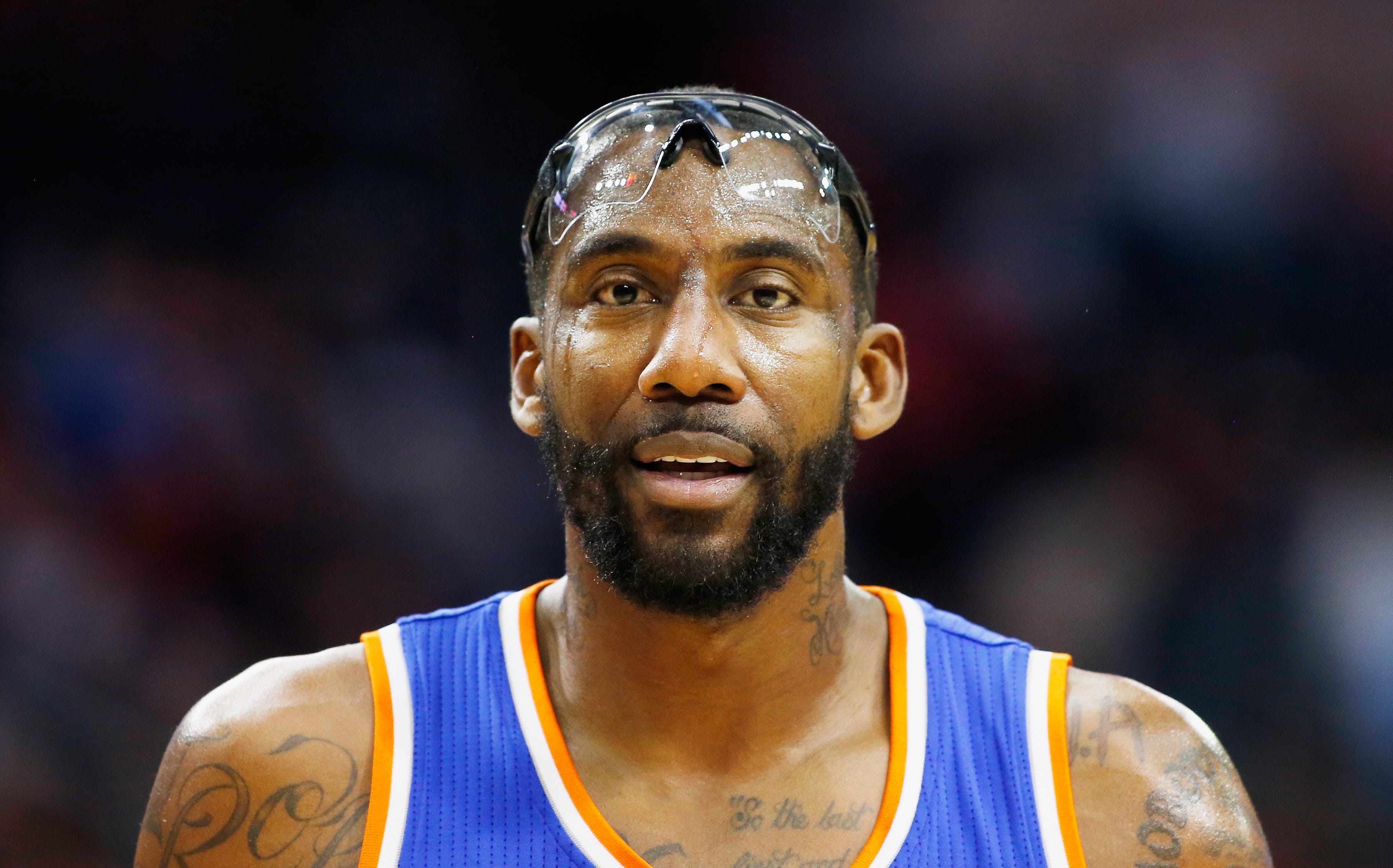
This American-Israeli bball star played for the Phoenix Suns, NY Knicks, Dallas Mavericks, and Miami Heat before retiring in 2016. In 2018, he converted to Judaism with the name Yahoshafat Ben Avraham. He was inducted into the International Jewish Sports Hall of Fame last year. He’s 6’10 (maybe size does matter). I actually met him on the streets of Jerusalem a few years ago, and just like when I met Robert Kraft, I had no idea who he was. So it goes. Read about Amar’e getting blessed by a rabbi three days ago here.
Deni “Turbo” Avdija

The only Israeli player in the NBA today, Deni began his professional career with the Washington Wizards and now plays for the Portland Trail Blazers. And, in case you’re wondering, he’s 6’8. Read more about him here.
Senda Berenson
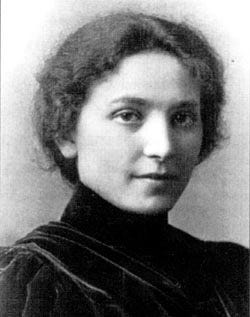
Many Jewish women have played and continue to play a major role in the sport, too. Some from the very beginning! Have you heard of the “Mother of Women’s Basketball?” Born Senda Valvrojenski in Lithuania, she popularized basketball for women. Just one year after basketball was invented, as director of PE of Smith College, she formed the very first women’s college basketball team and wrote the first rulebook for it. Learn more about Senda here.
Naama Shafir
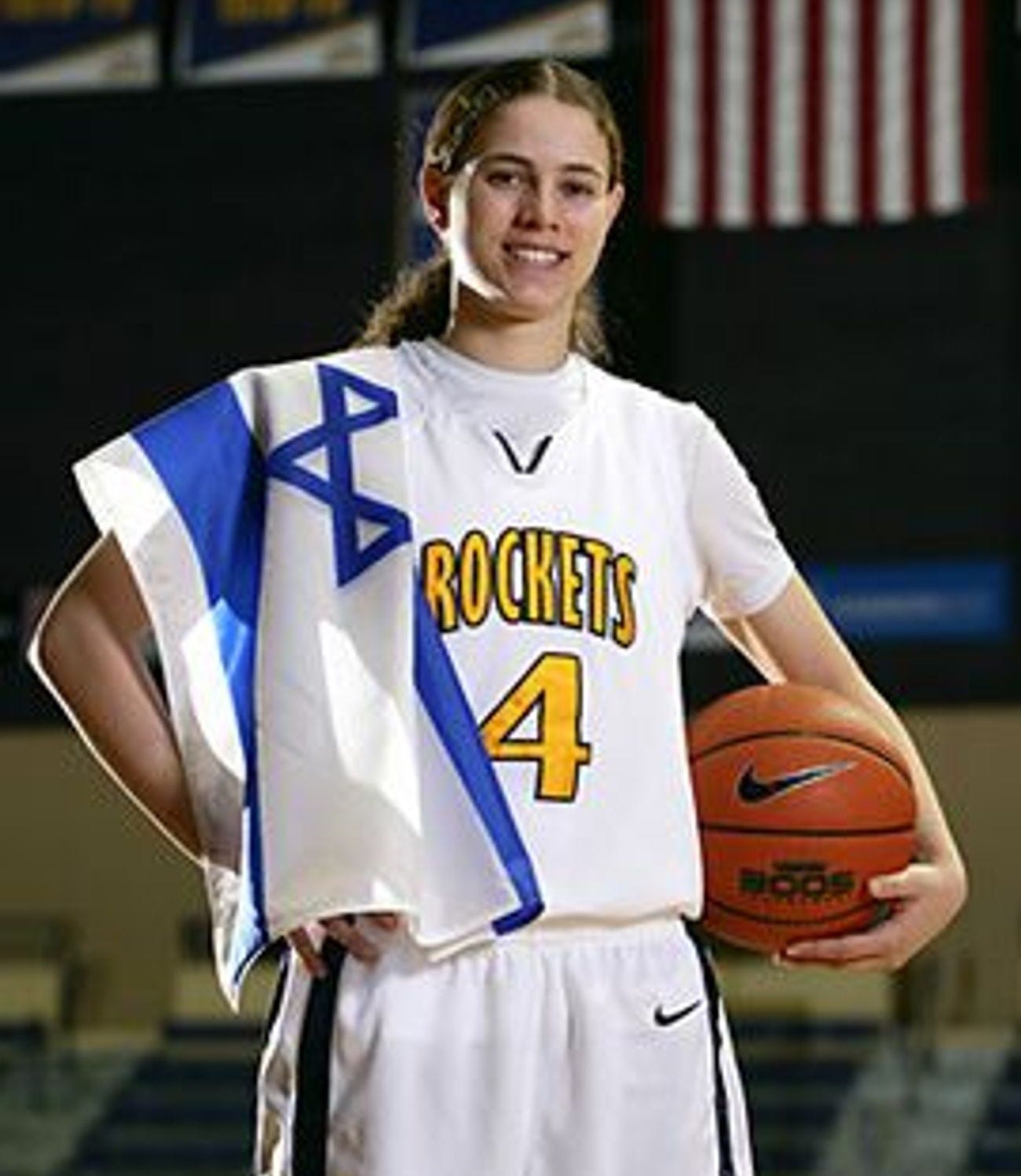
Naama was the first Orthodox Jewish woman to play on a Division I college team, competing from 2012–2016. The former MVP at University of Toledo would walk two miles on Shabbat to play games. She grew up religious in Israel, and received special rabbinic approval to play on Shabbat. Her rabbi told The Forward, “Although the Halacha says that it’s forbidden to jump and run on Shabbat, someone who derives pleasure from it can do it. But exercise is forbidden. Practice is in the category of ‘exercise’ and therefore forbidden, but the game itself is fun for the player.” In 2020, after marrying and having a daughter, she signed to play for Elitzur Ramla in the Israeli Female Basketball Premier League. Read more about her here.
Shabbat Shalom! Nothin’ but net,

Further Reading
Book: When Basketball Was Jewish by Douglas Stark
Book: Ellis Island to Ebbets Field: Sports and the American Jewish Experience by Peter Levine
Like my father would say, “For a Jew to make it big in sports, you gotta have balls!!
A friend - here - is a big chronicler of early basketball here, including its early Jewish influences:
https://www.two-handsetshot.com/
Enjoyed this post!