

🕯️This Drop is dedicated to the 15 souls who were tragically taken from us at Bondi Beach, Sydney on Sunday. They were celebrating the first night of Chanukah. May their memories be a blessing, and fuel to live our Jewish lives proudly and unapologetically. If you can, please donate to the Bondi Relief Fund.
Something’s not sitting right with me this Chanukah. Aside from the horrible, sad start to the holiday, that is.
After the news broke out of Sunday’s terrorist attack at Bondi Beach that left many dead and wounded, my Jewish friends texted with concern over worldwide antisemitism. Some friends cried. My one Jewish connection in Sydney, who lives in Bondi Beach just five minutes from the attack, said the community anticipated something like this happening, just not so soon. My social media feeds were bombarded with messages like, “Praying for Sydney” and “This is what happens when the world spreads blood libel against the Jewish state.”
Sunday felt like a day that’s becoming all too normal in the Jewish world: the deadly images/footage, the tears, the frustration at our friends’ silence and condemnation. I didn’t come across anything out of the ordinary that day. Until I did. Twice.
First, a Facebook friend, rather than mourn, immediately took to criticizing his fellow Jews for calling out antizionism in the wake of the attack. His post insinuated that since the shooters had a “Muslim-ish sounding name,” we shouldn’t jump to conclusions about his motive. This was hours after news broke out of witnesses hearing them say Allahu Akbar before shooting, and hours before IS flags were found in one of the shooter’s homes. As I also pointed out to him, someone else with a Muslim name, Ahmed al-Ahmed, a Syrian immigrant and fruit shop owner, risked his life to disarm the shooter. It’s as if reality is more complex than the narratives we try to impose.
OP was right in that we should call out Islamophobia whenever we see it, instead of jumping to conclusions and stereotyping. But I was enraged by his choice in priorities especially when the facts were out there, rushing to defend a narrative before acknowledging Jewish suffering and loss of innocent life, and throwing his fellow Jews under the bus in the process (the latter of which I know I’m doing right now, but stick with me).
Fast forward to that evening at a small menorah lighting, when a group of us were discussing the events of the day and the desire for more worldwide solidarity.
Someone there, who only found out about Bondi a couple of hours before sundown, said, “That’s why it’s important to engage in cross solidarity. I just came from a solidarity group for those affected by ICE.”
While ICE raids are a serious issue in this country, I found her statement to be performative, useless, and a bold choice to redirect Jewish pain elsewhere instead of comforting other Jews, on a holiday no less. I couldn’t help but respond: “That’s nice, but some of those groups tend to not be so welcoming toward Jews.”
Her response? “Hmm, it’s so unfortunate we’re all hurting and in pain.”
I couldn’t understand these few Jews choosing to set aside their own people’s suffering for the sake of others, just as much as I didn’t understand her meaningless response to me.
I’m a liberal at heart. I believe in helping those who are oppressed, and I think it’s hypocritical for Jews not to. But why do we have to cast our Jewishness aside in the process? Is it seen as “too much” to care about Jewish safety? Is it more important to fit in with other groups?
These instances from Sunday - both online and in real life - reminded me of the Hellenistic Jews of the Chanukah story, the ones who abandoned their traditional practices to blend in with Greek society. The ones who said “no thanks” to Shabbat observance and instead chose to wrestle naked at the gymnasium (okay, that does sound kind of fun though).
Like one of my favorite Jewish Substacks said this week, the holiday is about “celebrating the right to be different.” Even when it’s looked down upon. Even when it’s dangerous. Today, when we’re facing an ideological war, that choice is worth celebrating.
I don’t understand why it has to be so hard to both confront hatred you see online and publicly mourn dead Jews. To stand up for something you believe in without discarding your identity at the door.
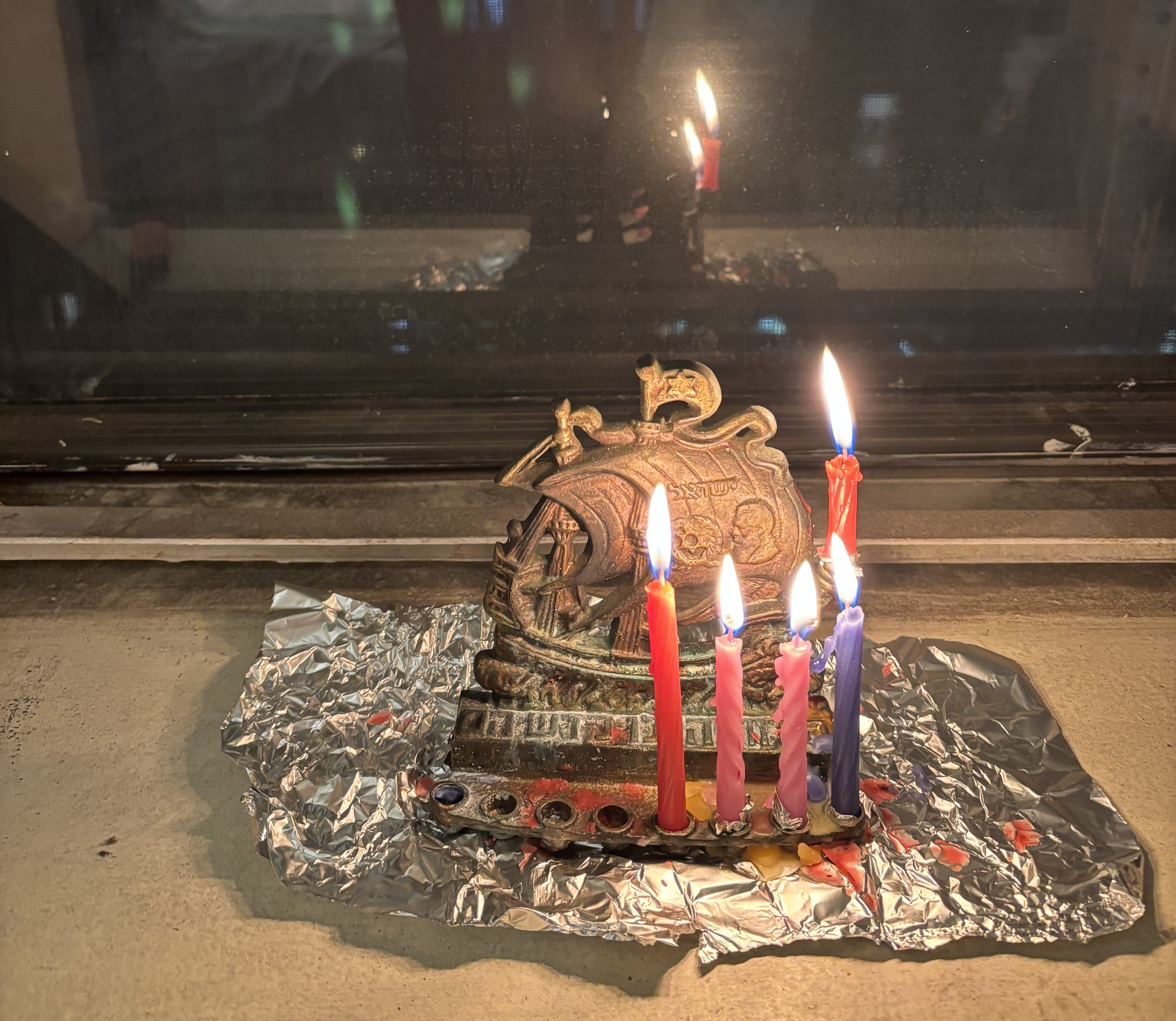
After a few days of carrying heavy emotions, I realized my anger outweighed my sorrow, and that this has become a usual pattern for me after any tragedy. Maybe this is how I process grief? Maybe it’s easier to be angry than sad.
Which reminded me how complex humans are, and maybe this is how some Jews process their grief, by channeling their social justice? Or maybe I’m giving them too much credit.
Maybe it’s not my business at all what other Jews do.
But I can still be angry. I’m a Jewish woman in 2025; I have every right to be.
Still, there’s only so much anger I can hold before it consumes me, which isn’t productive at all. In times of helplessness, I like to focus on what I can control. Luckily, we’re in the season of darkness. I say “luckily” because we can control how much light we put out into the world. Also, we’re now in what I call Scotch season!
Here’s some Chanukah light. Thank you for reading.
A Yemenite Chanukah Song
“Hannukah Hankini” is a traditional song that Yemenite Jews sang for centuries during the Festival of Lights. The song consists of Yemenite dialect and Hebrew words. Here’s a version on Instagram with translated lyrics.
A Cute Reframing on How to Talk to Kids about Chanukah
Now here’s a Facebook post that made me smile! A friend posted this interaction between his wife and kids:

This reframing, talking about what Jews have rather than what we don’t have, is key to raising kids with Jewish joy. But what do I know about raising kids?!
My New Chanukah Sweater Dress!

Shabbat Shalom and Chanukah Sameach,


Thank you for expressing what you are feeling with honest, depth with levity tossed in (very Jewish of you). The Yemenite music is lovely. It is interesting how over that past 5-10? years, many people pull in all marginalized groups, those impacted by historical events, into a prayer or celebration or mourning. In some cases it fits, others perhaps not. It’s all about Timing, Tone and Context. It might be we are more sensitive to others who suffer or have suffered when a tragedy happens and we are in mourning and grappling with our feelings. Widen the scope. When we celebrate Passover and people add in anecdotes to remember women or all enslaved groups throughout history does anyone balk or do we just celebrate freedom broadly and reflect on those enslaved. Does it water down a service. Perhaps for some. But to do what your Hanukkah party person did was super bad timing and deflection and mindless wokeness (or is that an oxymoron)
My feelings exactly and thank you for laying it out so succinctly. Now I don’t have to. I could say, you know what I think and feel about the Islamist terrorism against Jewish families with children celebrating Hanukkah at Bondi Beach? Read this week’s Miranda’s Shabbat Drop. Gd bless. Happy Hanukkah and Shabbat Shalom