

Hebrew Word of the Week:
A slice (of pizza) is the same word for triangle: meshulash (משולש) 🍕
But we’re not talking about pizza today! We’re talking about olive oil, and not just any olive oil, but Sindyanna’s olive oil.
A few months ago, the Park Slope Food Coop (which bothers me that it’s not spelled “Co-op” - their first transgression!) in Brooklyn voted to stop selling a few Israeli products like Bamba (their loss), frozen herbs, tahini, bell peppers.
The vote passed with 67% participating members voting in favor, and took effect the next day.
This was part of the Boycott, Divestment, and Sanctions (BDS) Movement, which uses economic pressure to protest the Israeli government’s actions and end oppression for Palestinians.
This all sounds morally compelling and impactful, and like it genuinely cares about peace and social justice, until you learn that the movement and its co-founder support replacing a Jewish-majority state with a Palestinian-majority state, instead of supporting a two-state solution.
Not to mention how easily BDS can cross into discrimination and antisemitism, alienating many Jews who buy Israeli products and making them feel unsafe, as we saw in 2024 Park Slope drama, and more recently here.
Never mind that the movement has had little actual impact. On their website, for example, they cite Israel’s current debt as proof of their impact, as if Israel’s economy wasn’t recently impacted by the tens of billions of dollars it spent on the Israel-Hamas war. Nice try.
But wait - there’s more! BDS’s actions usually backfire and negatively impact the very people it claims to serve by boycotting businesses that employ Palestinian workers.
Which brings us to Sindyanna of Galilee, whose olive oil is no longer sold at the Park Slope Food Co-op. Yep, I used the dash. My Substack, my rules.
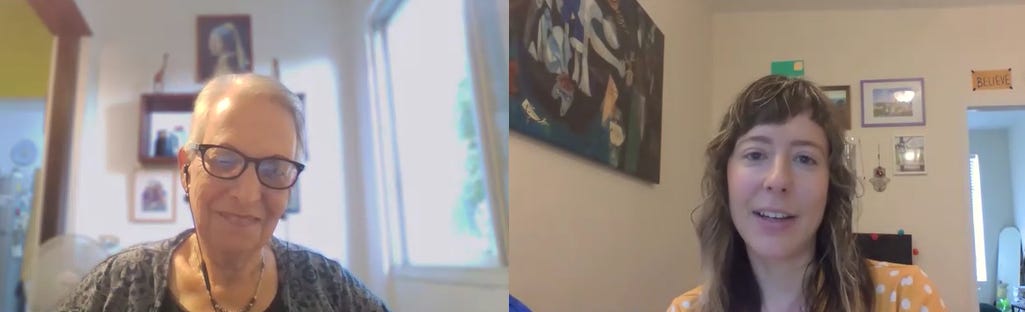
I virtually sat down with Hadas Lahav, CEO of Sindyanna, to hear about how her organization brings Jewish and Arab women together to sell Fair Trade products from Arab producers and reinvests the profits into education for Arab women.
Our conversation was a reminder that real peace work is happening on the ground, making the world a better place by choosing compassion, unity, and hard work. I hope it inspires you as much as it inspired me, and that more people wake up to the hypocrisy of BDS.
So, what is Sindyanna, and why did you start it?
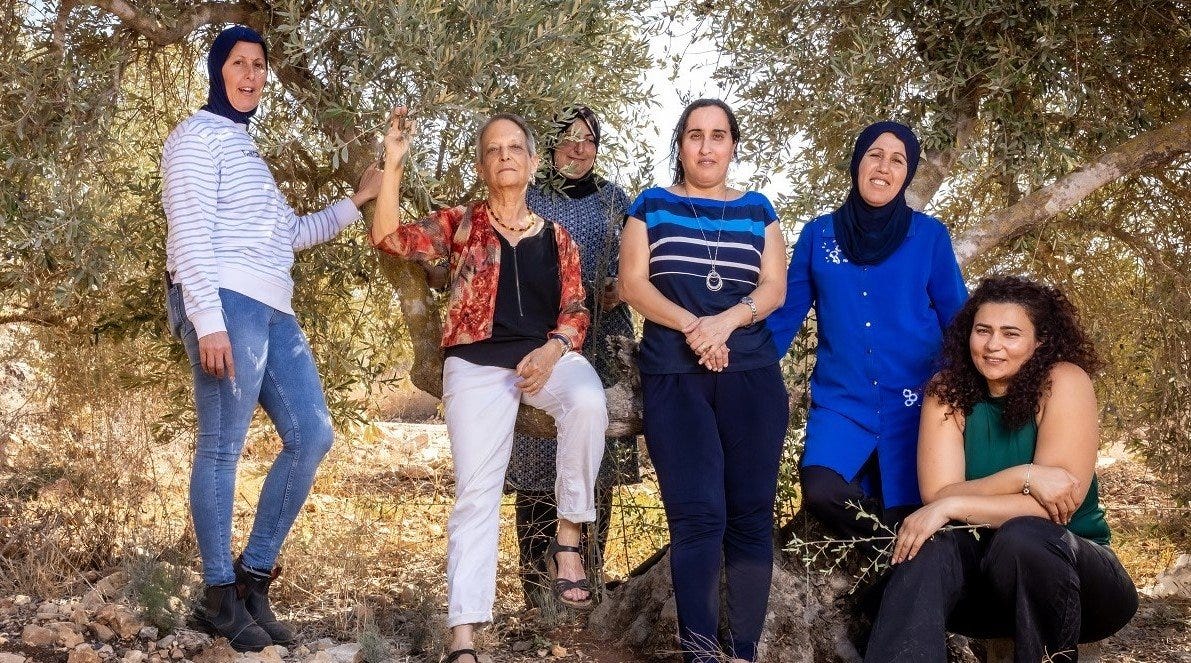
Sindyanna (سنديانة الجليل, named after the most common tree in the Galilee, the Palestine oak, renowned for its rootedness to the land, longevity, and endurance) is a nonprofit Fair Trade organization led by a team of Arab and Jewish women.
We established Sindyanna in 1996 as an official NGO. The idea didn’t come out of the blue. It was a culmination of longtime activities among the Arab population inside Israel. It is very important to understand that inside Israel, more than 20% of the citizens are of Palestinian origin. This minority suffers from discrimination and racist attitudes, especially now when we have such a right-wing extreme government.
What we noticed is that the weaker part of Arab society in Israel is the women, because of geographical and traditional factors. The majority of the Arab women at that time (about 80%) did not have any opportunity to work outside their homes. This means that they were dependent economically on the men in the family, and could not be independent.
We saw that if we want to build trust between Arab and Jewish citizens in Israel, which seemed to us at that time the most important thing for building a healthier and more just society, we have to find a way to empower the Arab women. There is a saying in Arabic that the women are the school of the children. The children grow under the supervision of the women because they are the ones who are responsible to educate and feed them. So if the women are stronger, the next generation will be stronger. And if we build trust between Arab and Jewish communities, we can build together what neither community can build separately.
How has your work evolved over the years?
We started by collaborating with the Arab farmers in the Galilee to buy their olive oil and sell it in the Israeli market. And surprisingly enough, it was well received by the Israeli society. This was the ‘90s. Then, in 2000 during the Second Intifada, it became difficult to market a product from the Arabic community in the Israeli market. This was when we turned to exporting.
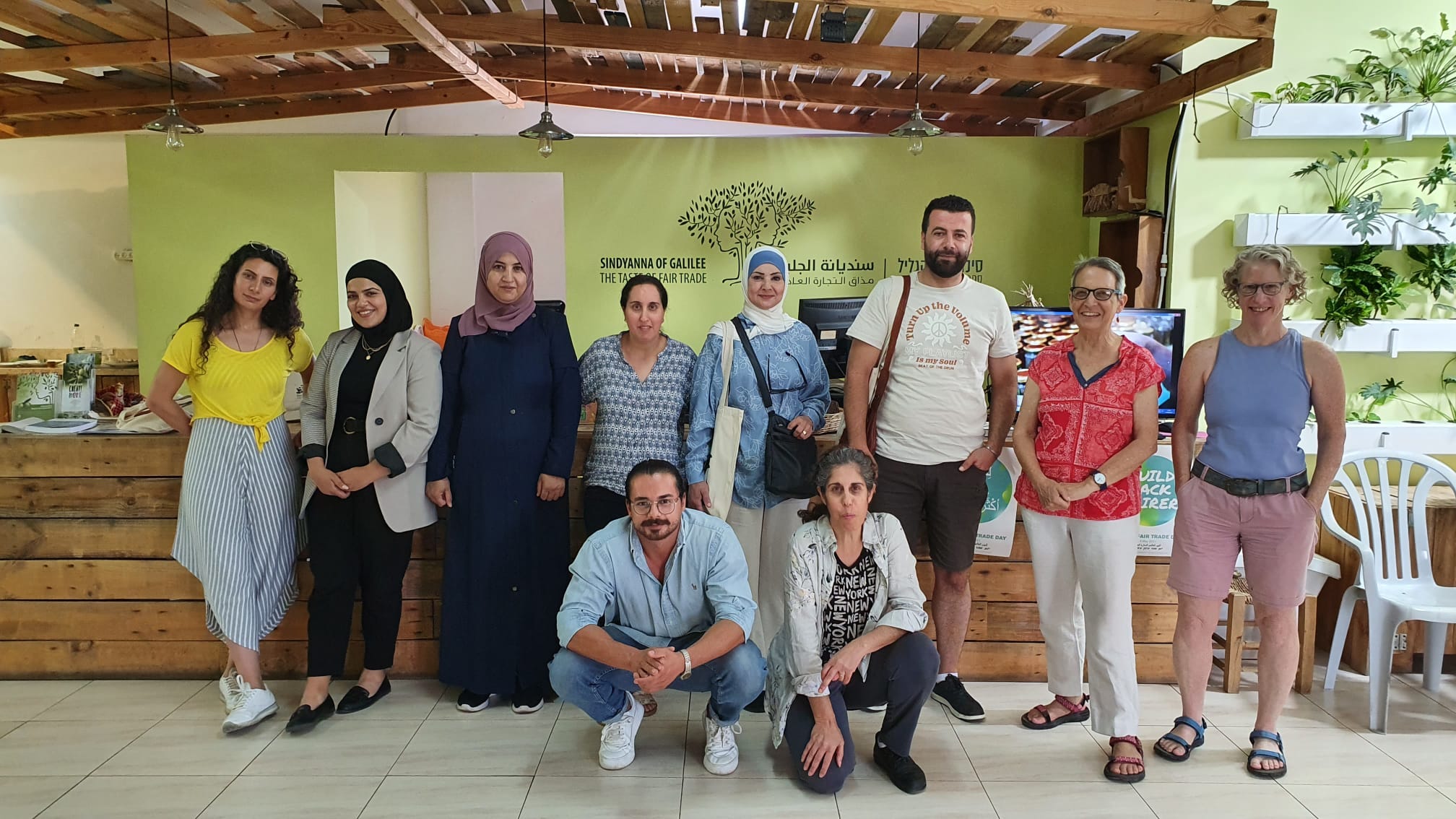
After some years, we grew enough to build a factory in Kafr Kanna. We’re still there and since then have added a visitors center, where we host groups of visitors - both young and old - from all over the world. We’ve organized workshops and seminars for Arab and Jewish women. Student groups come and hear the women’s personal stories, and have asked them questions, like “How do you view Israeli society? What happened to your family in 1948? How does it affect your feelings towards the Jewish people?” Everything is open.
In 2003, we joined the World Fair Trade Organization, which is a huge network of Fair Trade organizations from all over the world. We started to export, and were well received by our global Fair Trade partners. Sindyanna grew mainly through connections with Fair Trade organizations, and through many friends around the world that believed in our mission.
I want to jump to 2019, because that year, we were invited by the Park Slope Food Co-op to present Sindyanna’s olive oil in their Brooklyn store. Their buyer invited us and said that his community would be interested to meet the women behind the olive oil. At that time, the co-op was proud of our partnership, and they were proud that they held olive oil from Israel that represented a collaboration between Arab and Jewish women.
How did October 7th affect business?
Every year, the harvest begins around the middle of October. Everything in the process had already been arranged that year, and we built positive relationships with agricultural cooperatives in the West Bank.
After October 7, I was terrified. I kept wondering: What will happen? How will we get the olive oil? What would our Palestinian partners say? Would they continue with our collaboration? Or, now that Israel is attacking Gaza, would they not want any connection with the Israelis?
But what happened was the opposite. And this is something that the boycott movement doesn’t want people to know: For the Palestinians in the West Bank, there is no option for boycott. They don’t boycott Israel. They are happy when they have good connections with good people in Israel. For them, it is like oxygen of hope. They’re living under occupation. The workers cannot come to Israel to work, so they haven’t had access to the work market for almost three years. And settlers attack their houses and their fields. And when they have the chance to make good connections with Israel, they are happy about it. They will not give up those connections easily.
So, when I called the farmers, they said, “Don’t worry. You will receive your olive oil in time. We are happy with our collaboration. We will stick to it for as long as possible.”
Then, we faced a new challenge. Our annual olive harvest was in jeopardy. Many of our volunteers had been called up for reserve duty, and Palestinian workers, who arrive every year during the harvest to pick the olives, couldn’t reach the grove.
We reached out to a women’s organization called Building Alternatives (Bonot Alternativa) and asked if they could help. Just two weeks after the war began, more than 300 women came to our olive grove to harvest olives alongside Arab and Jewish women. It was powerful. Even in the darkest moments, people are willing to come together and build something better.
Wow. And where do the profits go?
This collaboration is not just a commercial collaboration. We are Fair Trade. For every kilo of olive oil we buy from the Palestinian farmers, we donate a Fair Trade premium for the cooperative to create social projects in the village every year.
For example, last year they used our donation to build a solar panel on the olive oil mill in the village, to renovate the play yards in two primary schools, and to buy new equipment for the members of the cooperative.
We not only promote relations between Palestinians and Israelis, but also empower the Palestinians, and help develop Palestinian society, both in the occupied territories and in Israel.
Let’s get into the Park Slope Food Co-op boycott.
What can I say about such a one-sided and wrong decision?
What was your first reaction when you learned that your product was going to be boycotted?
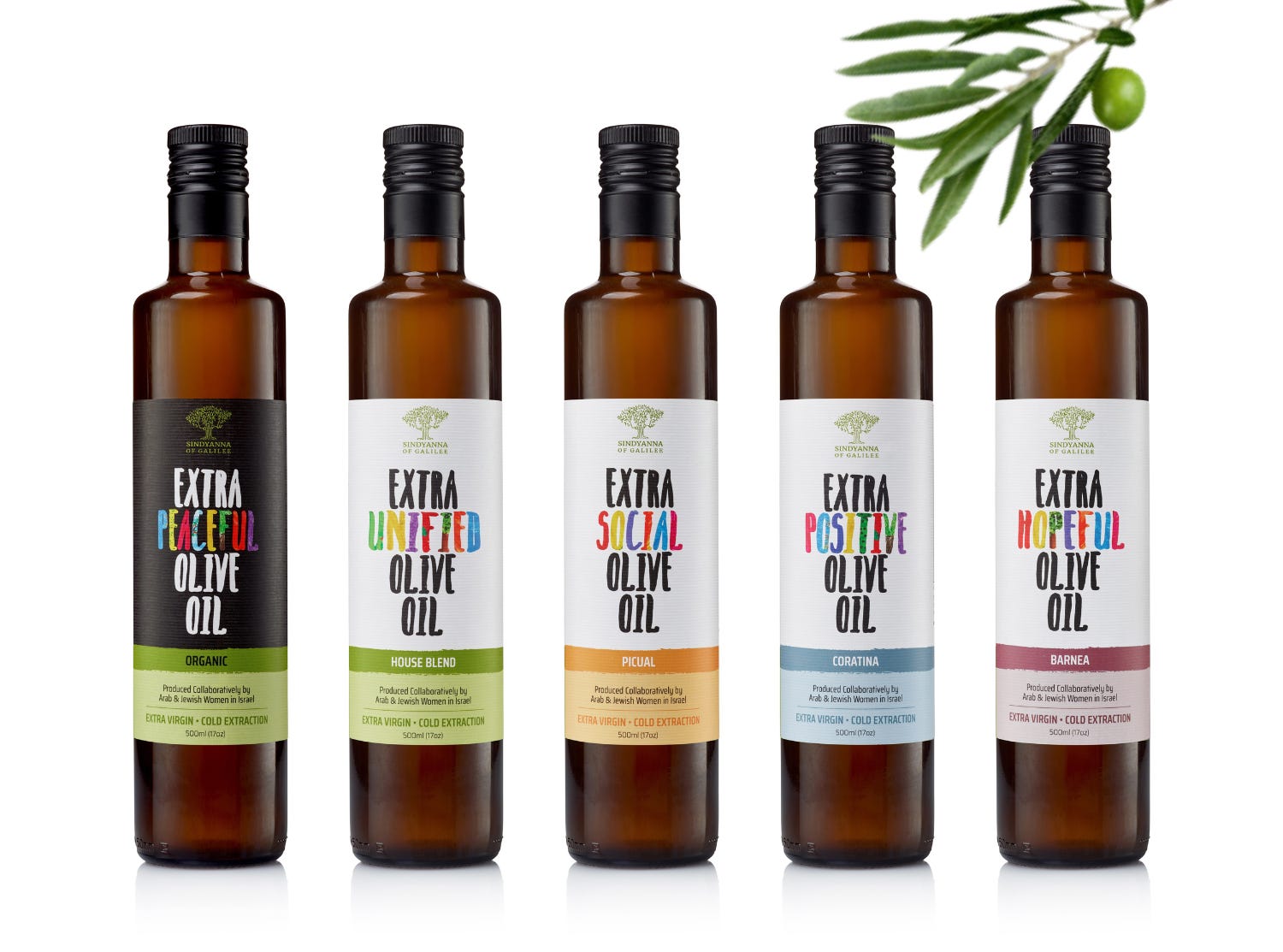
First of all, it was not very clear, because the olive oil is not sold by Sindyanna to the co-op. It is sold by our partner, a Fair Trade cooperative, and they import our olive oil and sell it with a private label. On the bottle, the label says “A project of Arab and Jewish women in Israel.” This doesn’t matter to them; complexity is a thing they cannot digest.
Since October 2023, we have been suffering from a kind of boycott, but it is an undeclared boycott. Nobody has said they cannot order our olive oil because we are Israeli. Some big customers stopped buying our products, but they didn’t say why. They just said they cannot sell it. It is too expensive, too small, too big. Many excuses. Nobody said it is because we are Israeli. The first time someone said, “No, we won’t sell your olive oil because you are Israeli” was the Park Slope Food Co-op boycott. This is why we decided to not stay silent anymore. Because you cannot keep silent when someone is trying to eliminate you.
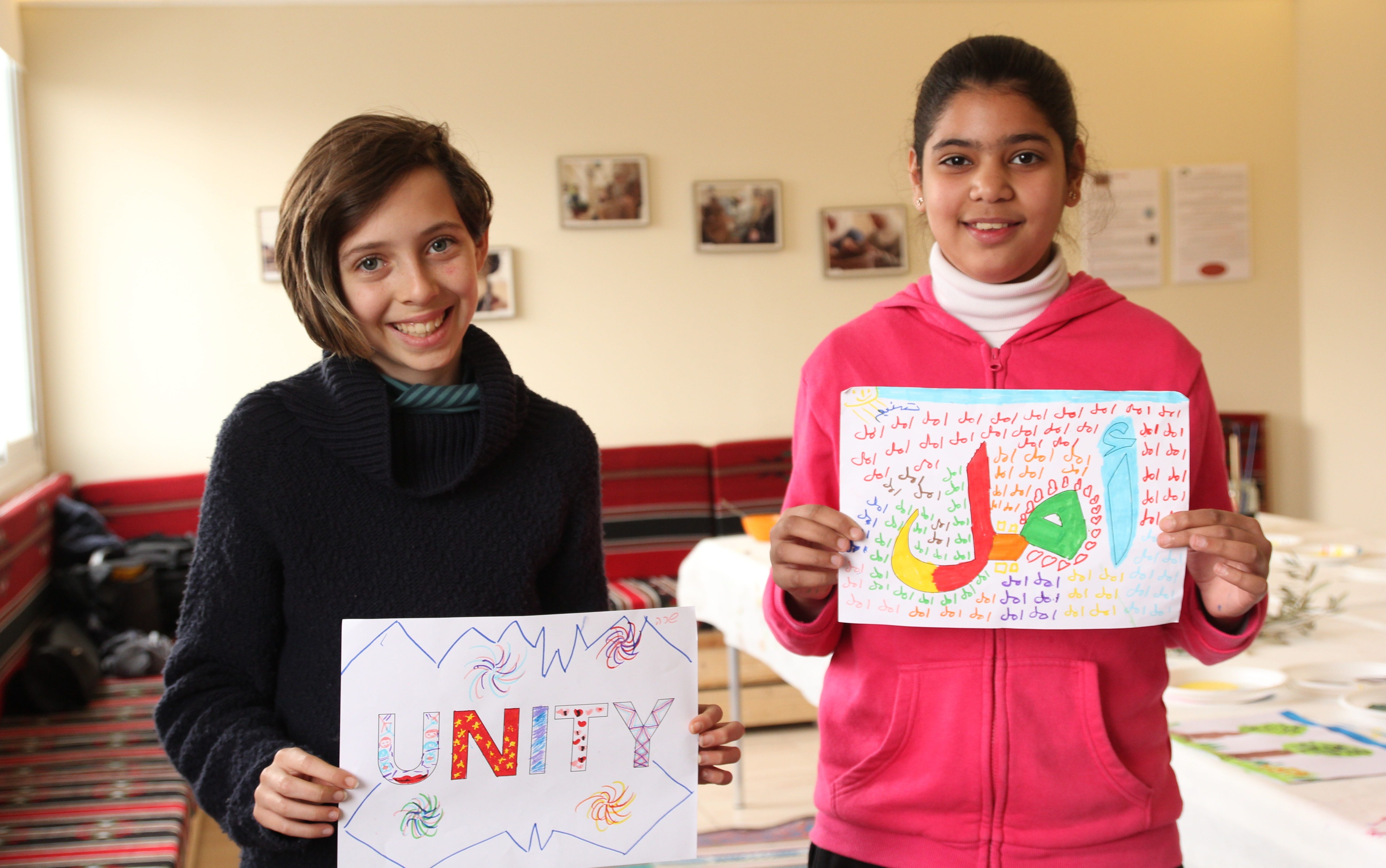
If there was one thing that you could say to the people in favor of BDS, particularly at the co-op, what would it be?
I don’t argue with BDS. I think it is useless. If you don’t want me, that is your problem. Because what I’m doing helps the Palestinians much more than what any boycott can do.
Because here you are, on the ground, actually making the connections, and promoting peace through dialogue, collaboration, and education.
If I were an American, or Brit, or German, etc. and I looked at Israel, I would say, “Israel has a very bad government.” By the way, it is not the only country in the world that has bad government, and not even the worst government. But nevertheless, this is our problem. It is very right-wing, very extremist. But if I were a person who sits outside Israel, I would see that in Israel there are more or less two camps: one is extremist, even fascist. And the other one is calling for equality and a just society, for collaboration with the Arab population. There is a big camp that calls for democracy.
If I were an unbiased person, I would support this democratic camp. I would support those people. I would say, “Let’s give them the strength to change the situation in their country.” If you have a democratic system, everyone - Palestinians, Israelis, Jews, Arabs, Christians, Muslims - can benefit from it.
But people who support BDS do the opposite. They say, “Israel is bad, and everyone in Israel is bad. Until the last Israeli becomes anti-Zionist, we don’t want to recognize Israel.” I believe this is an unbalanced approach that does not help advance peace or justice. There is no instant peace. It is a process. You have to build it step by step.
Do you have a story that you would like to share about one of the women that inspires you?
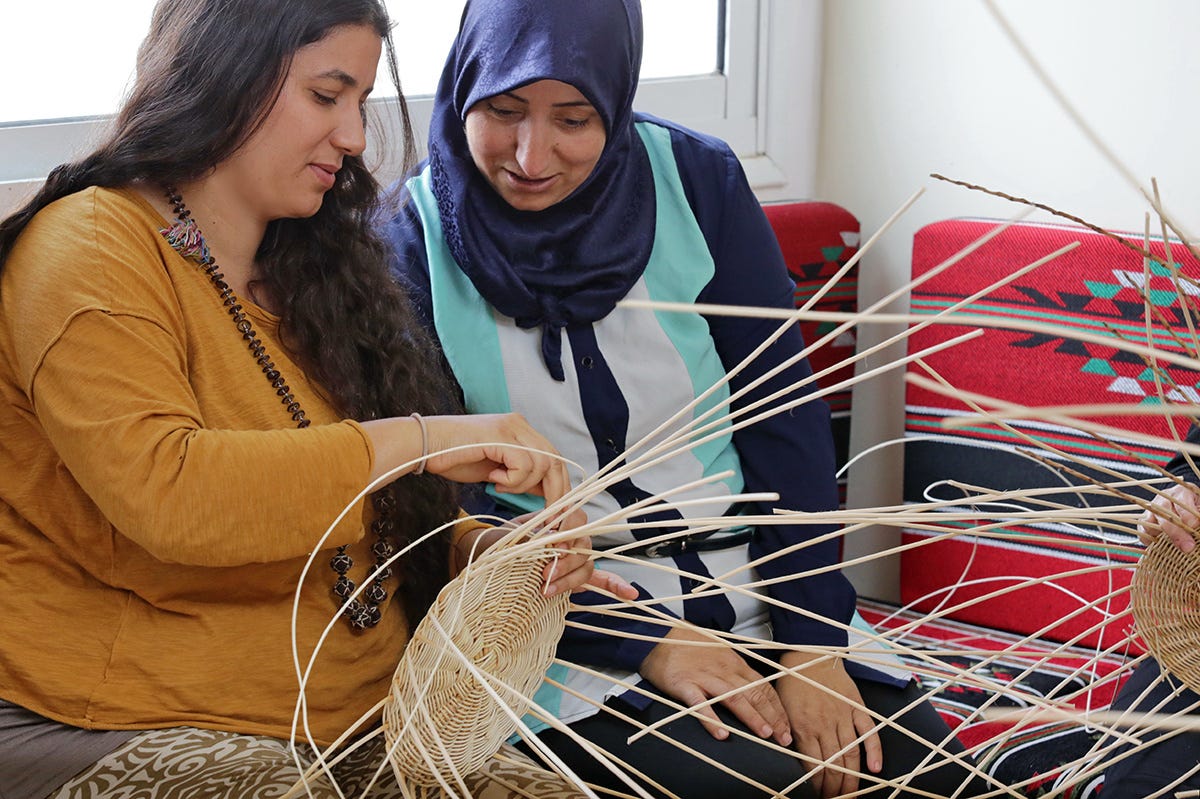
We have one woman from Kafr Kanna, the village where our factory is located. When she came to Sindyanna, she was a housewife. She came because she heard we were opening a weaving center, where we teach women how to weave baskets from all kinds of natural material. She came and was a devoted student. She learned the skill of basket weaving very well, and then became a teacher leading basket weaving shops in our visitor center. She’s invited by local municipalities to organize basket weaving for other communities. Before she joined us, she didn’t speak Hebrew. Now she speaks Hebrew. She didn’t know how to use a computer. Now she can work on the computer. She’s a living example of the term “empowering women.” In the last 30 years, we’ve met thousands of women. Every one of them has a special story. Every one of them benefited from interacting with Sindyanna.
What gives you hope?
You. Solidarity. What can be better than to be able to talk about our message, our vision, and to have people listening? And not only you, but also the 10,000 people who pressed ‘like’ on our last post. And also the democratic forces inside Israel. We see new parties that are absorbing the activists of the democratic movement and gaining political power. Hopefully we will get many seats in the next election. This gives me a lot of optimism. I didn’t have this. If you asked me one month ago, I don’t know if I would have been so optimistic. But now I see that more than 100,000 new people registered as members in this new Democratic party. They’re going to turn Israel into something better. Come visit us, and you’ll get some optimism too.
Any Shabbat plans?
On Friday evening, I plan to visit my 97-year-old mother, who lives on a kibbutz near Lake Tiberias, where my three siblings and I were born. I’ll spend Shabbat with her, catching her up on the latest news, listening to her stories, and enjoying her famous homemade salty cheese cookies.
My mother, who was born in Tel Aviv and has always considered herself a committed Zionist, says to me almost every day: “We made a mistake in 1967 when we did not withdraw from the occupied territories.”
You can buy Sindyanna’s products on their website.
Shabbat Shalom. Dreaming of those salty cheese cookies,

💧 If you like coexistence, check out this Drop:
Building Peace Through Classical Pieces

An interview with Nabeel Abboud-Ashkar, co-founder and executive director of Nazareth-based Polyphony, which helps build bridges between Arab and Jewish teens.
💧 If you like Israeli politics, check out this Drop:
How I'm Staying Connected to Israel Right Now

Learn about Israeli politics through the latest election campaign videos! And more!
I am old enough to recall many attempts by peacniks to make a peaceful co-existyence between Arabs and Jews in Israel and adjoing areas. Alas, the hard right in Israel and the Palestinians both continue to resort to and refer to "biblical" claims of exist of these lands rather than the reality that the UN in for both peoples the right to have own nation.
Now in the U.S., we have such things going on. Fact: a recent poll showed that 40% Muslims support Hamas.
boycott their boycott.
Bravo. Nice Drop, Miranda! Love it.