

Hebrew Word of the Week:
In keeping with this week’s theme, I did not know that cholent in Hebrew is chamin (חמין)! Stew is tavshil (תבשיל).
Here’s a confession: I hate cholent. Okay, hate is a strong word. But it’s probably my least favorite Jewish food ever.
There’s something about seeing a vat of the classic Jewish stew sitting in a slow cooker lined with plastic that makes me nauseated. And the few times I’ve had it, it’s like a glob of heavy brown bean-and-barley cement that I can feel settling in my gut. That goes for both meat and vegetarian cholent. If cholent is the star of that week’s kiddush, don’t expect me to stick around.
See, you thought I was all sunshine and rainbows? Think again!
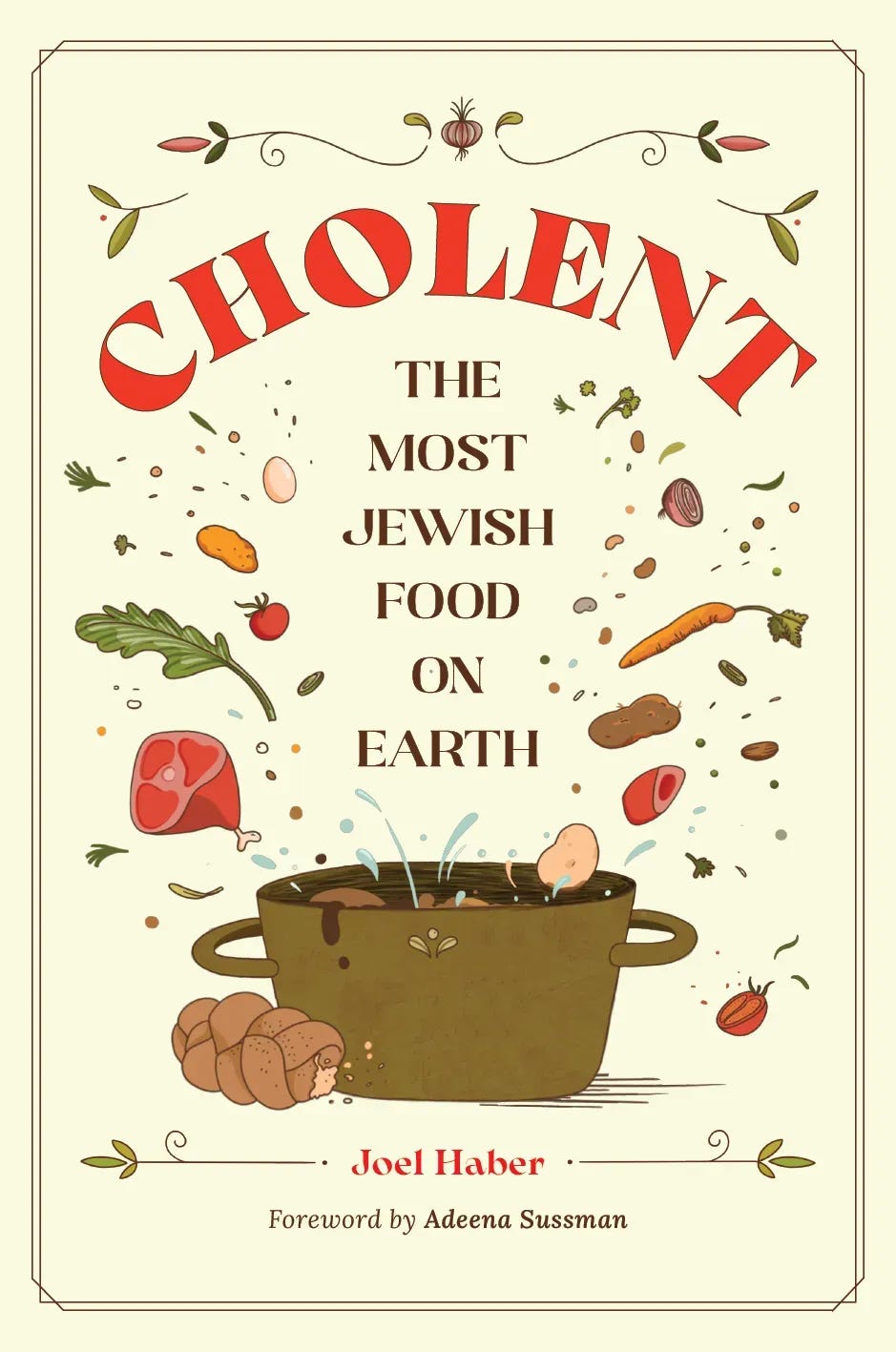
So when Jewish food scholar Joel Haber told me about his new book, Cholent: The Most Jewish Food on Earth, I told him, “I really don’t like cholent.”
But his book description alone is informative, teaching me that there are Shabbat stews - global variations of this classic Ashkenazi stew - from around the world. More on that later!
And then cholent came up yet again when I recently met a married couple of lifelong cholent enthusiasts. The wife’s AIM screenname was cholent86.
They were telling me about Kay Kantor Pomerantz’s two cholent books, Come for Cholent and Come for Cholent…Again. Even the story of how they met was related to cholent. A friend set them up, and while they bonded over their love of Jewish stew, they realized the woman had one of Pomerantz’s books, and the guy had the other. Beshert! One could say they came for cholent… together.
I decided to put my stewing aside and write about this very Jewish dish, rich in history as it is in ingredients. After all, every time I share my unpopular cholent opinions, people say, “That’s because you’ve never had good cholent.” (For good cholent recommendations, see the end of this post).
Maybe I still have so much to learn. If you’re anything like me, perhaps you have much to learn as well. Welcome to the cholent Drop!
Cholent 101
Cholent (“tsholnt” in Yiddish) is a slow-cooked stew typically eaten on Shabbat day, containing meat, beans, barley, and potatoes.
Since Jewish law forbids cooking on Shabbat, Jews got crafty and prepared stew overnight, letting it simmer over a low, hot flame. We love a culinary loophole!
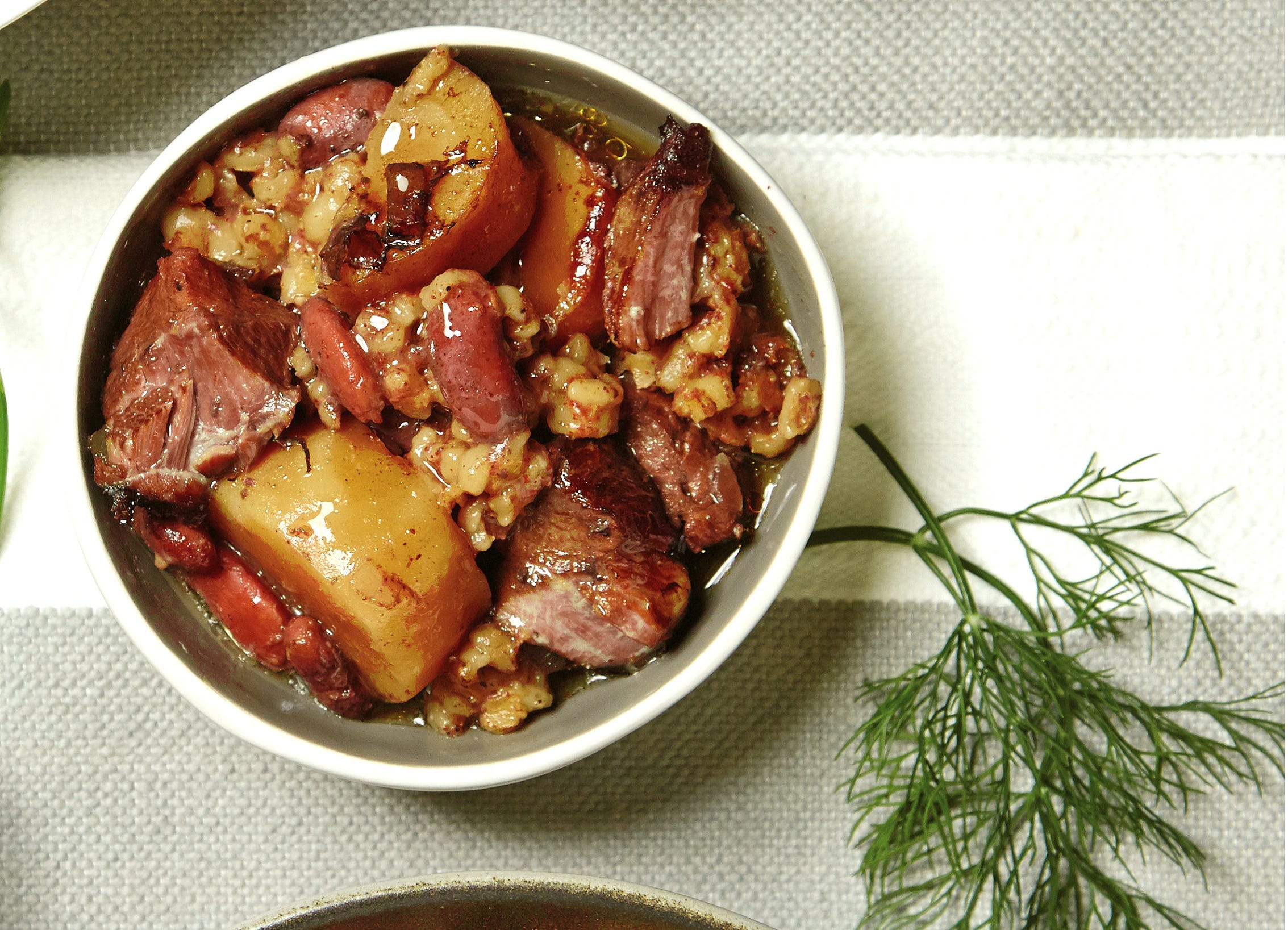
The official dish of cholent dates back to Medieval France (fun fact: some say the word comes from the French chaud lent, meaning slow heat, though Joel says that’s only half right), then spread to Germany and later Eastern Europe, and then the rest of the world. Back then, Jews used a communal oven to keep their cholent warm.
But Jews have been slow cooking their stews for about 1,700 years, starting with an ancient Middle Eastern dish called harisa (not the spice). Meat and wheat is mashed into a thick porridge, often topped with melted fat and cinnamon. It’s the first Shabbat stew from which all Shabbat stews descend. Today, it’s typically eaten in the Yemenite community.
“And everyone that doesn’t eat hamin [cholent] on shabbat is a renegade, the ways of the heretics are in him.”
-Rabbi Yehuda ben Barzilai Habarceloni, “Book of the Times”, 12th century
Cholent without borders
Joel’s book, complete with 20 different recipes, takes readers on a global journey, from Iraq to Bnei Brak. Cholent: The Most Jewish Food on Earth is packed with history about how Jewish migration has shaped each community’s foods. So even if traditional cholent isn’t your jam, there’s spicier varieties from Jewish kitchens all over the world!
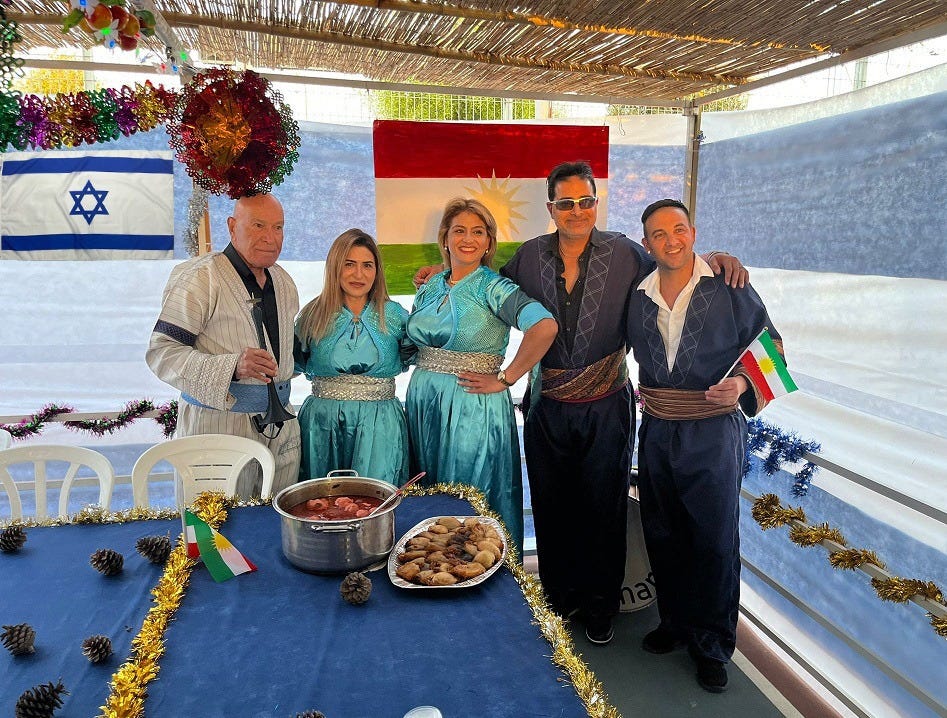
In honor of Mizrachi Heritage Month, let’s look at a couple of Middle Eastern Jewish stews, starting with mebosa from Kurdistan. In addition to a grain and a meat, its ingredients vary, and can include okra, beets, pumpkin, quince, or lemon juice.
But what makes this stew stand out is that it contains traditional Kurdish kubbeh, meat-filled dumplings. Kubbeh were so frequently added to Shabbat stews, that non-Jewish Kurds called them “Jewish dumplings” or “Sabbath dumplings.” While kubbeh has spread throughout the Middle East, it’s only eaten in stews in the Kurdish Jewish community!
Egyptian Sabbath stew is called ferik, because it contains freekeh, an unripe, green wheat that is harvested early then dry-roasted over an open flame. Versions can contain lamb, spiced with cinnamon and allspice. Many stews contain eggs, and today’s ferik is no exception.
Other recipes in the book include a Baghdadi-Indian version, a nod to the Jews of Kolkata, which uses cardamom and chutney. There’s also a take on the Sephardic Tuscan hamin, with meatballs, white beans, and chard.
There’s also a vegetarian cholent that uses veggie sausages and parsnips.
Cholent and beyond
But please don’t think this is a cookbook. There’s way more research in here than I’ve ever wanted to know about cholent!
Insights include what Karaite Jews, who follow written law (Torah) instead of Oral law, think about this classically Rabbinic loophole, and how the first American-Jewish cookbook describes Shabbat stew, called “Coogle, or Pudding, and Peas and Beans.”
And Joel’s writing isn’t limited to history either! The book’s last chapter explores what cholent’s been up to lately. Think “gas station cholent” (it’s exactly what it sounds like), a cholent vending machine (also what it sounds like), a 2021 appearance on Jeopardy! (in a question that none of the contestants answered correctly), and a rise in popularity of its cousin, yapchik, which is beef sandwiched between layers of potato kugel.
Where’s the best cholent?
My cholent enthusiast friends chimed in with their picks for best cholent. From LA to NY to Israel, here are their recs:
Cholent is more than a Shabbat staple. It’s a culinary map of the Diaspora, telling the story of a people who carried a shared tradition across continents, adapting it to new places, ingredients, and cultures while maintaining its essence. It also extends beyond the Orthodox community, bringing all types of Jews together for a restful meal or a casual hang steeped in joy. What’s more Jewish than that?
Sure, you could argue matzo is the most Jewish food on earth. It represents our redemption, after all. But we typically eat matzo once a year (unless you’re my dad), whereas Shabbos stew is enjoyed by many each week.
I still have much to learn (and taste!). And the next time there’s cholent at kiddush, I’ll still grimace. But I will be eager to share my cholent facts with everyone.
Shabbat Shalom! Let me know if you’re having cholent,

💦 If you like books about food, check out this Drop:
2 New Cookbooks You Need on Your Shelf

From stories of WWII and resilience to Jewish joy all year round, here are two cookbooks that belongs in every Jewish home.
I need to try a mizrahi cholent. I agree that the plastic bag variety needs improvement