

Hebrew Word of the Week:
Last week, I mixed up two verbs (shoutout to Shai who let me know!). Mechapes is, in fact, looking for, and mesachek is playing. So, to make up for my oopsie, here’s some Israeli slang: fadicha (פאדיחה), which is an embarrassing mistake.
📅 Shabbat Drop-In
My friend, Sandra Laub, is bringing her powerful one-woman play, Picking Up Stones: An American Jew Wakes Up to a Nightmare, to NYC late June/early July. Come see it with us at the American Theatre for Actors as part of the Midtown International Theatre Festival.
After the performance, we’ll gather to discuss the play’s themes of grief, identity, and the fragile possibility of peace after October 7th. It’s running multiple dates, but we’re seeing it together on 6/28! Get your tickets here!
I received copies of these books from the publisher (thank you, Soncata Press!) in exchange for an honest review. The thoughts below are entirely my own.
Dog, a portrayal of wartime trauma
In between romantasy and literary nonfiction, I’ve been reading more Jewish/Israeli books than ever! One recent read that has stuck with me is Dog by Yishay Ishi Ron.
I first saw Dog floating around on the Jewish literary scene last year when it came out. I assumed the story was about a soldier’s experience in the elite Oketz unit of the Israel Defense Forces, which made me excited because that’s the unit my brother served in.
When I finally started recently reading it, however, I was surprised to find it was inspired by the author’s true story of wartime trauma in a different unit.
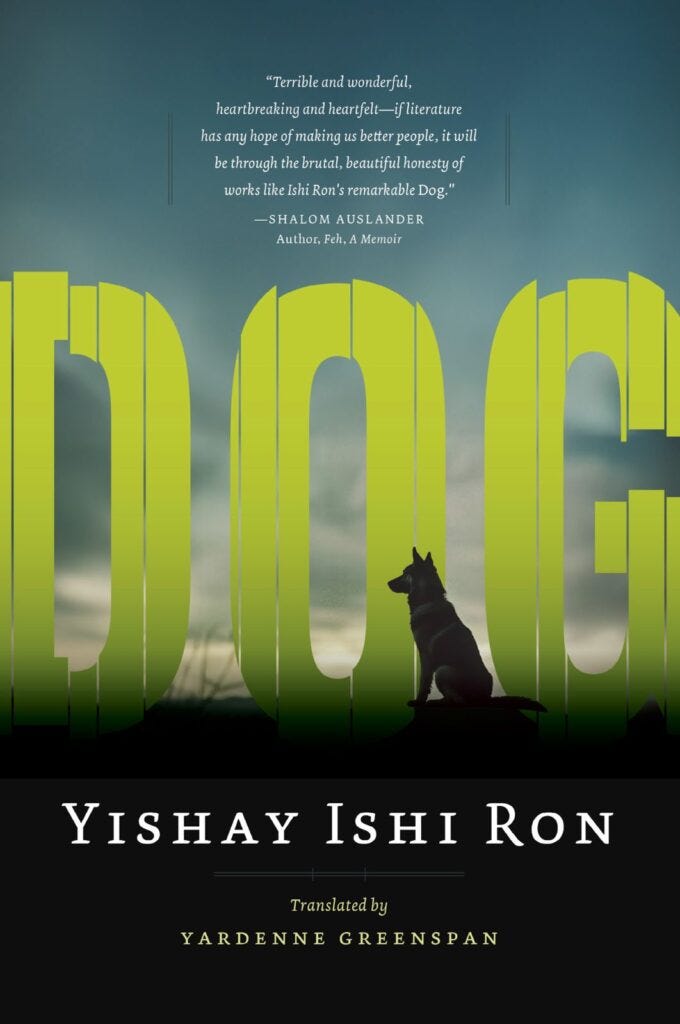
The story centers on a former Golani brigade soldier known as “Geller” (named after magician Uri Geller, whose mental spoon-bending tricks he becomes obsessed with, and is used as a metaphor for hope and a sense of control) as he struggles with heroin addiction after his military service in an elite combat unit. To the diasporic ear, the term “elite combat unit” elicits awe, pride, and, dare I say, a bit of sexiness. But in this story, it carries the weight of pain, trauma, and the messiness and moral complexity of war.
This isn’t the Israel many American Jews know, and that’s why it’s such an important read. In between heroin highs and begging for change outside his local coffee shop on the streets of Tel Aviv, he mentally slips back into warn-torn Gaza, using such vivid language I had to pause and re-read lines at times.
Take this descriptive paragraph from one of his flashbacks, for example. Content warning: death, violence, war, grief.
“Yehoram’s brain began to leak out through the cracks like red shakshuka with specks of egg white, and he fell right on top of me and I picked him up and his eyes looked at mine and in spite of the darkness I could see what one can only see in the wide-open eyes of someone who has taken a bullet to the head—a great, black, endless astonishment. So I picked him up and the radio got tangled between my legs and the bullets started whistling and I carried Yehoram’s body like a bucket with a hole in it through which life was draining out. I carried him just like I’m carrying Dog now, and the whole time I thought about his mother and how she had no idea that her life was over, she was probably still sleeping, enjoying the last good night she’d ever have. In a few hours, the casualty notification officers would show up, and she’d scream and Yehoram’s father would say nothing and would never speak again, because all of his words were connected to his eldest son’s heartbeat, and Yehoram’s brothers and sisters would lament their brother who died in Gaza, but no one would really pay much attention to their pain.”
Kudos to translator Yardenne Greenspan.
Every sentence of Ron’s seems like it was crafted with intention, and has commentary on everything from addicts never being able to return to their former selves, to how the IDF shoots dogs in Gaza. Throughout the war, people shared posts of soldiers rescuing dogs, but you never read about soldiers shooting dogs. Until now.
The personal narrative feels so real, because it’s based on Ron’s own PTSD, which he battled for two decades after serving in Lebanon. You can feel the rawness of his own personal journey throughout his book.
There’s also a tender plot involving a stray dog and the kindness of a stranger, reminding the reader that even in the midst of suffering, one can find compassion and humanity, and everyone is deserving of it.
Dog received this year’s Jewish Book Council Book Club Award, and now I understand why. It doesn’t stray (pun intended) from tough subjects, one that is so prevalent in Israeli society today. There are more than 30,000 cases filed of Israeli soldiers suffering from PTSD.
The novel is short - 180 pages - and makes for meaningful reading over Shabbos.
The Girl Who Rode the White Lion, a Holocaust mystery
Yishay Ishi Ron’s second novel is coming out next Tuesday, and this story revolves around yet another animal!
The Girl Who Rode the White Lion follows Sarah Frank, a young Jewish girl in 1939 Germany as she escapes Nazi Germany with the help of a traveling circus.
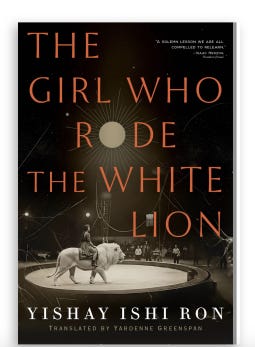
Nearly twenty years later, the discovery of an SS officer’s ring inside the body of an elderly lion at NYC’s Central Park Zoo kicks off a transatlantic investigation that uncovers Sarah’s hidden past. The fast-paced novel blends mystery and action with themes of survival, loss, courage, and love.
In full transparency, I didn’t love the novel. There was something off to me about framing an exciting mystery against the backdrop of the Holocaust, like repackaging real suffering as shiny entertainment. I also felt that the writing and scene transitions were rushed. However, I made some startling discoveries of my own while reading it that made me appreciate it more.
First, in the latest issue of Hadassah Magazine, I was tickled to read about a white lion kept at a zoo in Be’ersheva. The article was written by Miriam Green, an olah (immigrant) who found solace in volunteering at Midbarium during the war with Iran.
She writes about zoo life untouched by geopolitics, the preparation of rats for carnivorous animals, and examples from the Torah that emphasize compassion for animals.
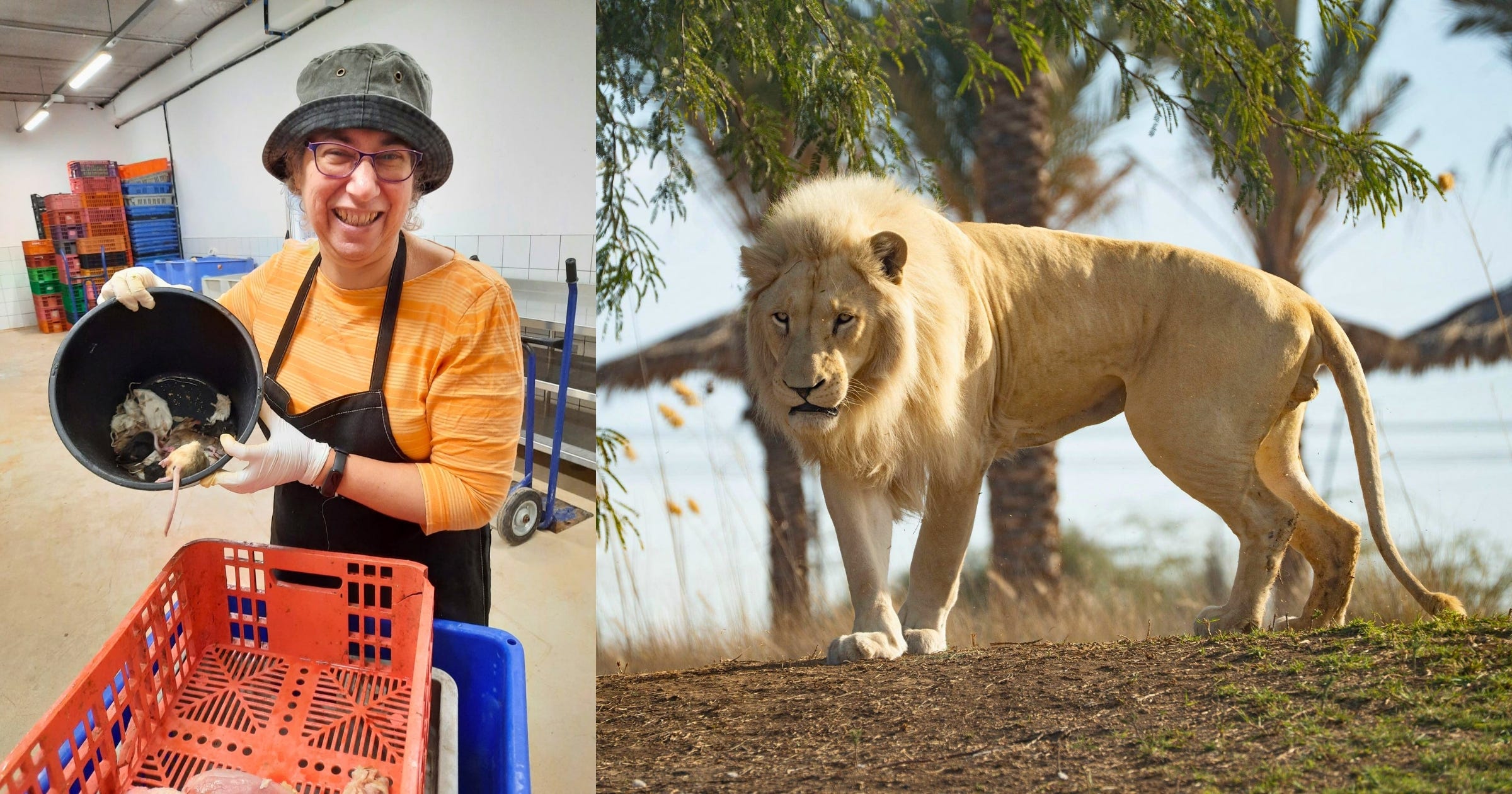
What jumped out at me in the piece, though, was the pair of white lion siblings at the zoo! They have a rare genetic condition called leucism, which is like albinism, where their bodies can’t produce pigmentation, but their eyes remain their natural color (whereas in albinism the eyes are usually red). They couldn’t survive in the wild at night due to their light color, so Midbarium rescued them.
In The Girl Who Rode the White Lion, this rare beautiful creature represents resilience and confronting your past.
Both Ron’s book and Miriam’s article made it seem like white lions are extremely rare, and I’m sure they are, but it’s like they’re en vogue or something!
The more captivating discovery: throughout the book, I kept thinking, “This story is ridiculous. There’s no way it’s true.”
While an SS officer’s ring didn’t actually end up in the stomach of a lion, imagine my surprise when I researched the story and found out that some Jews actually did flee Nazi Germany with the circus.
Adolf Althoff’s family owned a German circus dating back to the 17th century. He and his wife, Maria, hid another circus family full of Jews, created false papers for them, and helped them escape. Ron’s second book was inspired by this remarkable story.


In 1995, the Althoffs were recognized by Yad Vashem as Righteous Among the Nations.
“We circus people see no difference between races or religions,” said Althoff when he received the honor.
While the plot of The Girl Who Rode the White Lion may sound over the top, just know that real history took place under the big top. 🎪
Good Shabbos! Go read something,

💦 If you like Jewish books, check out these Drops:
Tragedy Tonight, Stories Forever

I was lucky enough to attend Jewish Book Council’s 75th National Jewish Book Awards, held at Temple Emanu-El. Surrounded by brilliant writers, scholars, translators, and publishers, I couldn’t help but feel a deep sense of gratitude celebrating those who contribute to the greater Jewish story. Here are some standout titles.
The Most Important Book I Read This Year

10/7: 100 Human Stories by Lee Yaron immortalizes some of the victims of October 7th in harrowing stories, some of destruction, some of rescue. It's a tough read, but a must-read.
Great Drop, thank you for the thorough and honest reviews. "Dog" has been on my list to read for a while, now I will kick it up the priority ladder.
FYI, there was a very interesting conversation with author Yishay Ron on the What Matters Now podcast a few weeks ago, in which he talks about his life and about both books. Also, the translator, Yardenne Greenspan, is actually married to professor Shai Davidai, and he did a great conversation with her on his own podcast a while back.
Here are the links if you're interested (one of the links for Yardenne interview is incorrect/mislabelled, I think I pasted the correct one below):
https://podcasts.apple.com/us/podcast/yishai-ishi-ron-ex-commando-writes-novels-about-trauma/id1067953235?i=1000768605670
https://podcasts.apple.com/us/podcast/here-i-am-with-shai-davidai/id1757483524?i=1000717810508
Shabbat Shalom! The play sounds good. Dog has been intriguing me for a while too, and I’m hoping to get at it when emotionally prepared.